
The UK Government has launched a new consultation asking vehicle manufacturers, suppliers, charge point operators, dealers, consumers and communities for their views on the pathway to ending sales of new petrol and diesel cars by 2030 and ensuring all new cars and vans are zero emission by 2035.
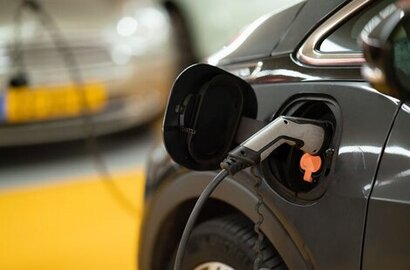
The consultation has been launched as the UK's transition to cleaner transport continues to gather pace. July recorded the strongest new car market since 2019, driven by growing demand for electric vehicles. More than one in four new cars sold are now electric, EV sales were up 45 percent on July last year, and over two million electric vehicles are now registered on UK roads.
The Zero Emission Vehicle Mandate (ZEV) aims to deliver savings for consumers by increasing EV availability and at more competitive prices – industry data shows new models are becoming increasingly comparable in price to petrol and diesel vehicles. It imposes a legal obligation on UK-based vehicle manufacturers to steadily reduce its introduction of new fossil fuel, Internal Combustion Engine (ICE), vehicles over the years to 2035, when all new cars and vans sold in the UK will be legally required to be Zero Emission Vehicles (ZEVs).
New petrol and diesel cars will be phased out by 2030, and all new cars and vans will need to be fully zero emission by 2035.
The policy was inherited by Labour from the Conservative Party, which introduced the ZEV Mandate on 3rd January 2024. The Labour government subsequently eased the targets for manufacturers, including with a policy review in 2025 that introduced new flexibilities. The new Government consultation is focused on questions around how the target for 2035 (100 percent ZEVs) is reached.
According to the Department for Transport (DfT), the consultation has been launched due to “challenging and complex global economic conditions, including supply chain disruption and tariff and trade uncertainty.” It also commented that the consultation will ensure that the targets £remain pro-business and grounded in the real world.”
The current trajectory for cars aims to reach 80 percent ZEV sales in 2030 and 100 percent ZEV sales in 2035, in accordance with the October 2023 joint government consultation response. This requires steeper annual growth in the years approaching 2030 with an easing of annual growth between 2030 and 2035. Currently, the UK Government believes that some UK-based manufacturers will find it difficult to meet this trajectory.
The current trajectory for Zero Emission (ZE) vans is 70 percent ZEV sales in 2030, reaching 100 percent in 2035.
Alternative options being considered by the Government are as follows.
For ZE cars:
A 70 percent ZEV target by 2030 but retaining the target of 100 percent ZEV sales in 2035. This would require a slightly greater annual growth from 2030 than the current trajectory, due to the lower growth in 2030.
A 60 percent ZEV target by 2030, requiring slower growth to 2030 but greater growth than the current trajectory between 2030 and 2035.
A 50 percent ZEV target by 2030. This is the easiest of the three alternative options to 2030 but also the more difficult of the three options between 2030 and 2035.
Maintaining the current 80 percent target by 2030 but with extended key flexibilities, such as borrowing, banking and CO conversion to 2034. The key flexibilities are currently scheduled to end in 2029. Extending them gives participants more flexibility to meet the current targets, meaning that ZE car sales could continue to be below target sales from 2030.
For ZE vans:
60 percent by 2030
50 percent by 2030
40 percent by 2030
70 percent by 2030 but with extended flexibilities
It seems that the Government’s review may have been influenced by concerns from the Society of Motor Manufacturers and Traders (SMMT), which has pushed for an urgent review of the mandate, due to decreasing demand for ZEVs, under the pressure of higher energy prices, delays in installing charging infrastructure and lack of consumer confidence. The SMMT, along with various trade unions, have claimed thousands of jobs are at risk if the mandate remains in its current format.
“The automotive industry is fully committed to a zero-emission future, investing billions in new technologies, products and incentives” said Mike Hawes, SMMT Chief Executive. “However, with the ZEV Mandate conceived under vastly different conditions, this welcome review is a timely opportunity to adjust the transition so it works for all. That means a commercially sustainable transition which supports UK competitiveness, investment and jobs whilst delivering greater choice and affordability for motorists – the sooner, the better.”
ChargeUK has countered that tens of thousands of jobs are at risk from a slower transition, estimating that a stable mandate and wider transport electrification could create 334,000 jobs and deliver £385 billion in value to the UK economy. These comments are broadly in line with other responses from EV and charging sector leaders.
Transport Secretary, Heidi Alexander said that it’s right that the government keeps targets under review to ensure they're practical and back British industry, maintaining that the end goal hasn't changed – but that the government needs to take business with it on the journey.
The Business, Innovation, Science and Trade Secretary Jonathan Reynolds said that the consultation is “about listening to industry, examining the evidence and making sure the Mandate continues supporting investment, innovation and competitiveness, so Britain’s car sector can thrive.”
However, David Martell, CEO of Andersen EV Plc, said that he has read the review with concern, wondering why this is happening now, adding that it will bring uncertainty to a market that is currently thriving.
“Consumers have never had such an impressive choice of EVs” said Mr Martell. “Often at prices comparable with equivalent petrol models. They have also recognised that EV running costs, especially when charging at home, are considerably lower. Quite simply, EVs are nicer to drive and are easier and less expensive to own and maintain. BEV registrations reached 43,106 in July, an increase of 44.5 percent compared with last year. Changing the annual mandate targets now would send a confusing message to consumers and risk dampening that enthusiasm.”
Mr Martell pointed out that the UK market has complied with the mandate to date and that strong flexibilities are in place to help manufacturers mitigate potential penalties.
“Clear targets have also given the private sector the confidence to invest significantly in charging infrastructure and technology” Mr Martell added. If the mandate is watered down, what incentive will there be for businesses to continue that investment? Growth in the EV market has been achieved through certainty and stability. The Government must not rock the boat with a U-turn that creates uncertainty about its commitment to low-carbon motoring.”
New YouGov polling for ChargeUK, published this week, found that only just over a third of the public (37 percent) want the transition to electric vehicles to slow down. That figure falls to 21 percent among those who voted Labour at the 2024 general election, when reinstating the 2030 ZEV mandate was a manifesto commitment.
The market data points the same way. BEVs accounted for 27 percent of new car registrations in July, up 49 percent year-on-year, and remained above the ZEV mandate trajectory for a second consecutive month.
“Ultra-rapid charging investment doesn’t happen on the back of uncertainty” said Delvin Lane, CEO, InstaVolt. “We’ve invested hundreds of millions of pounds into the UK’s charging network because government policy gave us a clear runway to plan against. Softening the mandate at this stage risks spooking exactly the private capital that’s been building the infrastructure this transition depends on. Meanwhile, hundreds of thousands of drivers are choosing to go electric. The numbers back this up: BEVs made up 27 percent of new car registrations in July, up 49 percent year-on-year, and staying above the ZEV Mandate trajectory for a second month running. OEMs need to recognise that this demand is real and seize it, or risk watching competitors take the opportunity they’re hesitating over.”
Ginny Buckley, the chief executive of Electrifying.com, the electric car buying and advice site, said that debate around the ZEV mandate “is increasingly polarised, but the biggest threat to EV sales is constant flip-flopping and a lack of clear direction.”
“I’d rather see no change to the existing mandate” Ms Buckley added. “However, life is all about compromise. I understand the pragmatic case for a 2030 target closer to 60 percent, while recognising plug-in hybrids with meaningful electric range. Mild hybrids are different: they can’t drive on electric power alone and remain fundamentally petrol cars. Whatever Government decides, it then needs to stick. Drivers need confidence in where we’re heading, and the charging industry needs certainty to keep investing ahead of demand.”
Tanya Sinclair, CEO of Electric Vehicles UK, said that “there is a remarkable cognitive dissonance in a government who is asking whether we should extend the availability of polluting vehicles amid our hottest summer on record.”
“It hasn’t rained for weeks, our ground is parched, air quality is poor” Ms Sinclair said. “Electric vehicles are the most powerful public health and climate change intervention we have to mitigate these changes, as much as we’re able. And to top it off, they are cheaper to buy and drive, and fantastically equipped with the latest tech. It’s all upside, so why isn’t this government doing everything in its power to enable their uptake?”
Gurjeet Grewal, CEO, Octopus Electric Vehicles, said that the “ZEV mandate is working – giving manufacturers confidence to invest and drivers confidence to switch.”
“Weakening it now would send exactly the wrong signal, just as EVs are becoming some of the best-value cars on the road” Mr Grewal added. “Carbon Brief estimates weaker targets could cost consumers £3 billion a year in expensive petrol by 2030. We should be accelerating the transition, not creating another policy wobble that leaves drivers, businesses and the UK economy paying the price.”
Vicky Edmonds, Chief Executive Officer of EVA England, said that the government should look honestly at why EV demand has not grown as quickly as expected, but that the answer is not to lower the ambition of the ZEV mandate - which has been absolutely critical for creating a market of EVs that people want to buy. She said that, instead, the answer has to be to fix the things that are stopping drivers from making the switch.
“Our members and surveys show that there is still significant untapped demand for electric vehicles, but drivers need a better deal” added Ms Edmonds. “That means targeting incentives where they will make the biggest difference, tackling the unfair premium paid by people who rely on public charging, and making sure the charging network is reliable, simple and convenient to use. A chargepoint that does not work when a driver needs it might as well not be there. The mandate was always only one part of the transition. If the Government gets the wider support package right, it can give consumers more confidence, stimulate demand and make the existing targets much easier for manufacturers to meet. This consultation is a real opportunity to address those barriers rather than dilute the destination.”
The consultation, launched by the UK and Devolved Governments, will run until 23 October.
For additional information see the full Zero Emission Vehicle Mandate Review here.