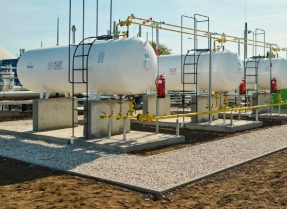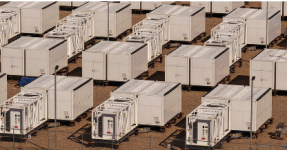


The DfT began the study by taking the number of publicly available EV chargers as of 1st January 2026, as published in the official statistics. This found that there are 116,052 EV chargers in the UK.
However, there is no single publicly available data set reporting the total number of fuel pumps across the country, so to estimate this figure, the DfT had to combine information from the Petrol Retailers Association’s 2025 market review, which reported the total number of petrol stations as numbering 8,329 as of 11th November 2024, and Deloitte’s 2013 research for the RAC Foundation, which drew on data from the Energy Institute’s retail marketing 2012 publication. This source reported that the average number of fuelling positions per petrol station in 2011 was 7.3. DfT has interpreted ‘fuelling positions’ as equivalent to fuel pumps.
Multiplying the number of petrol stations (8,329) by the average number of fuelling positions (7.3) gives an estimated total of 60,802 fuel pumps across the UK.
Using these estimates, DfT concludes that:
Based on estimates of industry data, there are now considerably more EV chargers than fuel pumps across the UK.
“This milestone shows we’re genuinely moving in the right direction and building the charging network that drivers need to make the switch to electric with confidence” said Vicky Edmonds, Chief Executive Officer of EVA England. “More public chargers than fuel pumps is not just a nice benchmark, it reflects huge progress on the ground that EV drivers are feeling. 69 percent of EV drivers have told EVA England the charging network has improved over the past year, and that growing confidence matters. But we shouldn’t stop here. Ensuring reliable, affordable and convenient charging where people live, work and travel is key to helping even more drivers make the transition smoothly.”
Data relating to electric vehicle public charging infrastructure in the UK is released under the ‘official statistics in development’ category, formerly termed ‘experimental statistics’. Official statistics in development are official statistics that are temporarily undergoing development and are being tested with users, in line with the standards of trustworthiness, quality and value in the code of practice for statistics.
These statistics do not meet the rigorous quality standards of accredited official statistics, for example, with respect to partial coverage, but still represent high-quality, trusted and valued outputs produced in line with the code of practice for statistics.
The data used in the Petrol Retailers Association (PRA) 2025 report comes from the myAutomate fuel retailer database, covering all open and actively trading forecourts as of 11 November 2024.
According to the report, myAutomate collects and validates data through:
Direct partnerships with retailers and oil companies
A call centre that contacts each station twice a year
Crowdsourced information from motorists via PetrolPrices, a large UK fuel price comparison app
A structured quality assurance approach designed to maintain accuracy
Although DfT has not independently verified these data or the underlying methodology, the report provides source information and metadata and the data collection process appears robust and multi-sourced. The figures are recent and broadly consistent with other sources available to government, providing a relatively high level of confidence in the station count.
The data are recent, and the total figure quoted broadly corresponds with other sources of data government has access to, which allows a relatively high level of confidence in this figure.
The estimate of average fuelling positions (7.3) is taken from Deloitte’s 2013 research for the RAC Foundation, which in turn relied on data from the Energy Institute’s retail marketing 2012 publication. The original source is not directly cited, so DfT cannot verify it fully.
This estimate is at least 14 years old, creating a timeliness issue relative to other data sources. However, in the absence of more recent public data, it remains the best available estimate.
The report notes that average fuelling positions increased only slightly between 2006 (7.1) and 2011 (7.3), suggesting slow growth. For DfT’s statement to be incorrect, the average number of pumps would need to have doubled since 2011. Given the historic rate of change, this appears unlikely, so assuming a similar number of pumps is considered reasonable for this purpose.
For additional information: