
A team of researchers from the Guangdong University of Technology and King Abdullah University of Science and Technology (KAUST) has published a comprehensive perspective on creating next-generation battery components from an abundant and sustainable resource: lignocellulose.
This work addresses a critical need for cost-effective energy storage by focusing on sodium-ion batteries, a promising alternative to lithium-ion technology. The authors, including Wenli Zhang, Zongyi Huang, Husam N. Alshareef, and Xueqing Qiu, detail how to transform plant-based biomass into high-performance hard carbon anodes, a key component for the commercial viability of these batteries.
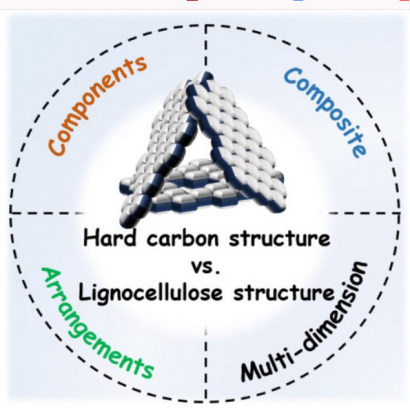
The investigation centered on understanding how the distinct chemical and structural makeup of lignocellulose's core components influences the final battery material. Rather than treating biomass as a single entity, the scientists prepared hard carbon materials separately from its three main constituents: cellulose, lignin, and hemicellulose. These precursors were heated to temperatures between 600 and 1600°C in a process called pyrolysis. By analyzing the resulting materials, the team established a direct link between the starting component and the electrochemical performance of the resulting anode, offering a blueprint for intentionally designing superior battery materials from natural sources.
The experimental analysis revealed that not all biomass components are created equal for energy storage. Hard carbons derived from cellulose and lignin consistently demonstrated higher sodium storage capacities compared to those made from hemicellulose. This superior performance was traced back to the material's internal architecture. Specifically, the cellulose- and lignin-derived carbons developed a greater closed pore volume, a critical structural feature that facilitates a highly efficient “pore-filling” charge storage mechanism for sodium ions. The findings suggest that biomass with naturally low hemicellulose content is an ideal starting point for producing high-capacity anodes.
Hard carbon materials store sodium through a complex three-part mechanism known as “adsorption-intercalation-pore filling.” A significant portion of the battery's capacity, termed the plateau capacity, comes from sodium ions filling tiny, closed-off pores within the carbon structure. The researchers' comparative analysis confirmed that the larger closed pore volumes in cellulose- and lignin-derived carbons directly contributed to their higher plateau capacities. This insight is essential for engineering future anodes, as maximizing this plateau region is a direct route to increasing the energy density of a full sodium-ion battery cell.
“The global demand for energy storage requires solutions that are not only effective but also sustainable and economical,” states Dr. Xueqing Qiu, a corresponding author on the paper. “Our work demonstrates that lignocellulose, an abundant biomass resource, is a prime candidate for producing hard carbon anodes. By understanding how each component—cellulose, lignin, and hemicellulose—contributes to the final battery performance, we can now develop targeted strategies to engineer these materials for next-generation sodium-ion batteries, paving the way for a greener energy landscape.”
Despite the promising results, the authors identify significant challenges that must be addressed before lignocellulose-derived anodes can be widely commercialized. The primary obstacle is the inherent inconsistency of raw biomass; materials sourced from different plants or locations can have varying compositions, leading to unpredictable battery performance. Achieving reproducibility at an industrial scale is a major engineering hurdle. Additionally, the long-term stability and failure modes of these anodes under demanding conditions like rapid charging and extreme temperatures require more thorough investigation.
Looking forward, the perspective advocates for a more refined approach to material synthesis. The team proposes developing advanced chemical and engineering strategies to pre-treat and modify lignocellulose before pyrolysis. Such methods could selectively remove less desirable components like hemicellulose or tune the material’s structure to ensure a consistent and high-quality precursor. Critically, these processes must align with the principles of green chemistry and sustainable development to maintain the environmental advantages of using biomass in the first place. This forward-looking strategy provides a clear and actionable roadmap for the field.
Corresponding Author: Wenli Zhang, Husam N. Alshareef or Xueqing Qiu
PHOTO: Synthesis strategies and obstacles of lignocellulose-derived hard carbon anodes. CREDIT: Wenli Zhang, Zongyi Huang, Husam N. Alshareef & Xueqing Qiu