
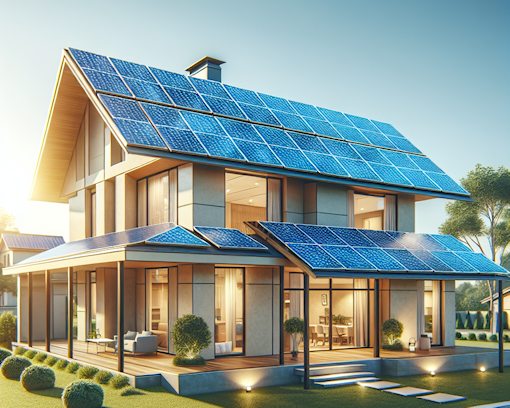
AI can analyze how a household consumes electricity. Over time, it learns usage patterns, like when occupants are most active, when appliances are typically used and when energy demand peaks. With this knowledge, the system can align energy consumption with solar production.
For example, instead of running a dishwasher or washing machine at night, it might suggest or automatically shift usage to midday when solar generation is at its highest. Similar increases in efficiency could reduce household CO2 emissions by up to 40% and lower energy consumption.
Solar arrays are generally low maintenance, but performance issues can still arise due to dirt buildup, shading or equipment faults. Traditional monitoring systems may only provide basic alerts, leaving homeowners to identify problems themselves. AI enhances this process by continuously analyzing performance data.
It can detect subtle changes in output that may indicate inefficiencies or malfunctions. If a panel underperforms or a component begins to fail, the system can notify the homeowner or service provider. This proactive approach minimizes downtime and maintains optimal efficiency.
Solar output depends heavily on outside conditions such as sunlight intensity, cloud cover and temperature. AI can process real-time weather data alongside historical performance to forecast how much energy a home solar array will generate throughout the day. Considering power demand reached pre-pandemic levels by the end of 2024, assessing how and where to cut back is valuable.
This predictive capability allows homeowners to plan energy use more effectively. For example, if the system expects lower solar production due to cloudy weather, it can prioritize electricity storage to ensure a steady supply. On the other hand, on sunny days with high output, it can encourage or automate higher energy usage to make the most of available power.
Battery storage plays a critical role in residential solar systems, especially for homes that want to maximize energy independence. However, deciding when to store electricity and when to use it can be complex. AI simplifies this by continuously optimizing battery performance. It takes into account factors like energy prices, predicted solar generation and household demand.
In time-of-use pricing areas, it can store power when rates are low and use it when they’re high, which helps homeowners reduce costs. This intelligent management ensures stored energy is used in the most efficient and cost-effective way possible rather than simply being discharged at fixed times.
When integrated with smart home devices, AI can control appliances, heating systems and electric vehicle chargers. An automation-enabled system can automatically charge an electric vehicle during peak solar hours or adjust air conditioning settings based on available solar energy. This level of automation reduces the need for manual intervention while ensuring the system uses power as efficiently as possible.
AI is already improving home solar energy use, but it still has some room to grow. Many such features are already available today. However, challenges like cost, system compatibility and data privacy considerations can limit widespread adoption.
As the technology advances and becomes more affordable, it is likely to become a standard component of home solar systems rather than an optional upgrade. For homeowners interested in renewable energy, AI represents an important step forward. It transforms solar power from a passive resource into an intelligent system that adapts to both the environment and everyday life. In this setting, automation delivers greater efficiency, savings and sustainability.