
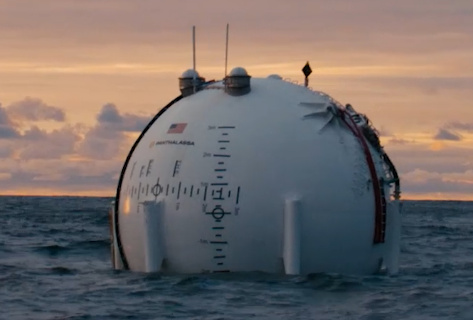
The funding will complete the company’s pilot manufacturing facility near Portland, Oregon, and accelerate deployment of its Ocean-3 series of nodes, which will perform AI inference computing at sea using power generated from ocean waves.
“There are three sources of energy on the planet with tens of terawatts of new capacity potential: solar, nuclear, and the open ocean,” said Garth Sheldon-Coulson, Co-Founder and CEO of Panthalassa. “We’ve built a technology platform that operates in the planet’s most energy-dense wave regions, far from shore, and turns that resource into reliable clean power. We’re now ready to build factories, deploy fleets, and provide a sustainable new source of energy for humanity.”
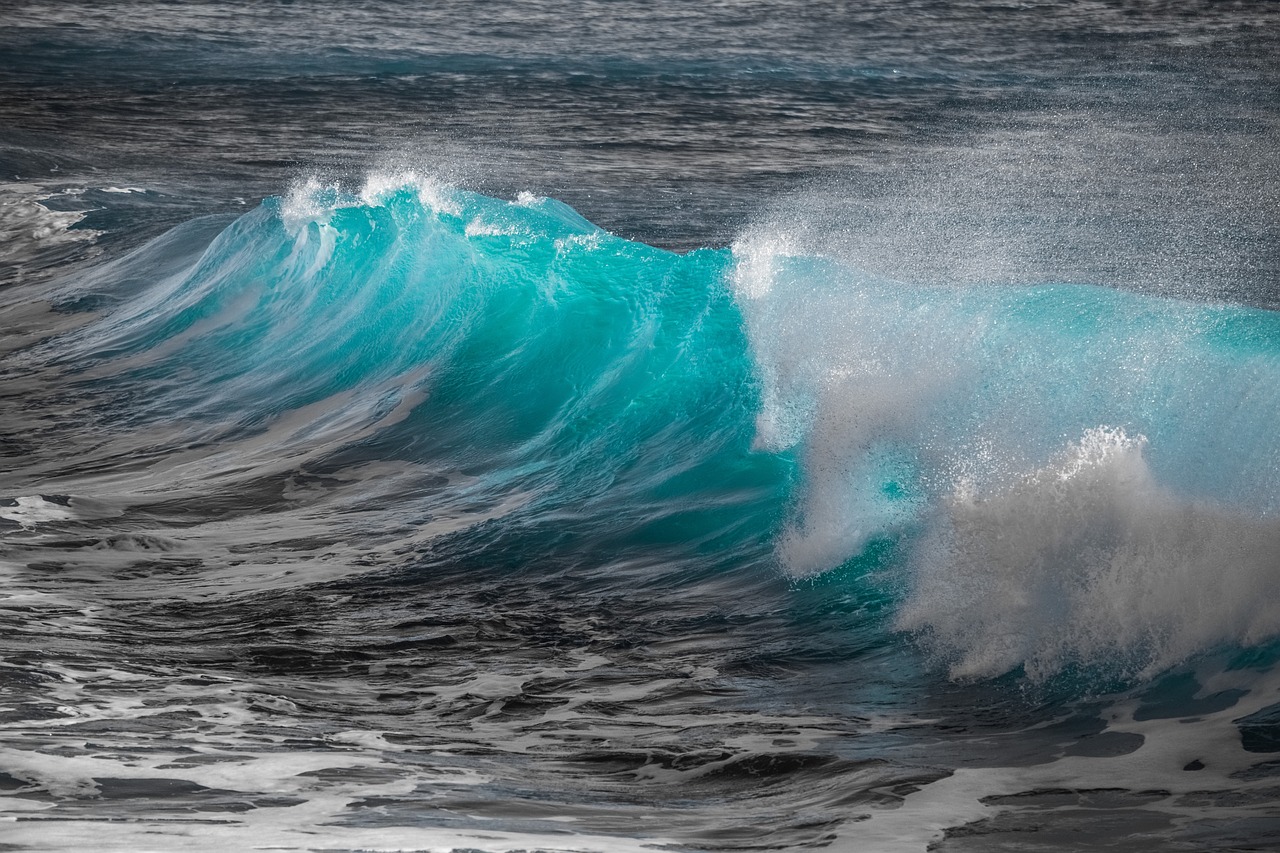
Panthalassa’s nodes are autonomous, floating energy systems that are mass-produced from plate steel in coastal factories. They operate in the distant ocean, where they generate clean electricity around the clock. Rather than transmitting energy back to terrestrial grids, Panthalassa uses it directly onboard to power AI chips, sending inference tokens to land by satellite. The surrounding ocean provides free supercooling, addressing one of the largest engineering challenges in land-based data centers and lengthening chip lifetimes.
Panthalassa has spent the past decade developing the core power generation, propulsion, autonomy, and at-sea computing technologies behind the platform. Its Ocean-1, Ocean-2, and Wavehopper prototypes in 2021 and 2024 proved these capabilities at sea. In 2026, the company plans to deploy its Ocean-3 pilot node series in the northern Pacific Ocean, demonstrating AI inference capabilities and refining its manufacturing process in preparation for commercial deployments in 2027.
As demand for new electricity and computing continues to surge, terrestrial data centers face mounting constraints: limited grid capacity, cooling water scarcity, supply chain bottlenecks, permitting delays, and impacts on local communities and infrastructure. Panthalassa’s platform expands energy and AI computing capacity without requiring new data centers or power plants on land, relieving strain on the grid, reducing ecological impacts, and lowering energy costs for families and businesses.
“The future demands more compute than we can imagine,” said Peter Thiel. “Extra-terrestrial solutions are no longer science fiction. Panthalassa has opened the ocean frontier.”
“Panthalassa’s autonomous wave power system is a game changer in addressing global energy needs and clean power generation,” said John Doerr. “It is a triple win: workers benefit, communities benefit, and we gain a strategic asset that strengthens American technological leadership.”