

This model has emerged as a critical tool for expanding equitable participation in the clean energy transition, particularly for renters and low- to moderate-income (LMI) communities.
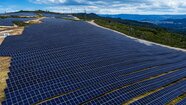
The community solar framework addresses the inability of renters, condominium residents and occupants of unsuitable structures to participate in solar adoption. These programs operate through shared photovoltaic arrays serving multiple subscribers within a utility service territory.
The billing construct relies on virtual net metering to credit electricity produced against individual utility bills, regardless of the physical distance between the customer and the generation site. This allows them to receive renewable energy credits without on-site equipment installation or maintenance.
The market gap for solar is substantial, with approximately 50% of homes and businesses unable to host rooftop arrays due to shading, roof age, structural limitations or rental arrangements.
The community solar segment installed 279 megawatts of direct current in the first quarter of 2024. During the same period, the broader solar industry accounted for 75% of new electricity generation capacity additions.
Site selection and feasibility analysis are the foundation of successful development, balancing technical viability, regulatory compliance and land acquisition costs.
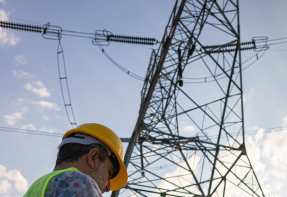
The first step is solar resource mapping to ensure optimal irradiation levels. Grid capacity assessments also verify that distribution infrastructure can accommodate generated power without costly upgrades, such as transformer replacements.
Community solar gardens transform marginal properties into renewable energy assets. For example, brownfields, capped landfills and remediated sites offer opportunities where contamination concerns hinder conventional redevelopment. Ohio's renewable energy development potential, in particular, includes 500 megawatts of alternating capacity on brownfield sites alone. Large commercial and industrial rooftops provide additional opportunities in urban areas with limited space.
Of course, zoning approvals may require public hearings, especially in jurisdictions without solar-friendly ordinances. This prolongs development timelines. Utility interconnection processes also demand technical studies and approval from utility companies that may lack standardized procedures. In addition, environmental impact assessments are often conducted for ground-mounted arrays on previously undeveloped land.
By removing requirements for high credit scores, property ownership and up-front capital, these community programs expand access to renters and LMI households who are often excluded from rooftop solar.
The model promotes resource sharing rather than individual hyperconsumption as a mechanism for equitably distributing environmental benefits. Subscription pricing typically follows three models — fixed discount structures, escalating rate agreements or flat kilowatt-hour (kWh) rates.
Fixed discount structures offering 5% to 20% price cuts relative to utility rates represent the most common approach. Ownership models allow individuals to purchase shares representing specific capacity, though they generally cannot remove, relocate or monetize panels.
Subscriber agreements introduce complexity that can obscure true costs. For example, contracts often include annual escalators that increase payments over time, which can erode savings. Participants also typically cannot access federal tax incentives, which flow to project owners. Contract portability limitations create additional challenges when subscribers relocate, as subscriptions may not transfer, resulting in termination fees.
Community solar viability depends on state-level legislation and federal incentive structures. State grants, renewable energy credits and tax incentives improve project economics and enable service to populations requiring subsidies. Federal investment tax credits further provide capital cost reductions that developers pass to customers through lower rates.
State policy significantly impacts participation rates. For instance, the Solar Massachusetts Renewable Target program provides a 20% discount on bills for participants enrolled in LMI tranches, creating strong economic incentives. However, the Trump administration's cancellation of Solar for All funding highlights policy volatility, forcing developers to rely more heavily on state-level programs.
Availability varies dramatically by jurisdiction due to inconsistent policies, creating a patchwork of community solar regulations across states. Some states may prohibit third-party electricity sales or lack virtual net metering frameworks, complicating multistate expansion and creating uneven access based on location.
Long-term performance determines whether subscribers realize projected savings and projects meet investor expectations. Participants benefit from professional operations without direct equipment responsibilities, including maintenance tasks and repair costs associated with rooftop systems. Likewise, no equipment exists on subscriber property, eliminating installation impacts.
However, array performance directly affects all subscribers, making maintenance quality critical. Accumulated dust and debris can cause efficiency losses of 25%, according to research from the National Renewable Energy Laboratory.
Without upkeep, generation declines reduce credits, potentially eliminating savings. Responsibility lies with operators, but subscribers bear the consequences through reduced credits.
Implementation examples demonstrate how organizational models address distinct market segments and community needs. These projects illustrate successful approaches across different geographic and demographic contexts.
Grand Valley Power Cooperative partnered with Grid Alternatives to develop a low-income solar farm, where participants receive shares that equate to 3.5 kWh of generation capacity. This has saved each household approximately $600 annually, based on early case studies. The cooperative structure allowed nonprofit participation, reducing costs and enabling deeper subsidies.
Brixton Energy Solar operates as the United Kingdom's first inner-city solar cooperative with a dedicated urban focus, featuring a 37-kW-peak station on the Elmore House roof. The cooperative ownership model allows residents to invest in renewable generation where individual rooftop access is limited.
Community solar gardens represent a critical pathway to extending participation in renewable energy beyond property owners with suitable rooftops. Successful deployment requires navigating zoning processes, adhering to subscription terms and following rigorous operational protocols. The model offers particular promise for renters and LMI households seeking to participate in the clean energy transition.