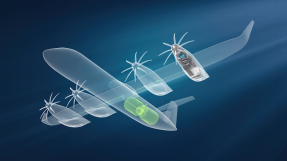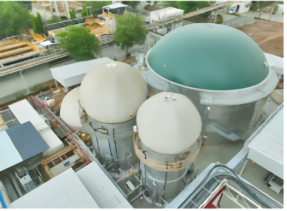

Celadyne’s dual-use technology strengthens hydrogen’s domestic supply chain and enables advances in self-sustaining vehicles and operations in remote locations, while addressing issues in hydrogen energy production, transport and storage which have hindered hydrogen’s widespread adoption, until now.
“Celadyne Technologies is creating a path toward cheaper, more efficient devices that will expand hydrogen adoption to power defense, transportation and manufacturing,” said Mark Arnold, associate vice president for Discovery to Impact and managing director of Longhorn Ventures. “We are excited to add them to our portfolio of University-backed startups that are turning research discoveries into world-changing solutions.”
Hydrogen is a highly abundant, versatile element that can deliver and store energy through chemical reactions that occur within devices called fuel cells and electrolyzers. For hydrogen to significantly contribute to the world’s energy supply, hydrogen devices such as fuel cells and electrolyzers need to become less reliant on critical materials, more efficient, simpler to manufacture, and less expensive to achieve large-scale adoption.
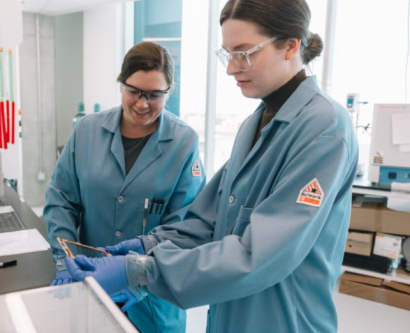
Celadyne Technologies is solving these challenges with advanced materials by redesigning the membrane at the heart of hydrogen devices. Hydrogen electrolyzers and fuel cells rely on membranes for conductivity and gas separation. However, existing membranes suffer from poor durability, low efficiency, and critical safety challenges — particularly when hydrogen permeates the membrane, forming explosive mixtures with oxygen, which Celadyne Technologies directly mitigates. Its two membrane products, Dura and Electra, help devices work faster, withstand higher temperatures, and last longer.
Since its launch in 2022, the $10 million UT Seed Fund has provided capital for 11 total early-stage startups built on UT Austin intellectual property to help scale them beyond initial launch. The UT Seed Fund portfolio includes startups that comprise a mix of groundbreaking University-based discoveries in computer sciences, physical sciences, material sciences, and life sciences.