
The alliance aims to further develop a reliable intermediate oilseeds market to help meet the growing demand for biodiesel, renewable diesel (RD) and sustainable aviation fuel (SAF) markets which is estimated to increase almost threefold to 40 billion gallons by 2040.
“This alliance will help us to connect the value chain necessary to bring camelina to market and provides our farmer customers greater market certainty as they consider camelina on their farm,” said Frank Terhorst, head of strategy and sustainability for Bayer’s Crop Science division. “We are utilizing our industry leading breeding program to enhance the crop, and its untapped potential globally to help meet the needs of this growing market. We see this as a win for our customers and their farms, as it creates potential new revenue streams, but also a win for the renewable fuels market.”
Philipp Schoelzel, senior vice president biofuels growth at bp, commented, "This collaboration represents bp at its best. Working with trusted partners with complementary capabilities to develop products customers want and need, while delivering value for our shareholders."
Fuels with lower carbon intensity
This announcement follows Bayer’s acquisition of camelina assets which was announced in January 2025. As Bayer ramps up production in preparation of a full-scale launch, testing of long and short season biotypes is underway. Bayer has already introduced newgold™ camelina in the Northern Plains of the US and Southern Saskatchewan and Southern Alberta regions of Canada.
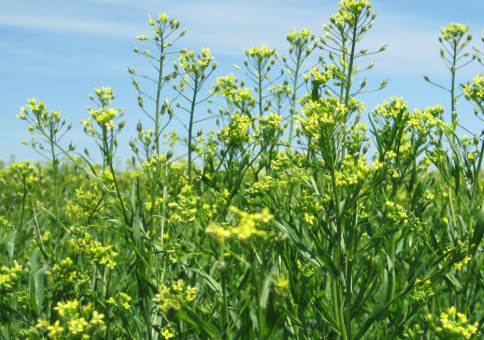
Camelina has a promising lower-carbon intensity for renewable fuel, offering flexibility to grow in both spring and winter, and requires lower inputs. Camelina is winter hardy, offering pod shatter resistance and drought tolerant characteristics allowing it to be grown on idle or fallow land, or in-between traditional main crop rotations, allowing farmers to avoid potential competition with food production.
Camelina crops sold under the newgold™ seed brand will be designed with the goal of acting as a profit multiplier, giving growers the flexibility to decide how and where it fits best in their operation:
As an intermediate crop, adding value between seasons
Within rotations, contributing to good agronomic management while diversifying income
On marginal or underutilized land, turning those acres into more productive assets
This flexibility will allow farmers to participate in the low-carbon fuel economy while maintaining control over their agronomic and financial decisions.
Biofuels can play a key role in helping to decarbonize the transportation sector since electrification may not be feasible in all transportation systems like aviation, rail, heavy duty equipment or marine. Biofuels can be produced from renewable organic materials like corn, soy, canola and other intermediate oilseed crops, such as camelina.