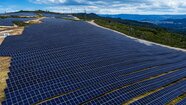

Pairing floating solar with hydropower unlocks hundreds of GW opportunities globally. However, one of the main challenges for floating solar installations on sites with large water level variations is how to maintain consistent position and tension across shifting depths in water bodies. Water levels rise and fall, sometimes dramatically, leaving conventional mooring systems either too taut or too slack. The result is reduced efficiency, increased maintenance needs, and operational uncertainty.
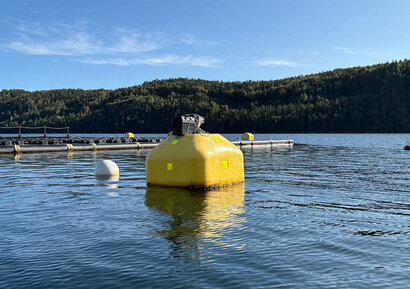
At the core of Tension Buoy is a smartly integrated winch perched atop the structure, designed to deliver dynamic tension control efficiently. As water levels change, this winch automatically adjusts the mooring chain length, consistently maintaining the optimal tension in the mooring line. Whether deployed temporarily for precise tensioning during installation, or installed permanently to adapt continuously throughout FPV operations, the aim of the Tension Buoy is to meet the real-world needs of changing water levels.
The mooring chain is routed through the buoy’s centre: rising from below, gliding over the gypsy, and then descending again, while any surplus chain hangs freely, ready to adapt to shifting sea states.
Hydro dams are dynamic, with levels rising and falling by many meters in short periods of time. Where fixed mooring systems struggle with lines being either too short or too long when water level changes, the Tension Buoy adapts the lines to ideal lengths and tension without manual handling. This keeps floating solar arrays stable and secure through every cycle. By making hybridisation straightforward, it enables operators to unlock new renewable potential and deliver reliable clean energy.
Tension Buoy unlocks the latent potential of reservoirs behind hydropower dams. Its self-adjusting anchoring system ensures floating solar and hybrid installations remain secure in all conditions. In doing so, it transforms challenging water bodies into productive assets, bringing clean energy to surfaces once considered impractical.
When paired with existing hydro infrastructure, the Tension Buoy becomes a bridge to hybrid energy systems that offer greater stability and flexibility. Solar power can supplement hydropower during bright hours or dry periods, while dams continue supplying baseload where needed. Together, they forge a more resilient, efficient energy ecosystem, one that revitalises existing assets and supports the global shift towards sustainable power.
For additional information: