
Energy is largely invisible and abstract. While it’s used constantly, people only experience it through its results or its cost, such as a lit room and a utility bill. It’s measured in units like “kilowatt-hours,” which have no tangible, emotional meaning to most people.
Art can bridge the gap and act as a translator for these abstract concepts. It takes the raw, invisible force of the wind and converts it into a sensory experience, such as sound, light, motion or all three, that the brain can connect with emotionally.
There’s a difference between hearing a reporter say, “winds at 15 mph,” and actually hearing a sculpture produce a deep, resonant chord at that exact speed. The installation makes you feel the power in the air, which is more impactful than any statistic.
Art installations can also turn what might be seen as industrial or intrusive, like energy infrastructure, into a point of civic pride and a cultural landmark. They can act as public conversation starters, bypassing political debates about energy policies. A strange, singing sculpture on a hill typically doesn’t immediately bring to mind political affiliations. This creates a neutral ground for conversation and a gateway to deeper technical topics.
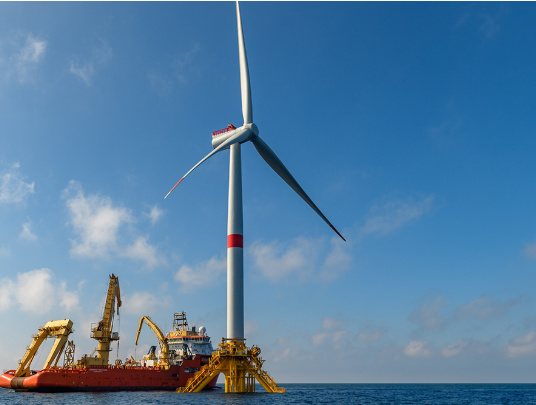
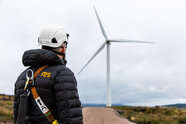
The wind turbines that generate renewable energy work on the same principle as an airplane wing. The blades have an “airfoil” shape, which includes a rounded leading edge that cuts into the wind, a curved top surface and a flatter bottom area. This design helps control the air’s path.
When the wind hits the blade’s rounded edge, the airflow splits. Some of the air travels over the longer, curved top surface, while the rest moves along the shorter, flatter bottom surface. The wind at the top has farther to travel, so it must move faster to keep up with the wind at the bottom.
The faster-moving air exerts less pressure, creating an imbalance between the areas above and below the blades. This difference creates a powerful force that “pulls” the rotor to spin. On an airplane, this force is called “lift,” and it’s what pulls the blade into rotation.
In wind turbines, the rotor connects to a generator, which converts the aerodynamic force into electricity. In some cases, a gearbox helps increase the rotation speed to enhance the process.
Steel is the material of choice for both massive turbines and durable outdoor art for many reasons. Perhaps the most obvious benefit of steel is its inherent strength and its natural resistance to impact from heavy winds and other natural forces, as well as corrosion. It has an exceptional strength-to-weight ratio and this metal also has a high recyclability rate. For example, at the end of a wind farm or sculpture’s life, its steel materials can be reclaimed and reused, fitting perfectly into the circular economy of a sustainable future.
Nature-Powered Sculptures that Sing in the Wind
Here’s a look at stunning, nature-powered acoustic art installations around the world.
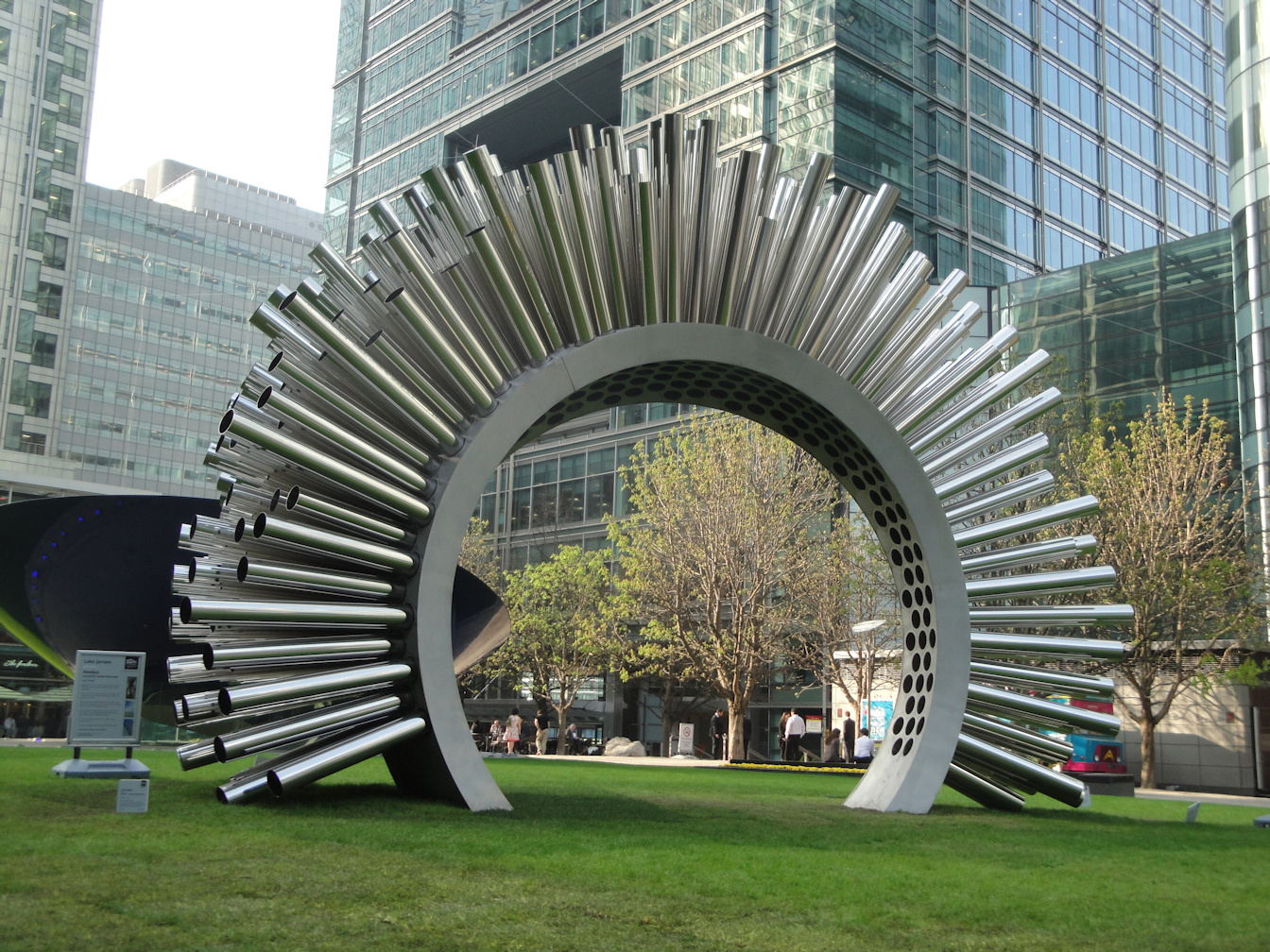
“Aelous” is a traveling acoustic pavilion that has appeared in various locations around the world. Now permanently installed at Filton, Bristol, this massive, arch-like structure is large enough for people to walk inside. The interior is lined with 310 stainless steel tubes that stretch outward. Similar to an Aeolian harp, many of the tubes connect to strings that vibrate with the wind, creating a low, humming multi-tonal soundscape.
British artist Luke Jerram is the innovative creator behind this striking installation, which toured the UK between 2011 and 2012 before finding its permanent home. Named after the Greek god of winds, the structure is designed to harness wind energy in a completely different way than conventional turbines — transforming it into an audible, immersive experience.
"This isn't a power plant, it's art," Jerram explains, though the distinction carries important nuance. While the 310 steel pipes don't generate electricity, they do "power the sound of the wind," making air currents both visible and audible. The pavilion allows visitors to "visualize this shifting wind map by interpreting the sound around them," creating a three-dimensional representation of an otherwise invisible force.
The installation represents more than aesthetic achievement. Jerram collaborated with the University of Southampton's Institute of Sound and Vibration Research and the University of Salford's Acoustics Research Centre to create this functional artwork that bridges science and art. The pavilion serves as a conversation starter about sustainability, acoustics, engineering, and our relationship with natural energy sources — demonstrating how renewable energy concepts can engage the public through emotional and sensory experiences rather than statistics alone.
The Singing Ringing Tree of Lancashire
The Singing Ringing Tree | Haunting Sound Sculpture in Lancashire's Wild Landscape
The singing ringing tree of Lancashire sits atop a windswept hill overlooking the town of Burley in the UK. It’s made from galvanized steel pipes that are stacked to form a tree bending to the winds. This sculpture creates an ever-changing, low and eerie hum, depending on the wind’s speed and direction. It won the RIBA National Award in June 2007, cementing its status as a serious work of architectural innovation.
Global Leaders Heading the Charge
Many sites worldwide generate wind energy at an industrial scale, demonstrating the scale of modern wind energy.
Denmark is one of the global leaders in harnessing wind energy. It has more than 4,800 installed wind power generators and strong government incentives for renewable energy innovations. It’s also a hub for developing and testing next-generation offshore and onshore wind technology.
The Whitelee Wind Farm is a recreational park with over 130 km of trails for cycling, hiking and horse riding. It also produces enough electricity to power more than 350,000 homes from 215 turbines. Whitelee Wind Farm is an excellent example of successfully integrating a large-scale renewable energy infrastructure into the community.
With over 15,300 wind turbines and hundreds of wind-related projects, Texas has led America in wind energy development. It has vast wind corridors where the wind is strong and consistent, making it one of the most productive places on Earth to harness this resource. For a state historically defined by gas and oil, the fact that wind now accounts for nearly a third of its energy generation demonstrates a massive economic and energy transition.
The fastest path to a more sustainable future is one that embraces not just science and policy, but also art and creativity. These elements capture public imagination and build the cultural will needed for energy transition worldwide. With the right installations, wind can propel this movement forward.