However, reaching global net-zero by 2050 targets in the marine and aviation sectors will require large-scale e-fuel production. Therefore, development of e-fuel technologies and scaling up of commercial projects is needed now.
e-Methanol is the leading e-fuel
In 2025, e-methanol production reached a new milestone, with Mitsui launching the "world's first commercial-scale e-methanol production" plant in Denmark in collaboration with European Energy. This Kassø e-methanol facility can produce 42,000 tons per annum of e-methanol.
Consequently, e-methanol is now at a higher maturity than other e-fuels such as e-kerosene or e-methane. It can be used as a drop-in replacement for conventional methanol markets, and e-methanol is also desirable as a sustainable marine fuel. Additionally, global e-methanol production is forecasted to keep rising, with several 100,000 tonne per annum e-methanol plants reportedly already under construction, mostly in China.
China is already well established in the global methanol landscape; it's the world leader for conventional methanol production and consumption. Moreover, China is also the global leader in green hydrogen production (the key feedstock for e-fuels) - with several players such as PERIC and Sungrow now having over 3 GW in electrolyzer manufacturing capacity. e-Methanol production in China can therefore be used towards its own domestic decarbonization goals. It can alternatively be exported into the growing European market for low carbon methanol.
e-SAF: Waiting in the wings
While e-methanol is the most mature, there are also several key technologies being developed for e-SAF (sustainable aviation fuel). These include innovations in reverse water gas shift reactors/catalysts, alternative methods of syngas generation, and new Fischer-Tropsch reactor designs.
For example, players such as Velocys and INERATEC have been commercializing microstructured/microchannel Fischer Tropsch reactors for compactness and high efficiency. UK-based OXCCU has developed a novel catalyst that can convert captured CO2 and green hydrogen into hydrocarbons in the jet fuel range using a single-step process. Other e-SAF project developers have ignored the syngas-Fischer Tropsch route entirely and focused on methanol-to-jet instead.
What about e-methane?
For e-methane, both thermocatalytic and biocatalytic methanation production pathways have been commercialized at a relatively small scale. Most e-methane projects are tied to existing biogas/biomethane plants, as supplying green hydrogen in addition to the CH4/CO2 from anaerobic digestion can reportedly increase methane output by 60% compared to typical biogas upgrading. The largest e-methane plants currently operational produce around 1000 tonnes per year. However, project developers such as TES and Ren-Gas have plans for much larger facilities.
What about e-fuels for cars?
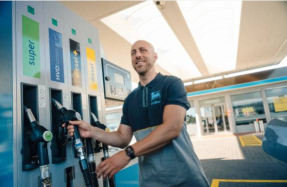
Electric cars beat e-fuels in terms of energy efficiency. However, most vehicles being sold worldwide still run on fossil fuels, demonstrating a need for e-diesel and e-gasoline as a drop-in replacement for full global decarbonization. The early e-fuel project frontrunners (such as HIF's Haru Oni and Infinium's Pathfinder) have mostly focused on e-fuels for road vehicles, suppling players such Porsche and Amazon that have voluntarily supported the development of low-carbon e-fuels.
Regulation will be the biggest driver for e-fuel growth. Given that electric vehicles are viewed as the ultimate green solution for cars, most regulatory support for e-fuels that exists is more geared towards the aviation and maritime sectors. Even so, technology pathways that produce SAF also produce renewable diesel as a byproduct, meaning e-diesel supply will also scale up as SAF demand grows. For example, INERATEC's e-fuel ERA ONE plant that came online in 2025 supplies e-diesel alongside e-kerosene.
ABOUT THE AUTHOR:
Eve Pope is a Senior Technology Analyst at IDTechEx, focusing primarily on sustainability and carbon capture, utilization, and storage (CCUS). Before joining IDTechEx, Eve graduated from the University of Cambridge with a MA in Natural Sciences. She is based in London, UK.