

The EU's coal industry is facing significant contraction. The OECD expected roughly 76,000 jobs to disappear from coal mines and plants in 2025. Current estimates suggest this number could reach 154,000 by 2030, highlighting a massive labor displacement that requires immediate attention from industry leaders and policymakers.
The renewable sector tells a different story. The industry now employs about 50% of all energy workers worldwide, and fossil fuel workers account for 1% of the workforce. These numbers reflect the shift toward sustainable generation — there's a high demand for technical roles that the current market struggles to fill.
Developing a talent pool to meet this demand remains challenging because while green job listings have been growing by 8% per year, the number of skilled people has risen by only 6%. In addition, 41% of workers pursuing careers in sustainability lack experience. This gap between available talent and job creation is hitting the brakes on industry expansion.
Success in transitioning workers starts with acknowledging that engineering fundamentals do not change the fuel source, and that the technical leap is also often narrower than expected.
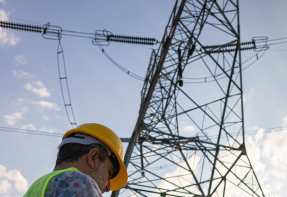
Coal engineers bring expertise in high-voltage electrical systems and grid infrastructure that directly translates into solar-era jobs. Professionals who manage steam turbines or complex thermal systems have the analytics skills needed to optimize inverter performance. Their experience with heavy industrial equipment also ensures they can handle the physical demands of large-scale solar installations.
Project management skills also transfer seamlessly. Senior staff from fossil fuel backgrounds understand land permitting, supply chain logistics and construction oversight, enabling them to stabilize rapid-growth developers who often struggle with the challenges of scaling up. In short, these veterans know how to deliver critical infrastructure projects safely and on time.
Another vital asset is a safety culture. Coal operations work under strict regulatory environments and transferring this mindset to solar construction sites reduces risk and enhances compliance. A workforce already disciplined in hazard identification offers immediate value to renewable energy developers.
A study on the Wyoming talent pool found that the cost of upskilling workers ranges from $3,060 to $7,201 per person to facilitate the transition to new energy roles. This investment pales in comparison to the costs of recruiting new talent from an already limited pool.
Experienced coal engineers offer a local solution that reduces relocation expenses and onboarding times. Companies that invest in training secure a loyal workforce while avoiding the high cost of hunting for talent in a competitive market. Another notable point is that keeping skilled workers in their communities maintains the local tax base and prevents the economic hollowing often observed after a facility shuts down.
Experienced engineers accelerate the deployment of renewable projects, as their ability to manage grid interconnection and complex site logistics helps projects finish faster. The Hamilton Solar Power Plant in Florida illustrates the scale of such a development. The facility can power more than 20,000 homes and is expected to reduce Florida's carbon output by 300 million pounds at year one. Delivering results of this magnitude necessitates a workforce capable of executing precise engineering tasks.
The Hamilton Solar project required a sophisticated grounding study to ensure safety and functionality across 550 acres. Such a technical challenge demands high-level engineering proficiency, and retrained professionals provide the backbone needed to bring these massive facilities online without delay.
Effective retraining benefits from a synchronized approach between government initiatives and corporate strategy — relying solely on market forces leaves too many variables up in the air. The International Energy Agency emphasizes that governments must play a major role by establishing clear policy directions that de-risk private investment. Public funding can subsidize the initial costs of training, while private organizations provide industry insight to ensure the curriculum aligns with real-world needs.
This collaboration creates a pipeline that ensures training graduates have guaranteed pathways to employment. When developers commit to hiring from specific retraining cohorts, they validate the program and increase enrollment confidence among skeptical talent. This train-to-hire model transforms abstract goals into tangible employment outcomes for coal communities.
The OECD also highlights the success of its RES-SKILL project, which focuses on developing new curricula for coal workers. By setting up joint competence centers, educational institutions can offer certifications recognized across the entire renewable energy industry. Such portability guarantees a retrained engineer holds credentials valuable to a solar developer anywhere.
For accessibility, training centers must be located within the communities most affected by mine or plant closures. Programs should also respect workers' professional identity by framing retraining as an evolution of their existing expertise rather than a point of starting over.
Integrating the fossil fuel workforce into the renewable industry involves harnessing decades of engineering experience to solve a pressing labor shortage. By valuing the skills of those who built the previous energy era, the industry secures the expertise needed to construct the next one.