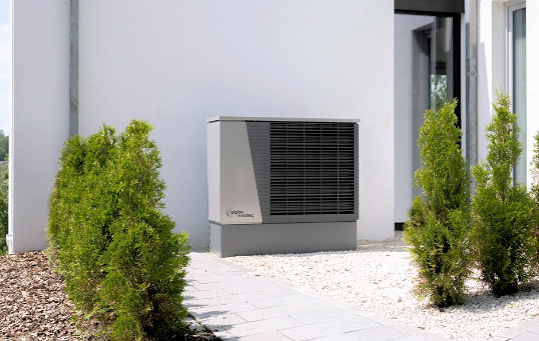

The statistics provide information relating to the number of hydronic heat pumps with a capacity up to 45kW installed in the United Kingdom.
In October 2021, the previous Government published its Heat and Buildings Strategy, which set out their plans to decarbonise buildings and grow heat pump deployment.
In March 2024, the National Audit Office published a report looking at the progress DESNZ has made in decarbonising home heating since the Heat and Buildings Strategy was published. One of their recommendations was to establish a single measure for the number of heat pumps installed regardless of policy. The launch of this publication started to address that recommendation by giving a view of the number of Government-supported heat pumps installed through DESNZ-led schemes. In this release, DES&NZ have expanded the coverage to include all retrofit installations and will work to expand the coverage even further in future releases to also include installations in new-build properties.
The Warm Homes Plan was subsequently published in January 2026, which included details of the Government's aim to achieve 450,000 heat pump installations per year by 2030.
The release uses data on installations certified through the Microgeneration Certification Scheme (MCS), which includes some installations in new-build and non-domestic properties, but since MCS data does not have complete coverage of installations in these types of properties they have not been included in these statistics.
What remains provides a best estimate of the total number of retrofit heat pump installations, which will include installations that both receive funding through Government support as well as those that are self-funded.
The total number of retrofit heat pump installations recorded in 2025 was 51,886. This was a 7 percent increase on 2024 (48,677) and is over four and a half times higher than five years ago (2020; 11,196).
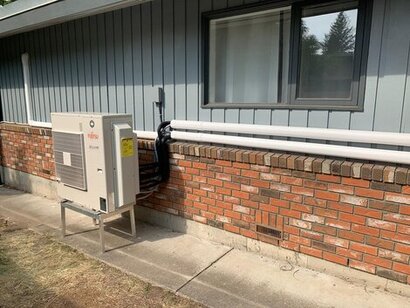
The majority of retrofit heat pump installations in 2025 were of Air Source Heat Pumps (ASHPs) – 99 percent - which has increased from 92 percent of installations five years ago (2020).
Of the 51,886 retrofit heat pump installations in 2025, the largest proportion took place in the South East (15 percent), followed by the Southwest (14 percent) and Wales (12 percent). London has seen the biggest growth in the number of retrofit heat pump installations over the last five years, albeit from a low base; an increase of 1,881 percent from 96 installations in 2020, compared to 1,902 in 2025. This is followed by Wales with an increase of 689 percent over the same period (from 801 to 6,321 installations).
A small proportion of new-build installations in Scotland and Northern Ireland pre-2023 Q4 may have incorrectly been classified as retrofit but will be reassigned in future when further data is acquired and enables these to be identified.
In 2022 Q1 there was a large increase in applications which coincided with the closure of the Domestic Renewable Heat Incentive scheme and just prior to the launch of the new Boiler Upgrade Scheme.
There are different numbers of properties in each area, which will be a factor that influences the variation in the number of installations in the different regions.
The 'unknown' category includes heat pump installations that could not be assigned to a region because the postcode was either missing or could not be matched to the Office of National Statistics (ONS) National Statistics Postcode Lookup (NSPL).
“The 7 percent rise in heat pumps installed in the UK last year, to 51,866 shows the technology is becoming an increasingly mainstream solution to the green heating challenge” commented Sachin Vibhute, Technical Consultant at LG. “However, installations will need to accelerate further if the UK is to meet its net zero targets. While support such as the Boiler Upgrade Scheme is helping to reduce upfront costs, there are still barriers for some households. This is particularly true in the UK, where much of the housing stock is older and retrofitting low-carbon heating systems can be more complex and costly. Maintaining strong and consistent policy support will be critical to sustaining momentum and giving households the confidence to make the switch. At the same time, expanding training pathways will be essential. Investment in installer training, including industry-led academies and upskilling programmes, will help build the skilled workforce needed to meet rising demand. With the right support from government and industry, heat pumps can play a central role in helping the UK move closer to its net zero ambitions.”
For additional information:
Department for Energy Security and Net Zero Heat pump deployment statistics: December 2025