Pending support from the Renewable Development Account (RDA) which will be decided in Minnesota’s 2026 Legislative Session, the project will deliver a first-of-its-kind regional supply of ammonia fertiliser directly to CFS member-owners, helping shield farmers from the price volatility seen in ammonia fertiliser markets.
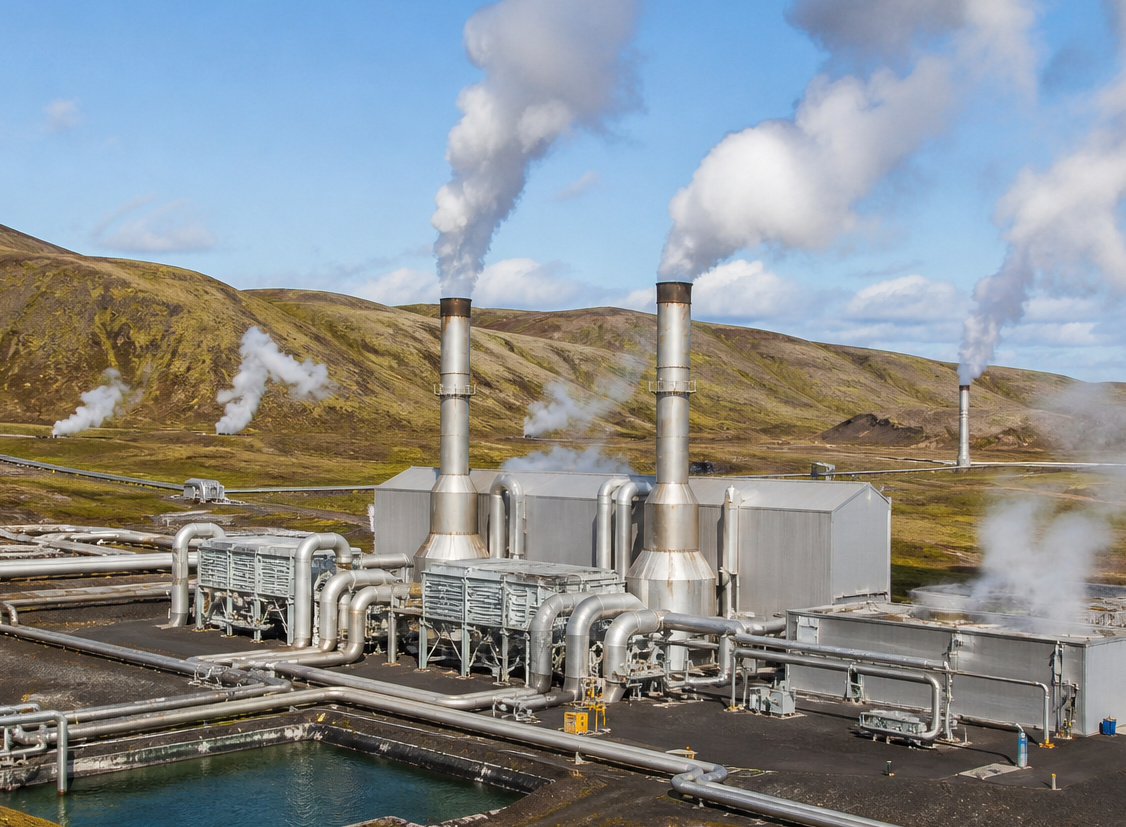
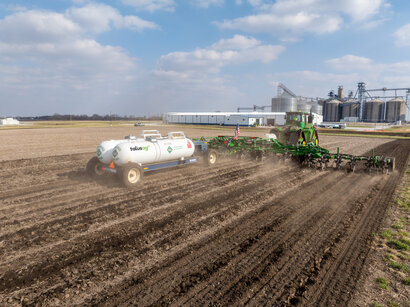
Using electricity from Blue Earth Light & Water, the two Talus10 ammonia projects will each convert air, water, and power, producing 20 tons of of locally produced ammonia a day, representing 40 tons in all, enabling reliable, local production of a fertiliser essential to crop production across the region and a fuel for power generation.
For Minnesota farmers - who have endured years of price shocks driven by international gas markets and geopolitical instability - this project offers a new model of price stability, supply certainty, and independence. The project will provide supply of ammonia to cover more than two-thirds of CFS’ annual ammonia sales and field applications to more than 100,000 total acres.
“Ammonia prices have swung by more than 300 percent in recent years” said KC Graner, CEO of Central Farm Service, a farmer-owned cooperative serving nearly 4,500 members across southern Minnesota and northern Iowa. “Local production gives our member-owners a level of control and predictability they’ve never had before - and it strengthens the economic resilience of every farm we serve.”
TalusAg, which completed a one-ton-per-day local ammonia production project in early 2025 in collaboration with Landus, an Iowa-based agriculture cooperative, will bring its modular, rapidly deployable Talus10 technology to Minnesota.
Funding from Minnesota’s Renewable Development Account - established under Minn. Stat. § 116C.779 to support innovative energy technologies - is being sought by the partners to cover necessary infrastructure for the project. The RDA’s mission is to accelerate solutions that benefit Minnesota ratepayers, reduce emissions, and spur rural economic development.
As part of the project, CleanCounts - the largest registry and source of truth for compliance and voluntary clean energy markets within North America - will enhance its existing capabilities for issuance, retirement, and transacting Energy Attribute Certificates (EACs) for ammonia. While known for its best-in-class services focused on supporting electricity and clean fuels markets across North America, CleanCounts is expanding into tracking ammonia.
CleanCounts supports more US state and Canadian province regulatory programs than any other single registry and brings the same level of rigor, transparency, and verification to voluntary buyers as is required by state regulators nationally. The process is similar to how the organisation tracks renewable energy and issues Renewable Energy Certificates (RECs) and Renewable Thermal Certificates (RTCs) for clean fuels like biomethane and green hydrogen.
EACs for ammonia produced using renewable energy, and other low-emissions methods, will verify the production of ammonia and attach a carbon intensity measurement to ammonia quantities, enabling downstream buyers, co-ops, and supply chain partners to make clear, auditable claims about ammonia-related emissions.
The West Central Research and Outreach Centre (WCROC) at University of Minnesota, Morris, built the world’s first wind power to local ammonia production facility in 2013 and expanded it substantially over the following years. Today, the facility at WCROC generates one ton of ammonia per day and includes leading research and production partners.
As part of the TalusAg/CFS project, Great Plains Institute will receive funding and work with WCROC on grid data to advance wind power to ammonia, and ammonia production to prevent wind power curtailment.
Concurrent with the announcement, Agricultural Utilisation and Research Institute (AURI) and Great Plains Institute issued reports highlighting the opportunity to generate millions of dollars in rural county property tax by preventing the curtailment of wind power through behind-the-meter generation of local ammonia.
Unlike most states, owners of wind turbines in Minnesota pay property tax based on the turbines’ annual production. Curtailment of wind power results in lost property tax revenue to rural counties. A 2022 letter from Murray County to the Minnesota Department of Commerce notes:
Over 70 percent of energy produced from wind turbines in Minnesota comes from just six rural counties: Lincoln, Mower, Jackson, Nobles, Pipestone, and Murray;
Between 2020 and 2022 Murray County experienced a 34 percent drop in energy production property tax revenue due to wind turbines being curtailed;
Between 2020 and 2022 Fenton and Moulton Townships experienced a 54% and 52% drop in energy production property tax revenue due to wind turbines being curtailed;
Counties have been told that imposed curtailment by the Midcontinent Independent System Operator (MISO) is due to economic dispatch drivers.
According to data from National Lab of the Rockies, today more than eight million MWh of wind is curtailed from generation in the MISO North region. National Lab of the Rockies’ Cambium models further show that, even with announced and planned expansions in transmission infrastructure, curtailment will increase to more than 15 million MWh in 2035.
Distributed ammonia generation facilities, such as the project proposed by TalusAg, can be placed in key locations so that electricity produced by wind turbines is used to produce local ammonia fertiliser during times of grid congestion instead of curtailing the turbine.
Preventing curtailment of wind turbines - through use of distributed ammonia generation during times of grid congestion - is a way for rural counties and townships to control and maximise property tax revenue while also supporting additional economic development.
For additional information: