
During the first ten months of 2025, solar and battery storage dominated growth among competing energy sources. Moreover, all net new generating capacity in 2026 is forecast to be provided by renewable energy sources and batteries.
EIA’s latest monthly “Electric Power Monthly” report (with data through October 31, 2025), once again confirms that solar is the fastest growing among the major sources of US electricity.
In October alone, electrical generation by utility-scale solar (i.e., >1-megawatt (MW)) expanded by 23.3 percent compared to October 2024 while “estimated” small-scale (e.g., rooftop) solar PV increased by 12.6 percent. Combined, they grew by 20.6 percent and provided 9.1 percent of the nation’s electrical output during the month, up from 7.8 percent a year ago.
Moreover, utility-scale solar thermal and photovoltaic expanded by 34.5 percent while that from small-scale systems rose by 11.3 percent during the first ten months of 2025 compared to the same period in 2024. The combination of utility-scale and small-scale solar increased by almost a third (28.1 percent) and produced a bit over 9.0 percent (utility-scale: 6.86 percent; small-scale: 2.16 percent) of total US electrical generation for January-October - up from 7.2 percent a year earlier.
Similarly, solar-generated electricity year-to-date (YTD) easily surpassed - by over 67 percent - the output of the nation’s hydropower plants (5.4 percent of total generation). In October alone, solar-generated electricity nearly doubled hydro’s output. In fact, in both October and YTD, solar produced significantly more electricity than hydropower, biomass, and geothermal combined.
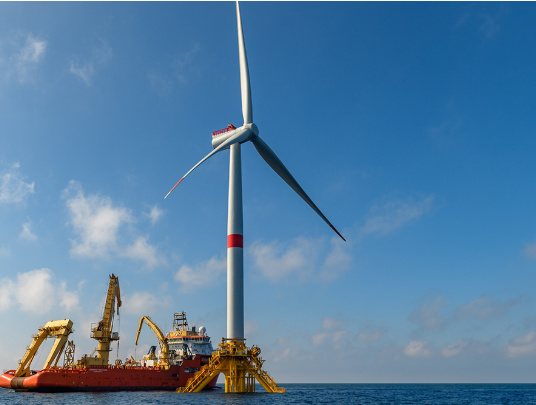
Wind continues to hold the lead among renewables. Wind turbines across the US produced almost a tenth (9.9 percent) of US electricity in the first ten months of 2025 – an increase of 1.1 percent compared to the same period a year earlier and 84 percent more than hydropower.
Wind + solar represent almost one-fifth of total US electrical generation – a larger share than that provided by either coal or nuclear power.
During the first ten months of 2025, electrical generation by wind plus utility-scale and small-scale solar increased by 12.4 percent and provided almost a fifth (18.9 percent) of the US total, up from 17.3 percent during the first ten months of 2024.
Further, the combination of wind and solar provided 16.6 percent more electricity than did coal during the first ten months of this year, and 10.8 percent more than the nation’s nuclear power plants. In fact, while solar and wind expanded, nuclear-generated electricity experienced zero growth.
Electrical output YTD by the mix of all renewables was almost 26 percent of total US generation.
The mix of all renewables (i.e., wind and solar plus hydropower, biomass and geothermal) produced 8.6 percent more electricity in January-October than they did a year ago and provided (25.7 percent) of total US electricity production compared to 24.3 percent twelve months earlier.
Renewables’ share of electrical generation is now second to only that of natural gas whose electrical output actually dropped by 3.6 percent during the first ten months of 2025.
During the past year, solar and battery storage have dominated capacity additions, coupled with a strong showing by wind.
Between January 1 and October 31, 2025, utility-scale solar capacity grew by 19,477.6-MW while an additional 4,837.7-MW was provided by small-scale solar. EIA foresees continued strong solar growth, with even more utility-scale solar capacity - 36,071.9-MW - being added in the next twelve months.
Explosive growth was also experienced by battery storage, which grew by 45.0 percent since the beginning of the year and added 12,150.3-MW of new capacity. EIA also notes that planned battery capacity additions during the next 12 months total 21,940.4-MW - a further increase of 56 percent.
Wind also made a strong showing since January 1, adding 3,796.0-MW, while planned capacity additions over the next year total 9,567.0-MW (on-shore) plus 800.0-MW (off-shore).
On the other hand, during the past ten months, natural gas capacity increased by only 3,479.6-MW and nuclear power added a mere 46.0-MW. Meanwhile, coal capacity plummeted by 3,241.1-MW and petroleum-based capacity fell by an additional 476.3-MW.
Thus, since January 1 - roughly the beginning of the Trump Administration, renewable energy capacity, including battery storage, small-scale solar, hydropower, geothermal, and biomass ballooned by 40,174.4-MW while that of all fossil fuels and nuclear power combined actually declined by 218.0-MW.
In 2026, all net new generating capacity is projected to come from renewables and battery storage.
EIA forecasts the trends seen in 2025 YTD to continue and accelerate during the coming 12-month period.
Utility-scale renewables plus battery storage are projected to increase by 68,528.0-MW (EIA does not provide a forecast for small-scale solar, but the SUN DAY Campaign estimates it will provide an additional 7,200-MW).
Meanwhile, natural gas capacity will have a net increase of only 4,167.4-MW, which will be completely offset by a drop of 4,287.0-MW in coal capacity. Petroleum and “other gases” will decrease by 42.2-MW. In addition, EIA does not project any new growth for nuclear power in the coming year.
Thus, in 2026, all net new capacity growth will be attributable solely to renewables and battery storage.
Should that forecast materialise, by October 31, 2026, the mix of all renewables, including small-scale solar, would reach 504,634.6-MW - almost equal to that of natural gas (514,018.2-MW) - and account for over 36 percent of US generating capacity.
Moreover, the installed capacity of utility-scale and small-scale solar combined (244,308.6-MW) would surpass that of wind (166,260.3-MW). Solar capacity would also handily exceed that of coal (166,649.5-MW) and more than double that of nuclear power (98,437.2-MW) although the latter two sources would still have significantly higher capacity factors.
“As 2025 draws to a close, it is clear that - notwithstanding the roadblocks created by the Trump Administration - growth by renewable energy sources and battery storage has greatly outpaced fossil fuels and nuclear power” said the SUN DAY Campaign's executive director Ken Bossong. “Moreover, it now appears highly possible that renewables and batteries could account for 100 percent of net new capacity additions in 2026.”
The SUN DAY Campaign is a non-profit research and educational organization founded in 1992 to support a rapid transition to 100 percent reliance on sustainable energy technologies as a cost-effective alternative to nuclear power and fossil fuels and as a solution to climate change.
For additional information: