

Energy Secretary Ed Miliband has set out a package of new measures designed to accelerate the UK's clean energy transition in response to ongoing global energy market volatility.
Excess profits will be taxed through the Electricity Generator Levy by raising the rate from 45 percent to 55 percent and extending its duration, ensuring an increased proportion of the extraordinary revenue generated when the gas price spikes is available to government to support businesses and households with the cost-of-living.
The government measures form part of its drive for clean, homegrown power, also including the unlocking of public land, speeding up of planning and cutting bills for households.
Instability in the Middle East has exacerbated the problems caused by Britain’s reliance on international fossil fuel markets, exposing families and businesses to volatile gas prices and driving the cost-of-living crisis even though much of the country’s electricity comes from cheaper renewables and nuclear.
These problems are easing over time as new clean energy projects are built, using fixed price contracts that aim to protect consumers from gas price volatility. However, a significant part of renewable generation – about 30 percent of Britain’s power supply – is still exposed to wholesale prices set by gas, leaving households vulnerable when international prices rise.
The new government measures consist of:
Voluntary long term fixed contracts offered to existing low-carbon generators not on fixed‑price contracts – covering around a third of Britain’s power supply. This will help protect families and businesses from higher bills when gas prices spike, with contracts offered only where they deliver clear value for money for consumers.
An updated Electricity Generators Levy: immediate action to tax excess profits through the Electricity Generator Levy by raising the rate from 45 percent to 55 percent, ensuring an increased proportion of the extraordinary revenues generated when the gas price spikes is available to government to support businesses and households with the impacts of the conflict in the Middle East on the cost of living.
These measures aim to further reduce the share of electricity exposed to gas price shocks and provide generators the economic incentive to move on to fixed contracts not linked to volatile gas.
“We need to get off the fossil fuel rollercoaster” said UK Prime Minister Keir Starmer. “This will make energy bills more stable and take the pressure off family budgets. When global gas prices spike, people here shouldn’t be picking up the tab. Our focus is simple: easing pressure on household budgets now, while building a homegrown energy system that protects families from global instability in the years ahead.”
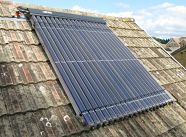
The government is currently investing £1.2 billion to upgrade 100,000 social homes over the next 2 years. It is planning to accelerate this further by providing an additional £100 million of funding for the Social Housing Fund, subject to final approvals, to support the delivery of up to a total of 57,000 solar installations for households this financial year.
Building on its successful solar scheme, Great British Energy will install more rooftop solar installations on a further 100 schools and colleges this year, supported by up to £40 million of government investment.
“As we face the second fossil fuel shock in less than 5 years, the lesson for our country is clear: The era of fossil fuel security is over, and the era of clean energy security must come of age” added Mr Miliband. “That’s why we’re doubling down on clean power, to give our country energy security and bring down bills for good.
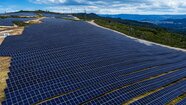
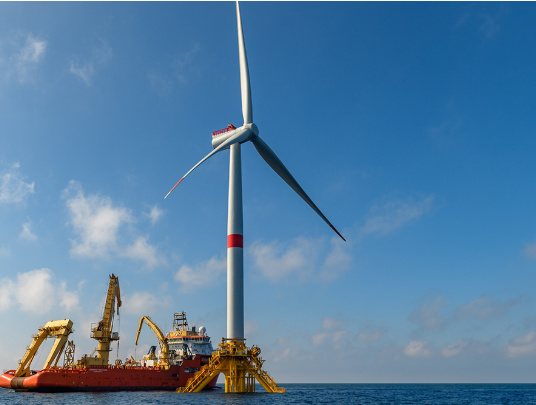
The government is also driving forward plans to massively expand renewables using brownfield land, industrial sites and railway sites, hosting solar panels and wind turbines, unlocking up to 10 GW of capacity and powering the equivalent of around 5 million homes.
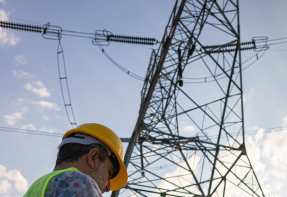
Streamlining outdated rules to unblock the grid and speed up clean, homegrown power, will involve a huge overhaul of planning, land access and grid connection processes, cutting delays for essential grid upgrades and renewables, and exploring new routes for developers to build and connect their projects faster.
Other government plans aim to make it easier for people to switch to cheaper electric transport and heating, by making EV chargers, solar panels and heat pumps easier to install for renters, flat-dwellers and households without a driveway.
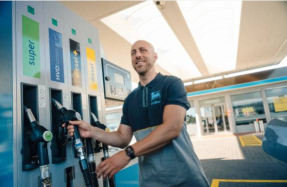
The government has announced that it will legislate this year to introduce permitted development rights to expand EV charging provision, allowing for cross-pavement charging solutions and associated charging points. It will imminently launch a consultation on changes to building regulations and the introduction of an Ability to Charge. This will look to increase EV charging provision in new buildings and those undergoing major renovations, as well as give renters and leaseholders greater access to charging by making it easier to request and install charge points.
Changes to permitted development rights will aim to make it easier to install air source heat pumps. This will involve consultation to explore expanding permitted development including extending to non-domestic buildings and amending some siting restrictions, and seek views on how to enable more installations in flats.
More ways to ensure low-income households can benefit from plug-in solar through the government’s ‘Warm Homes Plan’ will be explored this year. It has earmarked up to £25 million with a view to piloting support for plug-in panels in partnership with local authorities and mayors. This will employ a street by street approach where tens of thousands of low-cost solar panels are delivered to those most in need.
New funding – backed by £90 million – will help build and expand heat pump factories in the UK, creating around 2,000 British jobs. Alongside this, extra investment in the £30 million Heat Pump Ready scheme will help companies design and test new, market ready heat pumps that are cheaper, smaller and easier to fit.
A Wholesale Contract for Difference (WCfD) will offer existing eligible generators, who aren’t already contracted under a CfD, the option to accept a fixed price for the electricity they generate. This would mean that both they and consumers are no longer exposed to volatile gas-linked electricity prices.
A WCfD would see eligible generators give up their current forward wholesale revenues in exchange for a fixed power price achieved via a CfD. Under this proposal it is envisaged that generators accredited under the Renewables Obligation (RO) would continue to receive support via the RO in the way they do currently – with only their wholesale revenues being exchanged for a fixed price CfD.
The WCfD will be a voluntary offer to eligible electricity generators, and will be subject to consultation in due course. Government will only offer contracts to electricity generators where it represents clear value for money for consumers. Further details will be set out in due course, with plans to consult later this year.
“Today's commitment to streamline planning and grid connection rules, unlock clean power across the public estate, and make charging easier for renters and flat-dwellers all point in the same direction: a future where nobody is left behind in the switch to electric simply because of where they live” said John Lewis, CEO, char.gy. “Lamppost charging has always been about meeting drivers where they are, using infrastructure that's already on every street in the country. These reforms will help unlock that potential at the scale and speed the transition demands, and char.gy stands ready to deliver.”
Michael Goulden, CEO, Kerbo Charge, said that the company has long called for the government to cut through the red tape that has been holding back cross-pavement charging.
“Today's commitment to introduce permitted development rights this summer is exactly the kind of decisive action needed” Mr Goulden added. “With home charging five to ten times cheaper than public alternatives, this opens the door to genuinely affordable EV ownership for the millions of drivers who've been locked out simply because they don't have a driveway.”
For additional information: