
“Demand for electricity is expected to at least double in the coming years, as heating, transport and industrial processes switch to electric power and demand from data centers continues to rise” said Josh King, Chair of Solar Energy Scotland. "To cut bills and keep them low, we need to produce as much home-grown power as we can. That means retaining a goal of reaching at least four gigawatts of solar capacity by the end of the decade and committing to hit 9 GW by 2035."
This figure would be a fair share of what the industry believes can be deployed by then across Great Britain, about ten percent.
All the solar panels currently deployed in Scotland, on rooftops and on the ground together, come to less than a gigawatt of capacity, only a fraction of the 23 gigawatts now installed across the UK.
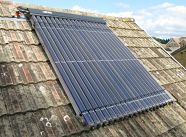
“At the last Scottish election, there was not a single mention of solar energy in any of the party manifestos, even by the Greens” added Solar Energy Scotland's Deputy Chair George Baxter, launching its manifesto this morning. "We hope to change that, this time round. On rooftop solar, our message is simple – that it is overwhelmingly popular and implementation should be quadrupled over the next ten years. It is the most direct way to demonstrate the savings of clean energy to Scottish businesses and households."
Earlier this year, the Whitehall set out its intention to all but require solar power on newbuild homes and non-domestic properties, through the upcoming Future Homes Standard and Future Buildings Standard from 2027. Scotland should go even further, by mandating solar installations on all new commercial and public buildings from 2026 – the 'European Solar Standard'.
The Scottish Government will also need to update building standards to include solar energy as standard. Although rightly focusing on heat and fabric efficiency, current work on Scotland's Heat in Buildings Strategy and Passivhaus standard risk overlooking the overwhelming benefits of on-site generation.
Over the current parliament, solar policy has been strengthened in many areas, with a draft ambition of 6 GW by 2030, equalizing permitted development rights with England and a similar business rate incentive England's.
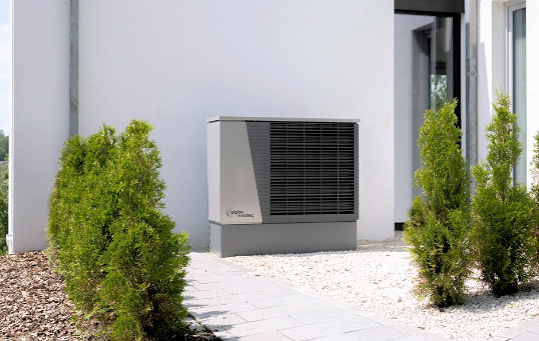
However, further measures are needed, such as ensuring the availability of low-cost finance to reinforce the retrofit market. Before interest-free loans for solar and battery storage were withdrawn in mid-2024, Scotland led the UK in heat pump installations – helping households cut running costs and invest in clean heat. Numbers fell by 10 percent in the first half of 2025 compared to the same period of 2024, while UK-wide, heat pump installations rose by 21 percent. Heat pumps work very well with solar and storage, so more support is clearly needed.
The new Scottish Government should also push electricity network operators to slash red tape. As things stand, arrays of 200 kilowatts or more in Scotland – anything beyond the roof of a supermarket or small warehouse – needs to be investigated to see how it would affect the high-voltage transmission grid. That threshold is five megawatts in England – 25 times more – cutting costs and accelerating delivery.
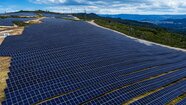
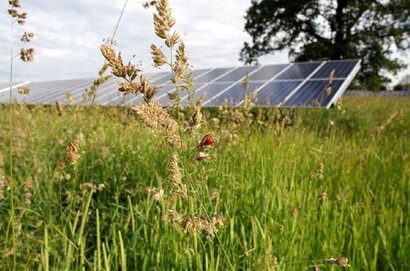
More than half of the expected growth in solar generation will come from solar farms, rather than on rooftops. Solar farms provide cheap power – and there is no conflict between them and the need for food security. Indeed, the opposite is true: by providing a dependable and regular income, insulated from poor harvests and market shocks, solar farms provide farmers with the security they need to keep producing food for us all.
Furthermore, grazing, honey making and other forms of agriculture can continue, with more options emerging all the time, such as 'agrivoltaics' – alongside an opportunity to power farm energy needs.
That's not to mention the biodiversity benefits of solar farms, as proven by the RSPB and Cambridge University, recorded by independent ecologists, compiled by Solar Energy UK's regular Solar Habitat reports and most recently highlighted by Lancaster University. Solar land can actively improve the environment by establishing wildflower meadows, hedgerows and wetland habitats.
Included in the manifesto is a demand for Scottish workers to be supported with the tools they need to capitalize on the growth of onshore renewables. That means adopting the recommendations set out in Optimat's recent report, such as establishing regional multi-technology training hubs, alongside greater investment in apprenticeships and vocational courses.
For additional information: