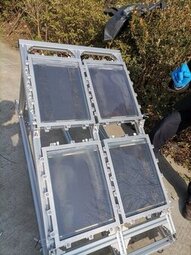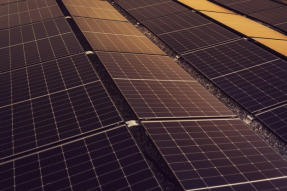

Traditional solar panels suffer from the disadvantages of being heavy, rigid and opaque. Furthermore, some rooftops are not strong enough to bear the weight of a heavy load of silicon modules. Perovskite-based solar can step in to unlock millions of square feet of rooftop space that is not suitable for traditional solar PV.
The commercialisation landscape for perovskite technology has now been meticulously mapped out in a new report by IDTechEx – “Perovskite Photovoltaics 2027-2037: Technologies, Markets & Trends”.
While perovskite-silicon tandem cells frequently make headlines for breaking world efficiency records in standard utility environments, the single-junction and flexible perovskite markets are quietly opening up entirely new application sectors. Because perovskite solar cells can be deposited onto lightweight plastics or glass, and their transparency can be tuned, they are transforming everyday surfaces into active energy generators.
A prime example of this trend is the revitalisation of Building-Integrated Photovoltaics (BIPV) and low-load commercial roofing. Large industrial warehouses and commercial facilities often have expansive roof spaces that cannot physically support the racking and weight of silicon panels. Lightweight perovskite PV can potentially solve this engineering challenge.
Furthermore, the technology is highly adaptable for emerging integrations like agrivoltaics, where tunable light transmission is required to protect crops, as well as vehicle-integrated photovoltaics (VIPV) and roadside noise barrier integration.
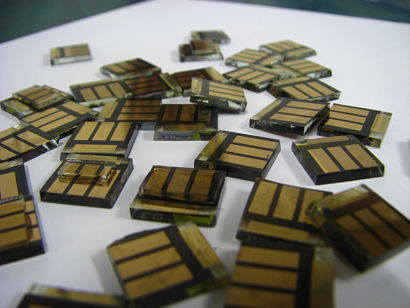
Even at the micro-scale, indoor perovskite PV is proving to be a highly efficient energy source for self-powered Internet of Things (IoT) devices, replacing disposable batteries in smart electronics.
The future of perovskite PV is highly segmented. It is no longer a one-size-fits-all technology competing purely on efficiency with silicon. Instead, success will be dictated by matching specific perovskite architectures with the right niche applications.
Understanding the specific applications that will drive the early adoption and long-term volume of next-generation solar is critical for technology developers and end-users alike. The IDTechEx report tracks everything from material innovations to pilot-line scaling, providing a holistic view of where the technology currently stands and where it is heading over the next decade.
Beyond just application analysis, the research covers critical technology development updates, manufacturing dynamics, detailed cost analysis, and an evaluation of the latest player activities and industry trends.
For additional information: