

The amount of solar generation can outpace the amount of power grids can absorb, store or use in real time, which means that the generated power can be wasted. The solution to this is to utilise flexibility, digital control and smarter energy management. This is the next challenge facing the energy transition.
Solar panels being fitted to a UK rooftop every three minutes since the start of the Middle East conflict demonstrates how quickly solar power installation is accelerating in the country, due to concerns about energy insecurity and high prices. This is pushing householders and business towards adopting cleaner and cheaper power.
Can you give me a brief background about Schneider Electric, and yourself, and explain what it is you do?
Schneider Electric is a global energy technology company. In simple terms, we electrify, automate, and digitalise every industry, business and home, driving efficiency and sustainability for all.
Our work brings together three connected layers. Hardware provides safe, reliable power distribution and operational performance. Software connects systems, giving customers greater visibility and control. Energy intelligence, which is the ability to use data and insights to make smarter decisions about energy turns information into action, reducing waste, anticipating and improving how and when energy is used. The greatest impact comes from combining these capabilities in one ecosystem, helping organisations become more efficient and sustainable.
As EVP of Energy Management, I lead one of Schneider Electric’s energy management businesses, accounting for around 80 percent of the company’s revenue. My role is to shape how we help customers and partners navigate the transition to a more electric, digital and decentralised energy system, bringing together the technologies, software and expertise needed to improve efficiency and strengthen resilience.
Can you talk about the likely potential of solar power in the years ahead, especially in the face of increased volatility in global oil and gas markets?
Solar has enormous potential. It is now among the lowest-cost forms of new electricity generation in many markets, while utility scale projects can be delivered much faster than many conventional energy infrastructure projects. It can also reduce exposure to imported fuels and volatile wholesale markets, keeping more investment and economic value within local economies.
Recent volatility in oil prices has reinforced that case. In early September, Brent crude was trading above $97 a barrel, close to $100, as escalating tensions affecting energy infrastructure in the Middle East heightened concerns about supply disruption.
When fossil-fuel prices rise sharply, countries, businesses and households are exposed to costs and risks they cannot always control. That is accelerating interest in locally produced, renewable electricity. For businesses, solar can lower reliance on grid imports, particularly when they can use their own generation at the right time.
The next phase must focus on getting more value from every megawatt installed. That means pairing solar with storage, flexible demand and digital energy management so clean power is used when it is most available and valuable.
Why are so many countries still dependent on fossil fuels? How vulnerable does that make those countries?
The world’s energy system was built around fossil fuels over many decades. Many countries’ infrastructure, industrial processes, transport systems and heating still depend on coal, oil and gas. Changing that at scale will take time, and it requires large investment and coordinated policy.
However, recent energy crises have shown the vulnerability this dependence creates. Countries that rely heavily on imported fossil fuels are exposed to geopolitical disruption, supply constraints and price volatility that can quickly affect households, businesses and national economies. The recent disruption to energy infrastructure and supplies in the Middle East has tightened global fuel markets and contributed to higher Brent crude prices, demonstrating how rapidly a regional conflict can become an economic issue far beyond its borders. As supply tightens in global markets, countries dependent on imported fossil fuels face higher costs, which are then passed through to businesses and households in the form of more expensive fuel, transport, heating and electricity.
Reducing that exposure is not simply a climate objective. It is increasingly an economic and security priority. Electrification, domestic renewable generation, modern grids and greater efficiency can all reduce reliance on imported fuels.
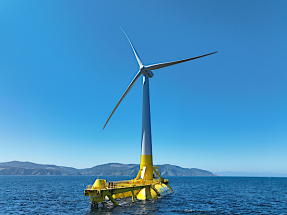
The goal should not be to replace one dependency with another. It is to build a more resilient and increasingly local energy system that can use home-grown renewable electricity effectively and respond more flexibly when global conditions change.
Why is solar so central to the energy transition?
Solar is central because it is one of the fastest and most economical ways to add clean electricity to the energy system. As more transport, heating, buildings and industrial processes electrify, demand for clean electricity will continue to grow. Solar will be essential to meeting it, and the momentum is already clear. The EU added at least 33.8GW of new solar capacity in the first half of 2026, which is 1.9% more than in the same period last year. It is now on track to add 68.1GW over the full year, close to the record set in 2025.
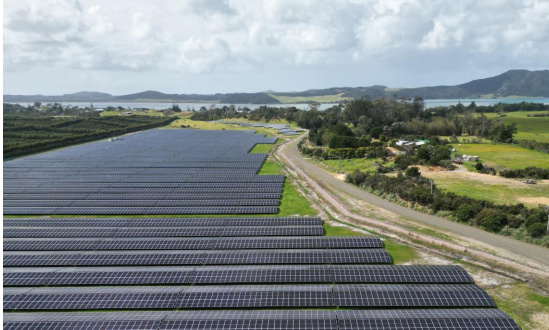
It is also highly versatile. Solar can be deployed on homes, warehouses, schools, factories, offices and large-scale solar farms. This means generation can be developed close to where electricity is consumed, helping communities and organisations reduce reliance on imported fuels and grid power.
But solar is not a standalone solution. Its output varies by time of day and season, so its full value depends on whether the electricity can be used, stored or moved to where it is needed.
That is why the conversation must move beyond solar capacity alone. We need to focus equally on how solar is integrated into grids, buildings and industrial operations.
Why is the recent rapid growth of solar exposing grid congestion and curtailment issues across global markets, not just in the UK?
The challenge is fundamentally one of timing. Solar generation is strongest in the middle of the day, particularly during the summer months, while demand often peaks later, when people return home, businesses continue operating, or energy-intensive processes are running.
As solar capacity grows, that mismatch is becoming more visible. In Europe, solar generation reached a record 129TWh in the second quarter of 2026. This is positive progress for clean-energy supply, but it also contributed to hundreds of hours of negative electricity prices in solar-rich markets. In some markets, system operators are increasingly having to curtail renewable generation to keep networks balanced. Germany curtailed around 1.28TWH of solar generation in May alone, while Spain curtailed more than 2.4TWh.
These pressures have also contributed to hundreds of hours of negative electricity prices across solar-rich markets. Negative prices occur when more electricity is being generated faster than the system can absorb, store or use, reducing its market value and sometimes meaning generators must pay to supply it.
The US is seeing a similar dynamic. Solar generated more electricity than coal for the first time in May, which is an important milestone. But it also reinforces the broader challenge, being that deployment is accelerating faster than grids, storage and flexible demand can adapt. Earlier this summer, analysts warned that as much as 40TWh of solar electricity could go unused, which is enough to power a major city for a year.
This is a global issue, not a failure of solar. It is evidence that energy systems need to become more flexible. Where networks lack capacity, storage is limited or demand cannot shift in response to plentiful renewable power, clean electricity may be curtailed or exported at very low value.
For businesses, this is not simply a grid issue. It increasingly affects energy costs, the return on solar investments and operational resilience. The ability to use electricity at the right time will be just as important as the ability to generate it.
How can digital tools, storage and flexible demand help organisations make more effective use of self-generated power and strengthen resilience in different energy systems?
The starting point is visibility. Organisations need to understand when they generate and consume electricity, when solar output is highest, when demand peaks and which loads can be adjusted without affecting operations.
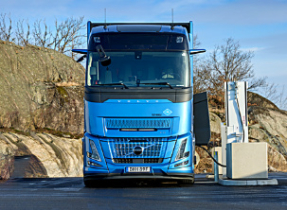
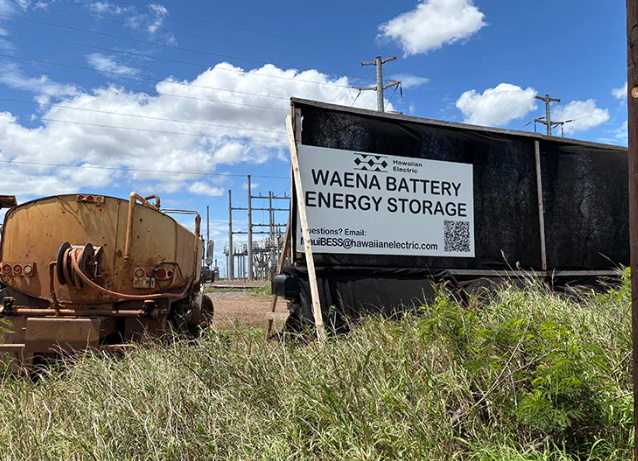
Metering and monitoring reveal these opportunities. They can identify when to charge EVs, pre-cool buildings, heat water or shift suitable industrial processes into solar-rich hours. Battery storage can capture surplus solar for use later, when output falls, demand rises or grid electricity is more expensive.
Digital energy management brings generation, storage and demand together. Software and automation can determine when to use on-site solar, charge or discharge batteries, draw from the grid or temporarily reduce non-essential consumption. AI can improve and automate these decisions by forecasting solar output, site demand and grid conditions using live and historical data.
The application will vary by sector. A manufacturer may shift flexible production, a supermarket may optimise refrigeration, and a logistics depot may align EV charging with on-site solar.
The goal is to maximise use of locally generated renewable electricity, reduce costly grid imports and strengthen resilience to price shocks and supply disruption.
Why does the next phase of solar growth depend on smarter integration of renewables into national grids and industrial operations around the world, not simply adding more capacity?
Installing more solar PV remains important, but generation capacity on its own is only part of the equation. It doesn’t matter how much electricity is generated if it can’t be used. That is why integration and grid modernization are so important. At grid level, this means strengthening networks so they can connect distributed renewable generation more quickly and move power to where it is needed. It also means using better forecasting and digital controls to manage a system in which supply is increasingly decentralized and variable.
For buildings, industries and infrastructures, priority is to make renewable part of operational planning. A building may generate significant power at midday but have its highest demand in the morning or evening.
Integrating solar with batteries, EV charging, heating and cooling systems, and flexible production processes allows more of that electricity to be used productively on site.
This is where digital energy management becomes essential. It can give operators a live view of generation and demand, then automate decisions around when to run equipment, store or draw from the grid. The result is a system that responds to changing conditions rather than treating renewable output as an isolated input.
The next stage of solar growth will therefore be shaped by how well we coordinate generation with grids and end use. More capacity expands the opportunity, and intelligent integration is what turns that opportunity into lower costs, stronger resilience and meaningful emissions reductions.
For additional information: