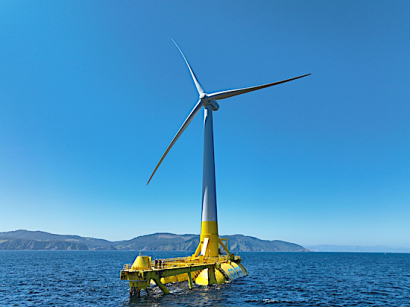
As the technology matures, however, the challenges facing the industry are also changing. Future progress will depend less on proving that floating offshore wind works and more on accelerating its industrial deployment. Manufacturing processes will need to become more efficient, supply-chain capabilities must expand, project costs have to be reduced and innovative solutions must reach the market more quickly. At the same time, Europe’s ambition to strengthen its energy independence and meet its climate objectives is increasing the pressure to shorten innovation cycles while maintaining global technological leadership.
Meeting these challenges requires much more than technological excellence. Floating offshore wind projects involve an exceptionally broad range of stakeholders, from developers, engineering companies and component manufacturers to ports, research organisations, investors and public authorities. Innovation therefore increasingly depends on the ability of all these actors to collaborate effectively across the entire value chain, rather than solely on the capabilities of organisations working independently.
Why innovation alone is no longer enough
Europe has one of the world’s strongest knowledge bases in floating offshore wind. Research organisations continue to advance new concepts in structural engineering, digital technologies and marine operations, while industrial developers refine increasingly mature floating platform designs. At the same time, SMEs contribute highly specialised solutions in areas such as advanced materials, monitoring systems, electrical infrastructure and offshore engineering, while regional clusters have built innovation ecosystems around their own industrial strengths.
Despite this remarkable capacity for innovation, much of this knowledge remains fragmented across regions and organisations. Similar technological challenges are often addressed independently, knowledge generated in one ecosystem is not always transferred efficiently to others, and many SMEs continue to face significant barriers to accessing major industrial developers, demonstration environments or international markets. Consequently, promising technologies often take longer than necessary to progress from development to commercial application, ultimately weakening the competitiveness of the European floating offshore wind sector.
This fragmentation has become one of the industry’s main obstacles. Accelerating innovation is no longer simply about developing better technologies; it also requires stronger connections between the organisations responsible for developing, validating and ultimately deploying them. In this context, collaboration is becoming as important as innovation itself.
A different approach: interregional innovation ecosystems
Against this background, different European initiatives are exploring new ways of organising innovation ecosystems. Rather than focusing exclusively on technology development, they seek to strengthen cooperation between the different actors that make up industrial value chains and create environments in which knowledge, experience and investment opportunities can circulate more efficiently.
This is the approach adopted by I3FLOAT, a European project that brings together Floating Foundation Developers, specialised suppliers, SMEs, research organisations, regional clusters and public authorities, while maintaining a direct connection with the market through its I3 Advisory Board. This body brings together nine leading companies in floating wind development in Europe – EDF power solutions, Elicio, Flotation Energy, Iberdrola, Jan De Nul, Navantia Seanergies, Ocean Winds, Qair and Smulders – which provide a market-oriented perspective and contribute to identifying the innovation challenges to be addressed through the project’s Open Calls. By connecting these different perspectives, I3FLOAT seeks to strengthen relationships between technology developers, future users and companies capable of bringing innovative solutions closer to market.
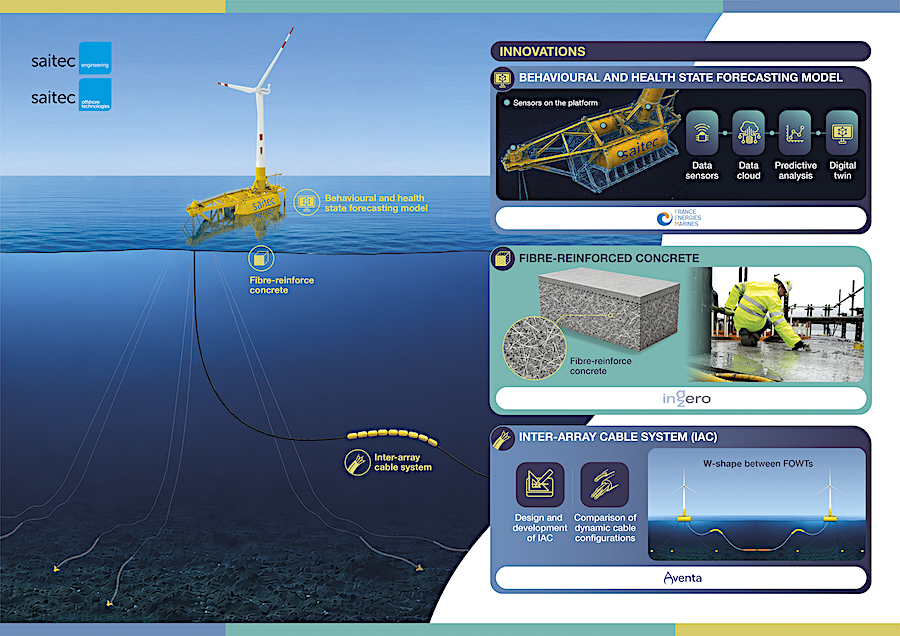
The pilot project led by Saitec Offshore Technologies uses the DemoSATH floating platform as a demonstration environment to validate various innovations aimed at improving the performance and competitiveness of floating offshore wind energy
Through eight European innovation ecosystems across Spain, France, Belgium, Italy, Poland and Bulgaria, I3FLOAT connects regions with complementary industrial capabilities and helps reduce the barriers that have traditionally separated regional innovation communities. The objective is not only to promote technological development, but also to ensure that the most promising ideas can be validated more quickly, attract industry interest and ultimately contribute to strengthening Europe’s floating offshore wind value chain.
From collective intelligence to investment opportunities
Perhaps one of the most distinctive aspects of I3FLOAT is not the Floating Offshore Wind Strategic Innovation Agenda itself, but the collaborative process followed to develop it. Rather than defining technological priorities internally, the project has engaged companies, research organisations, public authorities and other stakeholders from across Europe in a structured dialogue to identify the most relevant innovation needs facing the sector.
The process begins with regional workshops in which participants analyse the technological barriers limiting the deployment of floating offshore wind. These contributions are progressively grouped into broader Innovation Areas and more specific Innovation Lines, which are subsequently prioritised through a collaborative assessment involving representatives from different industrial and regional ecosystems. The result is a shared Floating Offshore Wind Strategic Innovation Agenda that reflects not the priorities of a single organisation, but the collective vision of a much broader European community.
This collaborative exercise has an eminently practical purpose. The prioritised Innovation Lines provide the basis for defining both the Open Challenges and the Specific Challenges, which are subsequently translated into the I3FLOAT Open Calls. In this way, the knowledge generated through dialogue between industry, research and regional ecosystems becomes concrete funding opportunities for SMEs capable of developing solutions to real industrial challenges. The first I3FLOAT Open Call, scheduled for September 2026, will mark the next step in this process by transforming the priorities identified in the Floating Offshore Wind Strategic Innovation Agenda into funded innovation projects. The Agenda therefore does not represent the end of a strategic exercise, but the starting point for new innovation investments with a clear focus on commercial deployment.
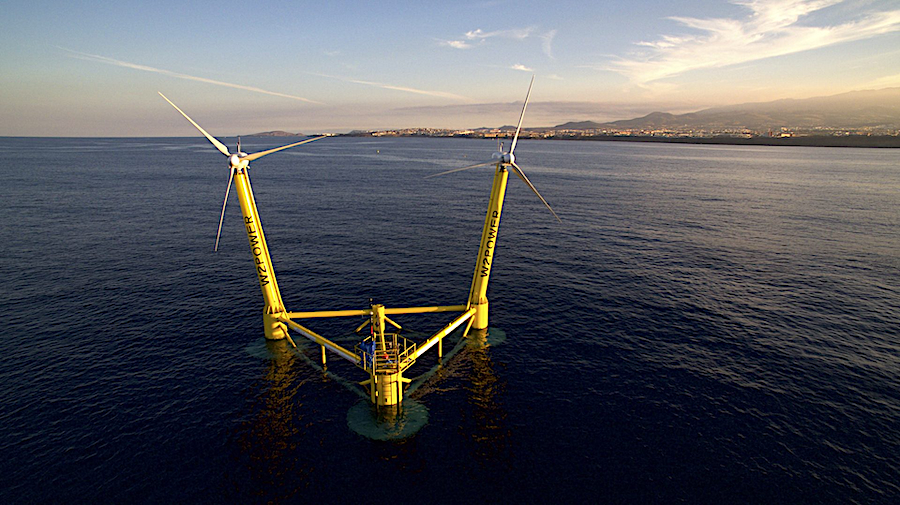
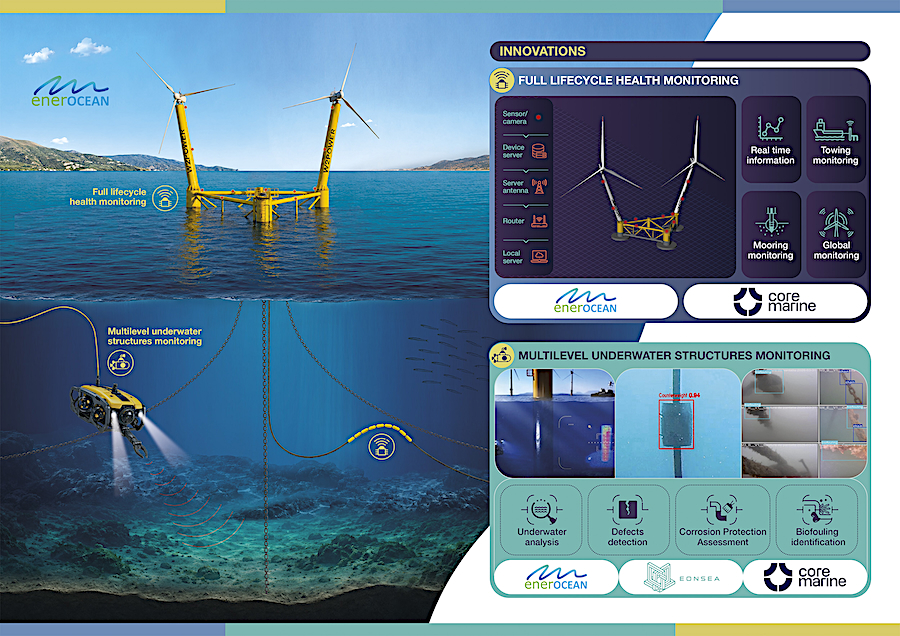
The pilot project led by EnerOcean integrates various monitoring solutions to assess the performance and condition of the key components of its floating wind technology. EnerOcean is one of the four platform developers participating in the I3FLOAT Pilot Hubs, aiming to advance the validation of new solutions under near-market conditions
This first call will extend these opportunities across a broad European geographical scope. Applications may be submitted by companies established in Belgium, Bulgaria, Italy and Poland; Primorje-Gorski Kotar in Croatia; the French regions of Sud–Provence-Alpes-Côte d’Azur (SUD-PACA), Occitanie, Bretagne and Île-de-France; Santarém in Portugal; Nitra in Slovakia; and the Basque Country, Andalusia, Madrid, the Canary Islands, Cantabria and Navarra in Spain. The call will also be open to SMEs from EU Less Developed Regions (LDRs) and Outermost Regions, further broadening access to the I3FLOAT innovation ecosystem.
Demonstrating innovation where it matters
While the Open Calls are designed to attract new innovators, the project’s Pilot Hubs provide industrial environments in which innovations can be validated under conditions close to those of future commercial deployment. Located in different European innovation regions, these pilots focus on technologies that are already approaching market maturity and address some of the main technical challenges currently facing floating offshore wind.
The Pilot Hubs bring together four leading Floating Foundation Developers – Saitec Offshore Technologies, EnerOcean, Eolink and Multi Engineering – and 11 specialised suppliers: IngZero, France Énergies Marines (FEM), Aventa, Eonsea, 24SEA, Haedes, Geodis, Tetrace, Océanide, CoreMarine and Ghenova. Through ten innovation investments, these companies are addressing technological and operational challenges ranging from advanced monitoring and fibre-reinforced concrete to automated manufacturing, supply-chain industrialisation, logistics and mooring systems for complex seabeds. The pilots therefore provide industrial environments in which emerging technologies can be tested, refined and brought closer to commercial application.
Their role extends beyond demonstrating individual technological solutions. The Pilot Hubs create opportunities for collaboration between large industrial developers and SMEs working on complementary innovations in areas such as digital monitoring, advanced materials, structural optimisation, manufacturing processes, logistics or offshore infrastructure. This combination allows new technologies to be tested within an industrial context while simultaneously creating opportunities for smaller companies to contribute specialised expertise that would otherwise be difficult to integrate into large demonstration projects.
In this way, innovation is no longer developed through parallel initiatives, but becomes part of a shared ecosystem in which industrial validation, technological development and market readiness advance together.
Why SMEs matter
Small and medium-sized enterprises have long been one of Europe’s main sources of industrial innovation. Their flexibility, technical specialisation and ability to develop highly focused solutions enable them to respond quickly to emerging technological needs and introduce innovations that complement the capabilities of larger industrial organisations.
However, transforming these innovations into commercial opportunities remains a significant challenge. Many SMEs have limited access to major industrial developers, operational testing environments or international customers capable of validating their technologies and facilitating their scale-up. Even when technically mature solutions exist, establishing the partnerships required for industrial deployment can prove considerably more difficult than developing the technology itself.
For this reason, initiatives such as I3FLOAT seek to reduce these barriers by combining financial support with networking activities, advisory services, interregional cooperation and direct interaction with industrial stakeholders. The objective is not simply to fund individual innovation projects, but to create the conditions needed for SMEs to build strategic partnerships, gain visibility within European value chains and accelerate the market uptake of their solutions. Strengthening SMEs ultimately contributes to increasing the competitiveness and resilience of the entire floating offshore wind ecosystem.
Beyond a single project
Floating offshore wind will continue to evolve through new engineering solutions, larger-scale demonstrators and increasingly ambitious commercial developments. However, the sector’s future success will depend not only on technological progress, but also on its ability to organise innovation more efficiently across regions, disciplines and industrial sectors.
Europe already possesses the knowledge, industrial capacity and entrepreneurial talent needed to lead the global floating offshore wind market. The challenge now is to connect these assets more efficiently, foster collaboration between regional innovation ecosystems and ensure that the most promising technologies can move from laboratories and demonstration projects to commercial deployment within shorter timeframes.
From this perspective, the main contribution of initiatives such as I3FLOAT may extend far beyond the technologies developed during the project itself. Their long-term value lies in demonstrating that collaboration can become a strategic asset capable of accelerating innovation, strengthening European industrial value chains and creating a more integrated ecosystem in which companies of all sizes can contribute to the future of floating offshore wind.
The I3FLOAT project is funded under the Interregional Innovation Investments (I3) Programme – Strand 1 (I3-2024-INV1), co-funded by the European Union and managed by the European Innovation Council and SMEs Executive Agency (EISMEA).
Views and opinions expressed are however those of the author(s) only and do not necessarily reflect those of the European Union or the European Innovation Council and SMEs Executive Agency (EISMEA). Neither the European Union nor EISMEA can be held responsible for them.
• More information: https://claner.es/i3float/
• LinkedIn: I3FLOAT Project
• Subscribe to the I3FLOAT newsletter: https://claner.es/i3float/i3float-newsletter/
Follow the development of the Floating Offshore Wind Strategic Innovation Agenda, upcoming Open Calls, Pilot Hubs and other project activities through the I3FLOAT website and LinkedIn page.