

A year later, it will also extend to works covered by building control approval, such as installing a new roof or renovations for a material change of use.
A Building Regulations circular covering the change was issued on Friday. Revised guidance spelling out the finer details of the new system will come in the spring or summer, following a consultation last autumn.
“This is tremendous news for Wales and I applaud the Welsh Government for their wise decision” said Chris Hewett, Chief Executive of Solar Energy UK. “Solar Energy UK has long lobbied for solar power to be all but mandatory on new homes and buildings, which will soon see far lower bills than would otherwise have been the case.”
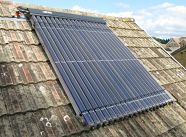
Technically, the Building etc. (Amendment) (Wales) Regulations 2026 do not refer to solar power. However, the requirement for “a system for renewable electricity generation” to be installed on-site means that rooftop solar power will be deployed in virtually every circumstance, being the cheapest and most practical way to comply.
The rules parallel England’s Future Homes Standard and Future Buildings Standard, which are expected to be finalised this year after years of delay. They too will all but mandate solar panels on new homes and buildings. Already, over 40 percent of new homes in England are built come with solar panels.
Scottish rules have been in flux in recent years, with plans to introduce already outdated rules that would not mandate solar installations. Northern Ireland has tightened energy efficiency requirements in recent years, and solar installations are strongly expected to become mandatory.
The rules avoid encouraging the installation of ‘token’ systems of oyears, couple of panels, as can happen under existing energy efficiency requirements. If a system capable of generating at least 720 kilowatt-hours per year cannot be installed, the requirement will not apply. The amount is about a fifth of what would be expected from a typical residential installation of 3.5 kilowatts.
Similarly, building in areas with electrical connection limitations would not be penalised. The rules assume that homes would be unable to supply more than 16 amps per phase, or 3.68 kW, to the grid. Beyond that level, permission from the regional distribution network operator is required via a G99 application.
On the other hand, the law very much encourages developers to go install more than the bare minimum needed for compliance. Doing so will count towards meeting energy efficiency requirements and achieving a higher energy performance certificate rating, so reducing running costs and making buildings more attractive to potential buyers or users. It also avoids the perverse incentive under the current approach that allows the energy performance of a building’s fabric to be reduced if solar panels are added.
For additional information: