

Cascading extraction is the most practical and economically viable solution for delaying EV battery recycling by a few years. This process typically involves disassembling, testing, sorting, grouping and reassembling batteries for reuse. When their declining capacity can no longer meet the high-performance EV requirements, repurposing them for less demanding applications gives them a new lease on life.
Many remanufactured and repurposed second-life batteries become stationary energy storage solutions in power-hungry industrial facilities. Heavy manufacturing leads the way in battery second-life value extraction and deserves more credit.
Heavy industry is driving the second-life EV battery market forward. MarketsandMarkets™ expects it to grow from 25-30 gigawatt-hours in 2025 to 330-350 gigawatt-hours in 2030. Sustainable energy storage is the most promising use case, and the strong demand from heavy manufacturing facilities should accelerate innovation in this emerging field.
The industrial sector has consistently been the largest energy end user. In the United States, industrial activities accounted for 31.16 quadrillion British thermal units in 2024.
Since 1975, manufacturing plants' energy consumption levels have not increased as much as those of the transportation, commercial and residential sectors. Still, heavy industry can single-handedly support the second-life EV battery market with its immense power requirements.
Moreover, heavy manufacturing has been a notorious environmental polluter. In 2022, the industrial sector emitted 9 gigatons of carbon dioxide (CO2). The Net Zero Emissions by 2050 Scenario notes that industrial emissions should drop to 7 gigatons by 2030 for the global energy sector to achieve net zero CO2 emissions by 2050.
Embracing sustainable energy storage solutions is essential to meet these ambitious time-bound targets. The rising availability of lithium-ion EV batteries has opened new possibilities for heavy industry to curb its adverse environmental impact. One of them is the battery energy storage system (BESS).
A BESS stores electric energy in chemical form using batteries. Lithium-ion is the fastest-growing type of electrochemical energy storage.
This chemistry has the highest energy density among all those used in making commercial rechargeable batteries. Other advantages of lithium-ion batteries include relatively low maintenance, no scheduled cycling requirement, low self-discharge rates, no toxic lead and/or cadmium content and no memory effect.
Discerning heavy manufacturing decision-makers know these merits. They intentionally choose retired batteries from light and heavy EVs and maximize their second-life value instead of competing against automakers for new ones to minimize their BESS investments.
Second-life lithium-ion EV battery-powered stationary energy storage solutions are strategically valuable for heavy industry for these five reasons.
A BESS supports peak shaving and load shifting efforts by obtaining and storing cheaper electricity from the grid when demand is low and using the saved energy when demand is high.
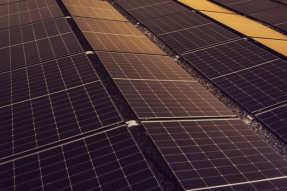
Furthermore, this system maximizes and mitigates the limitations of renewable energy generation solutions. For example, it can store the surplus electricity a solar array generates when the sun is shining and maintain adequate supply levels when output is minimal during overcast conditions.
Drawing electricity from a BESS helps prolong the life of sensitive manufacturing equipment. Some machines are prone to damage due to sharp voltage fluctuations and frequent power quality disturbances.
Smooth, consistent power delivery prevents premature equipment wear, operational defects and shutdowns.
BESS adoption builds grid resilience. The increasing intensity, frequency and unpredictability of weather events increase the risk of unexpected power outages. Civil unrest and war also threaten the integrity of the power infrastructure.
Although a BESS has capacity limits, it kicks in when the primary electricity source goes down to reduce unscheduled downtime and sustain robotics-heavy workflows for continuous productivity.
Cascading battery systems are modular. They consist of battery packs connected through multilevel converters to achieve higher voltages and power levels.
Cascaded designs make it easy to add more battery modules to increase capacity as needed. Hybrid cascaded systems can accommodate different battery types to simplify procurement and scale up amid global supply chain disruptions due to convoluted international logistics and other causes.
Decarbonization is high on the agenda of heavy manufacturing business leaders. In addition to minimizing air pollution at source, generating, storing and consuming renewable energy efficiently is instrumental in lowering the embodied carbon of materials. Selling more eco-friendly products aligns with the environmental, social and governance strategies of industrial clients.
For example, more companies are opting for greener building materials in construction to complement other efforts aimed at reducing CO2 emissions. They prioritize suppliers that have meaningfully integrated renewable energy sources into their operations to earn sustainability certifications, gain favorable press and impress investors.
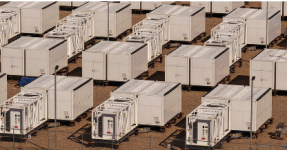
In 2024, Porsche unveiled a 5-megawatt energy storage solution made of used Taycan batteries in its automotive plant in Leipzig, Germany. The system consists of 4,400 second-life batteries from preseries and work vehicles, occupies a space about the size of two basketball courts and can last over 10 years.
Porsche divided the modules into four cube battery containers and connected them to an inverter and a transformer in a medium-voltage system. The battery modules required no technical changes and lend themselves to isolated repairs and replacements if any fail.
The plant’s solar arrays partly supply electricity to this stationary energy storage solution with a 9.4-megawatt peak output. The system supports the facility’s peak shaving measures to avoid costlier grid charges and minimize the need to construct larger electrical networks.
The German luxury carmaker plans to replicate this pilot project in other locations, demonstrate leadership in harnessing the value of second-life EV batteries and inspire others to follow suit.
Delaying EV battery recycling is circular and sustainable. Although BESS designs are not without risks, any challenge is surmountable for ingenious, resourceful and innovative heavy manufacturing players.