

Real-time pricing (RTP) is an electricity pricing structure that enables rates to fluctuate based on the actual cost of generating and delivering power at any given moment.
Some electricity companies, like the Electric Reliability Council of Texas, already offer this pricing structure to their customers. These companies often make fine-tuned pricing predictions and communicate this data to their customers so they can make the right preparations. Price changes often involve balancing supply and demand costs. These conditions mean you may pay different electricity prices depending on your appliance use.
Customers and homeowners will need a smart electric meter to make the most out of this system. This type of meter allows the real-time transmission of information about pricing and power usage.
While this pricing system can be more accurate and lead to more mindful household power consumption, it still isn’t the norm. Some electricity companies lack the infrastructure to support this system, and it can be challenging to communicate the more complex billing mechanisms to consumers.
Despite the challenges of implementing a brand-new system, RTP offers advantages that benefit consumers, service providers and the environment.
RTP usually prices consumption higher during peak periods or when companies opt for more costly energy sources, like peaking power plants that use gas and other fossil fuels.
If consumers know they will get charged more during these times, they will consciously shift their usage to less busy periods when renewable sources are available. As a result, energy demand will lessen during peak periods, reducing generation and transmission costs.
Certain times of day are associated with higher energy consumption. For example, when it gets dark, most homes switch on their lights and appliances, leading to a sudden uptick in power usage.
RTP encourages load shifting, or moving electricity consumption to off-peak hours for lower prices. As a result, the change in demand will be less dramatic and more sustainable.
Energy from renewable sources like solar and wind is more affordable than nonrenewables with high carbon emissions. Encouraging consumers to use energy during off-peak hours when these sources are stronger helps the world shift toward more sustainable consumption.
As the name suggests, a hybrid energy system combines multiple energy sources to create a consistent and reliable power source. Most hybrid systems use solar and wind energy, combining the benefits of both sources while filling each other’s limitations.
For example, solar power is stronger during the day, while wind is often more powerful at night in some places. A hybrid setup is often more reliable and cost-effective than relying on a single source. RTP makes electricity use smarter. Hybrid systems take this progress further by addressing power production and consumption from the source. Below are its key components.
Aside from the sun’s natural brightness reducing the need for artificial lighting in homes during daylight hours, potentially lowering energy costs, the sun is also an excellent electrical power source. Solar power is energy harnessed from the sun using photovoltaic panels. Solar energy systems convert sunlight into electricity, which households can use immediately or store for later use.
Current photovoltaic technology has evolved significantly, with bifacial solar panels now capable of capturing sunlight from both sides, increasing energy yields by up to 27% compared to traditional monofacial panels. These bifacial systems are particularly effective in ground-mounted installations with high-albedo surfaces (like white gravel or snow) that reflect sunlight onto the rear side of the panels.
Modern solar power systems also incorporate Maximum Power Point Tracking (MPPT) controllers that continuously adjust operating parameters to extract the maximum possible power under varying environmental conditions.
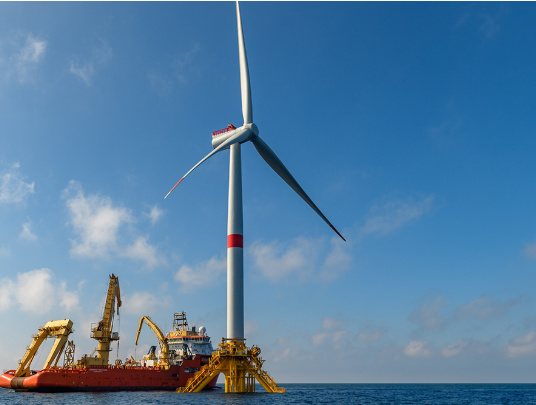
Wind energy systems use turbines to capture the kinetic energy from the wind and convert it into electricity. Wind and sunlight are often available at different times of the day, allowing them to fill each other’s gaps.
Wind turbines are classified based on their axis of rotation: Horizontal Axis Wind Turbines (HAWTs) and Vertical Axis Wind Turbines (VAWTs). According to the International Journal of Applied Power Engineering, HAWTs generally demonstrate higher efficiency ratings than VAWTs, with HAWTs achieving power coefficients between 0.35-0.45 in optimal conditions, compared to 0.15-0.30 for most VAWT designs. This efficiency difference of approximately 25% in favor of HAWTs has been consistently documented in comparative performance studies.
Small-scale residential HAWTs typically operate with rated capacities of 1-10 kW and are designed to maximize energy capture in variable wind conditions. Their efficiency is affected by site-specific factors, including average wind speed, turbulence intensity, and terrain characteristics. For optimal performance, residential HAWTs require proper tower height (typically 15-30 meters or 49-98 feet) to access smoother, more energetic wind flows above turbulent ground effects. Modern small wind systems incorporate features like passive yaw control for wind direction tracking and aerodynamic blade designs that balance energy capture with noise reduction.
VAWTs, while less efficient in terms of absolute power coefficient, offer certain advantages in residential settings. Their omnidirectional design eliminates the need for yaw mechanisms, making them particularly suitable for areas with highly variable wind directions or turbulent conditions. Research published in the European Journal of Sustainable Development Research demonstrated that H-type and Darrieus VAWTs maintain more consistent performance in turbulent urban environments where wind direction frequently changes. This operational advantage can partially offset their lower theoretical efficiency in specific installation contexts.
Energy Storage
Renewable energy sources can be inconsistent — it’s not always sunny, and wind speeds can fluctuate throughout the year. Hybrid energy systems often incorporate storage solutions like batteries to preserve extra power that can be accessed anytime.
Today's hybrid systems increasingly employ multiple storage technologies in combination, known as Hybrid Energy Storage Systems (HESS). These may pair lithium-ion batteries (offering high energy density and rapid response) with flow batteries (providing longer duration storage and extended cycle life) to optimize performance across different time frames. According to research published in Sustainable Energy Research (2024), such hybrid storage configurations can improve system reliability by 23% while reducing lifetime costs by up to 18% compared to single-technology approaches. Advanced battery management systems (BMS) continually monitor cell voltages, temperature, and state of charge while implementing sophisticated algorithms to extend battery life and ensure safe operation.
Sometimes, homeowners may have a backup energy source, such as a generator or a grid connection. These connections are optional but can provide reliable power and peace of mind if the renewable sources are insufficient.
Modern hybrid systems now integrate fuel cell technology as an increasingly viable backup option. Zeppelin Power Systems recently unveiled a hybrid fuel cell power generator that combines PEM (Proton Exchange Membrane) fuel cell technology with lithium-ion batteries, offering 50 kVA nominal output with zero direct emissions when operated on green hydrogen.
Such systems provide clean, quiet backup power with minimal environmental impact compared to traditional diesel generators, while their compact design (often housed in standard 20-foot containers) facilitates easy installation in residential or commercial settings.
Hybrid energy systems are more than an alternative power source. They offer compelling advantages for households and businesses seeking to save money or embrace more environmentally sustainable practices.
Hybrid energy systems use multiple energy sources, helping ensure a more consistent power output. If one source becomes scarce or unreliable, there’s always another. If no energy source can provide enough power, the system can store energy from past excesses. Having multiple energy sources and backups improves home energy optimization and makes this system more stable and reliable.
Advanced microgrid controllers represent the intelligence behind modern hybrid systems, orchestrating the interaction between generation sources, storage systems and loads. These controllers implement sophisticated algorithms for power flow management, frequency and voltage regulation, and seamless transitions between grid-connected and islanded modes. According to technical specifications from leading manufacturers like PXiSE Energy Solutions, today's controllers can respond to changes in system conditions within milliseconds, enabling real-time optimization and significantly improving overall system stability.
Energy systems primarily relying on nonrenewable sources can damage the environment. Switching to a hybrid renewable energy system helps reduce greenhouse gas emissions and prevent further environmental damage. Using multiple renewable energy sources also makes these systems more flexible and able to adapt to future changes. The Noor Ouarzazate Solar Complex in Morocco, Africa’s largest solar facility, minimizes carbon emissions by around 230,000 tons annually.
Life Cycle Assessment (LCA) studies of hybrid renewable energy systems demonstrate the substantial environmental advantages beyond just operational emissions reductions. According to research published in Applied Energy, hybrid renewable microgrids can significantly outperform conventional power systems in most environmental impact categories. The study found that the energy payback time (EPBT) — the time required for a system to generate the same amount of energy used in its production — for hybrid renewable systems ranges from 9 to 15 years, depending on the specific technologies and configurations used.
With an operational lifetime of 25-30 years for most components (except certain solar technologies, which may require earlier replacement), these systems provide a net positive energy return and substantial emissions reduction over their life cycle.
Using a hybrid power system helps reduce grid consumption, making homes less reliant on the grid and its many fluctuations. These systems are essential for remote areas where grid connections are less reliable or for households choosing to live off the grid. By capturing and storing power, entire communities can live more independently. In Australia, First Nations communities living in remote areas are experimenting with creating their own power grid through hybrid energy systems.
China's Taishan Antarctic research station, completed in 2025, demonstrates the ultimate application of grid independence using hybrid energy systems. Operating in one of Earth's most extreme environments, the station combines solar PV arrays, wind turbines, hydrogen production/storage systems, and lithium-ion batteries to maintain reliable power through months of darkness and temperatures below -50°C. The system achieves over 80% renewable energy utilization annually, dramatically reducing the need for diesel fuel transportation to this remote location.
Building a hybrid energy system will require some initial investment. However, renewable energy systems themselves are free. The sun and the wind don’t cost anything, and they minimize your reliance on costly fossil fuels. The system’s energy storage component also helps you avoid peak-hour prices if you’re connected to a community energy system. Combined with RTP, consumers will enjoy lower power bills due to the lower cost of energy production.
According to Lazard's 2025 Levelized Cost of Energy+ Report, the economics of hybrid renewable systems have improved substantially. The LCOE (Levelized Cost of Energy) for utility-scale solar+storage hybrid systems has reached a 10-year low, while gas-fired generation has reached a 10-year high LCOE. For residential and small commercial applications, hybrid systems with properly sized storage components can achieve payback periods of 7-10 years in many markets, with lifetime cost savings exceeding the initial investment by two to three times when accounting for avoided utility costs and potential revenue from grid services.
Hybrid energy systems can work for small homes or large businesses. Their main structure is relatively simple, making it easier to tweak or expand depending on the user’s needs. Small companies can create their system and switch out or add equipment as their power needs change. Homes can have their own setup or connect with neighbors to build a communal energy system. This scalability makes hybrid energy systems an excellent long-term solution for nearly any use case.
Modern hybrid energy systems employ modular architectures that facilitate straightforward expansion as energy needs grow. According to Electric Energy Online magazine, industry standards like IEEE 1547 and IEEE 2030.5 establish protocols for interoperability between energy components, enabling "a common way and data dictionary for talking to devices," which significantly reduces integration costs when adding new equipment. These standardized communication protocols — particularly Modbus and DNP3 — have become fundamental for renewable energy systems, allowing different components to communicate regardless of manufacturer.
As highlighted in Energy Global magazine, this standardization is especially critical for ensuring that renewable energy systems can scale efficiently while maintaining reliability. The emergence of sophisticated energy management software further enhances scalability by providing intuitive monitoring and control interfaces that adapt to growing system complexity and can be accessed remotely through secure web and mobile applications.
More than reducing financial costs, smart energy management requires building resilience and sustainable systems. RTP and hybrid systems can be the building blocks for creating power grids that prioritize people and the environment. Embracing these smart energy choices today can lead to a cleaner, more energy-efficient future.