
Germany is at the forefront due to its significant demand for flexibility associated with decarbonisation initiatives, fostering robust market growth in both the near and long term. Great Britain ranks second, supported by its substantial installed capacity and diverse sources of revenue. Italy’s short-term advancement is largely influenced by the MACSE subsidy, which facilitates long-duration energy storage development.
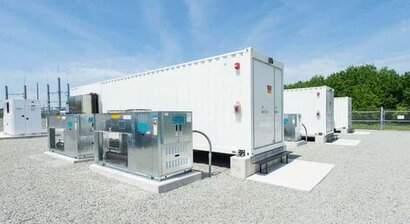
Between 2024 and 2025, Europe’s installed battery capacity increased by over 7 GW to just above 17 GW. Aurora predicts that by 2030, European battery capacity will exceed 80 GW. Longer-duration batteries are expected to become more popular as capital costs fall and flexibility needs rise in decarbonising power markets. Already, 24 billion euros is projected to be invested in 4h batteries from now until 2030, accounting for more than half of expected investment.
“Battery markets in Europe are evolving rapidly” said Eva Zimmerman, Pan-European Senior Research Associate, at Aurora Energy Research. “But they are still at different stages of market development: while Great Britain, Germany and Italy are maturing and as a result face issues such as grid connection constraints, more nascent markets only have their first projects coming online in 2026 or later.”
Anne Geschke, Pan-European Senior Research Analyst, at Aurora Energy Research, added that opportunities for market players are changing as battery deployment across Europe reaches scale.
“Market players with more risk aversion may look to buy into existing projects in more mature markets, while others may look to establish themselves in markets where batteries are gaining traction only just now” said Ms Geschke.
The report highlights that more nascent markets are now gaining traction. Southeastern European markets, such as Romania and Bulgaria, now rank among the top 10 markets for batteries in Europe. Promising battery economics and increased policy support influence this rise in attractiveness.
However, given its rapidly changing landscape, battery deployment is facing new challenges and opportunities. Rising system needs for flexibility and questions around managing grid connection pipelines have been bringing the topic of grids to the forefront. Discussions around flexible grid connection agreements (FCAs) and potential implications for battery economics are ongoing in many countries.
“As realising large-scale projects becomes more of a challenge in markets with few secure cash flows, battery investors are starting to move to more innovative offtake structures such as tolling agreements to secure financing ” added Jörn Richstein, Research Lead, Pan European Power Markets, Policies & Technologies, at Aurora Energy Research.
For additional information: