
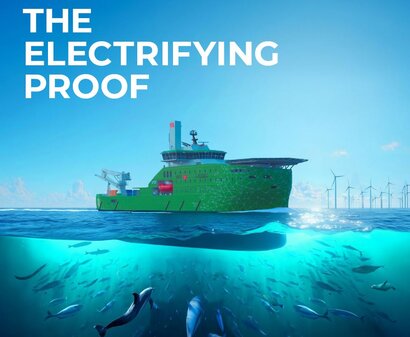
The analysis also finds that when vessels are operated in fully electric mode with offshore charging capabilities, they can cut operator costs by as much as 70 percent.
Hybrid eCSOVs use dual fuel generator sets to charge the batteries that provide the main electrical propulsion for the vessel during operations when charging is not available. In this configuration, engine load and speed can be optimised to reduce energy consumption, fuel costs and carbon liabilities - saving as much as $1 million per year. In fully electrified mode, with offshore charging available to the operator and carbon emissions reduced to zero, costs can be reduced by as much as 70 percent, or an average of $1.8 million savings per year.
European regulation on carbon emissions affecting vessels servicing the offshore wind industry are being rapidly rolled out and will be effective from 2027. Servicing the 45 GW of installed offshore wind capacity in the North Sea will become increasingly costly for wind farm owners without action to reduce CO2 emissions and manage fuel and tax costs.
The technology needed for widespread electrification of CSOVs in the offshore wind industry already exists and is ready to be deployed. Improvements in battery technology have helped to reduce the cost of battery systems and lower the overall build costs of eCSOVs. Collaboration across the industry, involving ports, offshore wind farm developers, turbine manufacturers and the offshore charging equipment OEMs themselves, is vitally important for the growth of offshore charging to realise full electrification.
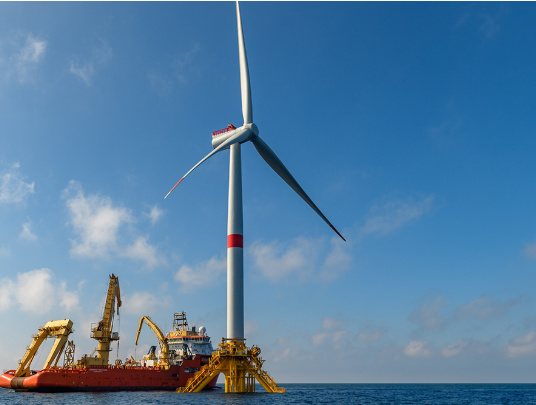
Offshore charging systems have been successfully integrated into wind turbines and can also be deployed via monopile or floating hook-ups, but clear licensing and permitting support is needed for their rollout. By lowering operating expenses and emissions taxes, offshore charging systems will provide a clear return on investment for developers, as long as regulators are able to ensure the economics stack up for them.
“The design of our vessel enables clean operations from day one, without reliance on offshore charging infrastructure, while remaining fully future proofed for connection when it becomes available” said Gavin Forward, New Build Project Director at Bibby Marine. “eCSOVs offer a clear route to lower operating costs compared with conventional CSOVs by reducing energy consumption, limiting exposure to rising carbon costs, and future proofing operations. A battery-first architecture delivers improved operating performance, redundancy, and flexibility over conventional vessel designs (internal combustion engines, for example), while increasing crew comfort and reducing underwater noise emissions. We are proud of the work we have undertaken with experienced technology partners to integrate proven technologies into the first eCSOV for the North Sea market, due to be commissioned in mid-2027, and to help drive the decarbonisation this sector urgently needs.”
Bibby Marine has drawn together technology partners including Kongsberg, Corvus Energy and Stillstrom and laid the keel of its hybrid-electric eCSOV at the Armon shipyard in Vigo, Spain in 2025. CSOVs are a crucial vessel class for the offshore wind industry as it continues to expand and will be tax liable for their carbon emissions under the EU’s emissions trading system and its FuelEU Maritime carbon intensity standards. Driving this vessel class to electrification will be an important step towards lowering costs and in helping the industry continue to be a decarbonisation leader.
“A fleet of zero-emission offshore service vessels should be the essential goal for the offshore wind industry to reinforce its own decarbonisation mission” added Nigel Quinn, CEO of Bibby Marine. “Full electrification of the vessel fleet offers an opportunity for significant savings and has the potential to create budgeting stability for operators at a time when cost controls are crucial to the sustainability of the sector. The offshore wind industry can lead the way on full electrification for industries across Europe. We designed and built this ship to prove that what many thought was aspirational is, in fact, achievable. eCSOVs will empower operators to break free from the volatility of fossil fuel markets, with electricity costs aligned to a farm’s own clean energy production, securing long-term OPEX planning. This is the blueprint for a resilient, zero-carbon future.”
For additional information: