
Recently, the Governor also announced clean truck sales continued to rise in California in 2024, with zero-emission models representing nearly one in four of all new truck sales.
“In the state of California, 94% of people now live within just 10 minutes of an EV charger. We’re proving that electric vehicles are here to stay – even as Trump sells out American innovation and jobs to China,” said Newsom.
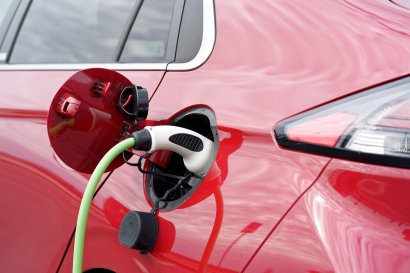
California’s growing number of publicly available EV chargers can be found at highly accessible locations like grocery stores, parking lots, and even gas stations. Shared chargers can be found at apartment complexes, workplaces, sports facilities, and other parking areas. This statewide network of public and shared chargers is in addition to the estimated 800,000 EV chargers installed in single family homes.
“With this expanding public network, EV chargers are becoming ubiquitous in California,” said CEC Commissioner Nancy Skinner. “Our goal is to make driving an EV a no-brainer choice for Californians. They are fun to drive, never need an oil change, don’t cause smog, and it’s getting easier to charge your vehicle with public EV infrastructure.”
State agencies recently published a report in response to Newsom’s executive order reaffirming the state’s commitment to ZEV adoption. California is tearing down barriers to ZEV adoption and providing financial and other assistance to speed up EV charger deployment including in low-income areas and rural communities.
California state agencies continue efforts to speed up EV charger installation and plan for increasing grid demand.
This includes:
California also announced that there are 20,093 charging and hydrogen fueling points for medium- and heavy-duty (MDHD) zero-emission vehicle (ZEV) vehicles across the state. This is an increase of 3,766 (23%) since the last update in February.
While trucks total just 6% of vehicles on California’s roads, they account for over 35% of the state’s transportation emissions and a quarter of the state’s on-road greenhouse gases.