
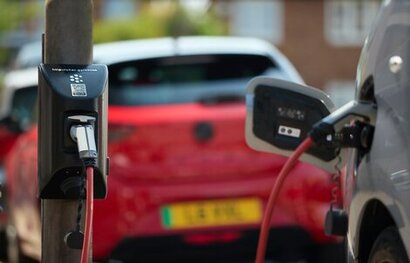
Active charge point sockets rose from 3,879 to 4,978 over the period, while total emissions fell from 904.8 tCO2e to 688.6 tCO2e. The decoupling of network growth from absolute carbon footprint is unusual in a sector scaling as quickly as public charging, where hardware manufacture and installation dominate the emissions profile.
“The two headline numbers in this report mean something important when taken together” said John Lewis, CEO of char.gy. “We grew the network by 28 percent and cut our absolute emissions by nearly a quarter in the same twelve months. For an infrastructure business scaling at our pace, that is the test of this decade: showing you can build quickly without your footprint growing with you. Behind the 14,439 tonnes of CO2 this network kept out of the air are 46 million miles of driving, and almost all of those miles were done by people who cannot plug in at home. That is who on-street charging exists for.”
On an intensity basis, char.gy now emits 138.3 tCO2e for every 1,000 active sockets, down from 233.3 the previous year and 332.9 in its baseline year, a 58 percent reduction that puts the company ahead of its 2030 target of 161.2 tCO2e per 1,000 sockets five years early.
char.gy attributes the improvement principally to hardware design. During the year it completed the transition to recycled aluminium for the casings of its core Flow charge points, reducing embodied carbon in each unit by around 30 percent. Its own-design charge point controller – which targets Scope 3 Category 1 emissions, the company's single largest category – has entered final testing and will be deployed in units from 2026.
The company delivered 14.4 million kWh of renewable electricity to drivers over the year, up from 10.3 million kWh, a growth of 40 percent, well ahead of the 28 percent increase in sockets. Energy delivered per socket rose around 9 percent as a result, indicating rising utilisation rather than simply more hardware in the ground. The network powered approximately 46 million miles of electric driving for 15,686 active drivers and maintained 99 percent availability, in line with the company's long-term target.
Avoided emissions from displaced internal combustion journeys reached 14,439 tCO2e, roughly 21 times char.gy's own operational footprint. The company reports the figure separately, and sets out the assumptions behind it, principally that every char.gy-powered journey would otherwise have been driven in a petrol or diesel vehicle.
2025 was the year the government's Local Electric Vehicle Infrastructure (LEVI) programme began converting council contract awards into kerbside hardware. char.gy's first LEVI-funded charge point, delivered with Brighton & Hove City Council, went live on Zapmap in September 2025.
The company won six further LEVI contracts during the year, taking its cumulative total to eight, and secured around 20,000 sockets under contracts awarded in the period. It has bids submitted for approximately 65,000 more. Its 2030 ambition is a live network of over 60,000 sockets serving more than one million drivers.
Those council contracts carry social value obligations that char.gy expects to deliver over £100 million of localised benefit over the next fifteen years, across education, employment and community investment. A dedicated social value function established at the end of 2024 spent 2025 building delivery processes, with early activity including support for the Brighton and Hove Food Partnership and careers talks for electrical engineering students at Barnet and Southgate College.
For additional information: