
This comes as the Government simultaneously releases its report recommending revisions to the existing UK standard to make it easier to deliver accessible charging that meets driver’s needs.
The amendment – originally tabled by Conservative Peer Lord Borwick and now expanded upon by Government – gives Ministers the power to mandate accessibility standards across all new public electric vehicle (EV) charging points, should voluntary progress by the industry remain too slow.
Speaking in the Chamber, the Minister stated that while the Government has been “working closely with the sector to update the current accessibility standards”, he has “been convinced that we should use the Bill to provide further certainty”. Speaking on behalf of the Opposition, Conservative MP David Simmonds thanked the Government for its “willingness to embrace the debate about electric vehicle charging”.
It comes as the ‘ping pong’ stage of the Planning and Infrastructure Bill begins in the House of Commons – where both Houses of Parliament agree on final amendments to the Bill, one of the final steps before it becomes law.
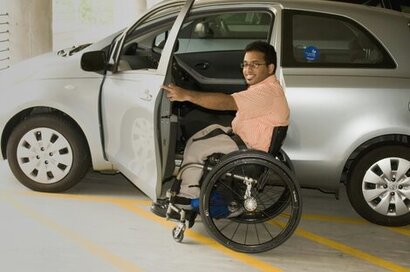
The move coincides with the publication today of the Government’s report recommending revisions to the existing PAS 1899 framework, which sets out detailed accessibility requirements for public EV chargepoints - including minimum parking bay sizes suitable for wheelchair users, placement of bollards, and the positioning and orientation of payment terminals.
PAS 1899 was first published in 2022 as a voluntary standard, but it is estimated only 3 charging sites in the whole of the UK currently fully comply with the standard. A recent survey by EVA England revealed 47 percent of all drivers, with and without disabilities, reported accessibility issues using current infrastructure. The organisation also found over half (51 percent) of drivers with disabilities are finding heavy charging cables at faster charging points hard or extremely hard to use. In a separate poll, a full quarter of Motability Scheme customers – providing specially adapted vehicles to drivers with disabilities – said they would not use current public charging infrastructure over accessibility concerns.
The recommendations follow a year-long review and consultation by Government with industry stakeholders and consumer and disability groups to identify improvements that would make delivery of the standard easier and more consistent.
The amendment to the Planning and Infrastructure Bill fits neatly with that review, granting Government powers to:
Mandate compliance with PAS 1899 in future, if accessibility concerns persist;
Place requirements on all parties involved in the installation of charging points
Require installers to report accessibility-related data, enabling Government to monitor and publish accurate figures on compliance, should it feel the need to.
With 1.35 million drivers with disabilities on UK roads and a ban on sale of new petrol and diesel cars by 2030 (and hybrids by 2035), ensuring accessible public charging is seen as vital to an inclusive transition to electric mobility.
“This is huge progress for all drivers, especially those with disabilities” said Vicky Edmonds, CEO of EVA England, commenting on the announcement. For the first time, we have the Government’s assurance that accessibility won’t be left to chance. These enabling powers will also incentivise greater action by industry to roll out accessible charging. I would like to thank Lord Borwick and Sir Jeremy Wright for championing this cause and ensuring its inclusion in the Bill, and to thank the Government for expanding upon Lord Borwick’s amendment to provide essential future safeguards for the safety, reliability and user-friendliness of public EV charging. EVA England has long supported this ambition, and we’re proud to see such decisive action taken to ensure the public charging network works for everyone.”
For additional information: