
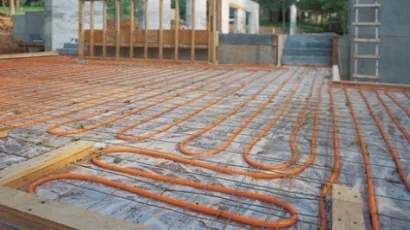
Hydronic heating systems use heated water pumped through a closed-loop, tubed pattern installed underneath the floor, which releases heat to the surface. This method of radiant flooring is the most popular and cost-effective compared to electric or air-based radiant flooring systems, as it typically requires the least amount of energy to operate.
The heat from the floor helps maintain consistent temperatures throughout the home, without fighting drafts or inconsistent airflows that can occur with traditional whole-home heating systems. Warmth from the floor reaches people and objects directly, while encouraging warm-air circulation. While unheated floors can become cold because warm air rises, heated floors maintain consistent heating, allowing users to potentially keep the thermostat at lower temperatures even in the winter to save energy costs without sacrificing comfort.
In some cases, hydronic systems can also be used for cooling. With a similar principle, running water a few degrees below the household temperature can help maintain a cool environment. However, not all systems are equipped with this ability, and keeping hydronic heating systems off during warmer months can be a more efficient and cost-effective way to keep the home cool.
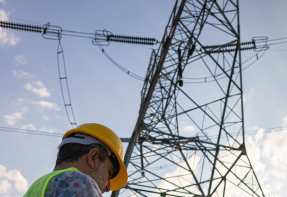
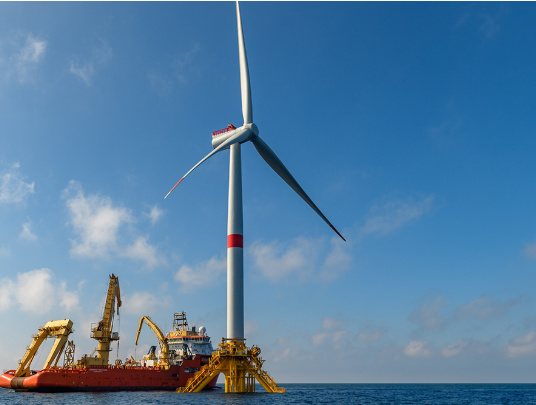
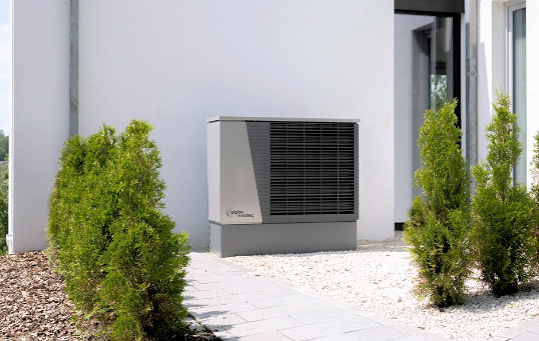
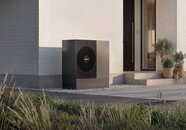
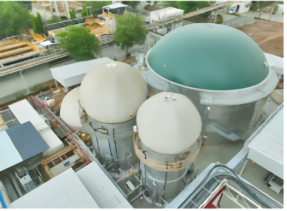
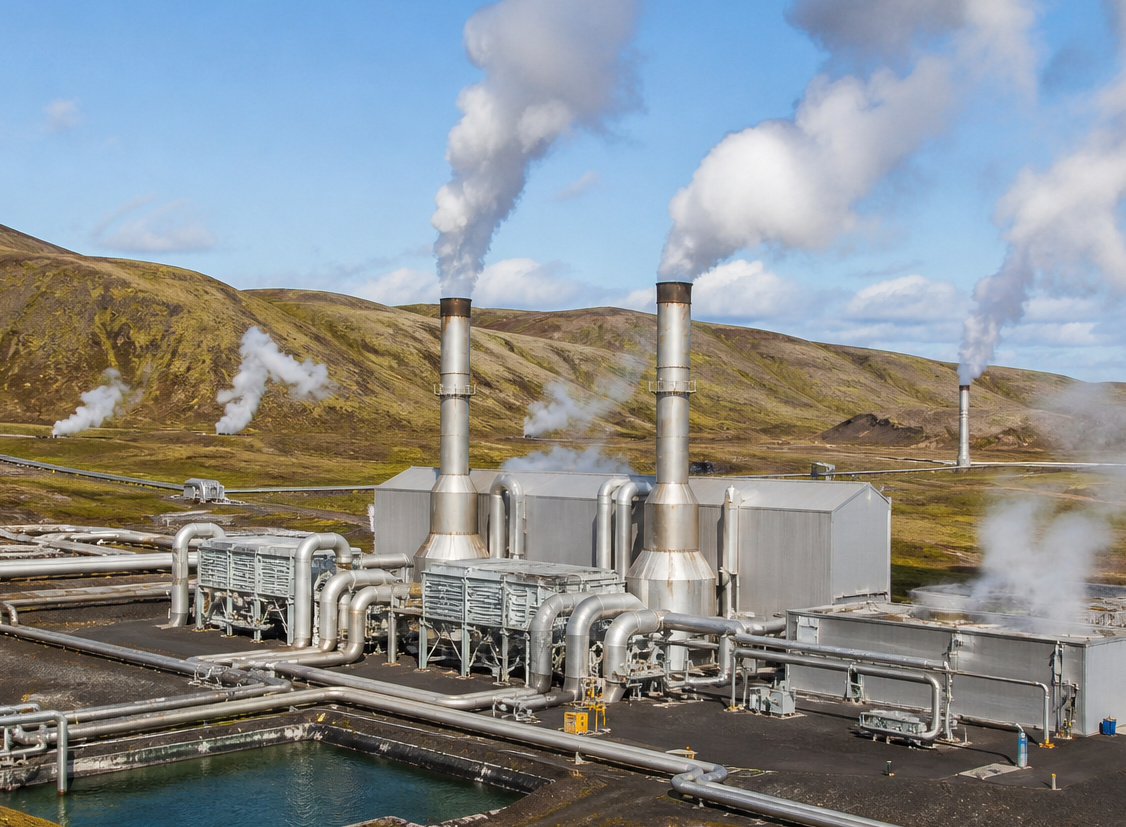
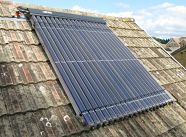
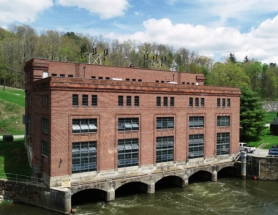
Hydronic floors require a heating system to maintain the water's warmth, and they can utilize various sources to achieve this. While they can run with traditional gas or electric power, integrating the heating systems with renewable energy makes the already energy-efficient system even more sustainable:
Hydronic floors are an ideal heating solution for homeowners seeking to reduce energy consumption while maintaining ideal home conditions.
In tandem with consistent temperature control from the ground up, hydronic radiant floor heating minimizes the use of forced-air systems, which can circulate dust and allergens or create uncomfortable drafts. Homeowners can set the thermostat to a static temperature without frequently adjusting it to accommodate daily or seasonal fluctuations.
Radiant heating and cooling systems are more efficient than traditional systems, resulting in up to 30% savings in energy usage. Furthermore, hydronic, water-based systems are more effective than air-based or electric systems because water is denser than air and can store and release heat at a higher capacity.
Radiant floor heating systems operate more quietly than conventional HVAC systems, heating homes without visible vents or radiators. This can also open up design opportunities, allowing homeowners to structure rooms without planning around heating structures, vents or drafts.
While hydronic floors can enhance a home’s overall comfort and energy efficiency, their effectiveness depends on the entire home’s ability to retain heat. A truly sustainable home maximizes the benefits of hydronics and renewable energy sources, taking a multifaceted approach to ensure a holistic and optimal environment.
Thermal loss from poor insulation or exposed areas like walls, foundations, garages and attics may lead to higher energy usage to maintain comfortable temperatures. Properly insulating and installing energy-efficient upgrades in these spaces can reduce energy loss by up to 71%, allowing the whole house to benefit from consistent temperatures at lower costs.
With sustainability top of mind, homeowners can aim for net-zero, leaving a minimal or non-traceable carbon footprint. With the green building market trending at a 9.7% annual compound growth rate expected for 2028, it is likely that energy-efficient, sustainable and renewable resources will continue to improve homes.
Modern hydronic flooring is an effective and efficient method for home heating. When used in combination with renewable energy and a well-insulated structure, homeowners may find that the system provides a year-round solution for a comfortable and sustainable environment.