
Through three immediate asks and 16 recommendations, Our Geothermal Nation sets out how the UK can deliver on 10 GW of geothermal heat, support up to 50,000 direct jobs and enhance vital energy security.
Our Geothermal Nation makes 16 recommendations across five key areas: policy and regulation; market and finance; knowledge, education and skills; technology development, research and innovation; and infrastructure integration. It sets out three immediate asks of government:
Back the national delivery of geothermal by recognising and resourcing the NGC to lead coordination, adopting the strategy and its targets with accountable delivery arrangements
Commission a costed exploration-risk pilot to bring forward the first wave of investment
Create demand by assessing geothermal for suitable heat network and public-estate projects, including publishing a pipeline showing each project's development stage, opportunities and barriers
The roadmap finds that the main barrier to growth is the deployment environment. Geothermal projects can carry high upfront drilling costs and geological risk at the first well, followed by low running costs once operational. Investors also face uncertain long-term revenues and limited risk-sharing and licensing mechanisms.
With the right support, the roadmap finds that the UK could deliver 10 gigawatts (GW) of geothermal heat and 1.5 GW of geothermal electricity by 2050, supporting up to 50,000 direct and 125,000 indirect jobs.
Around half of the energy used in the UK currently goes on heat with annual demand at around 600 terawatt-hours (TWh). Geothermal supplies only around 2.1 TWh, or 0.3 percent. At the roadmap's illustrative 80 percent availability, 10 GW of heat would deliver about 70 TWh a year, jumping to around one-eighth of the UK's modelled 2020 heat demand.
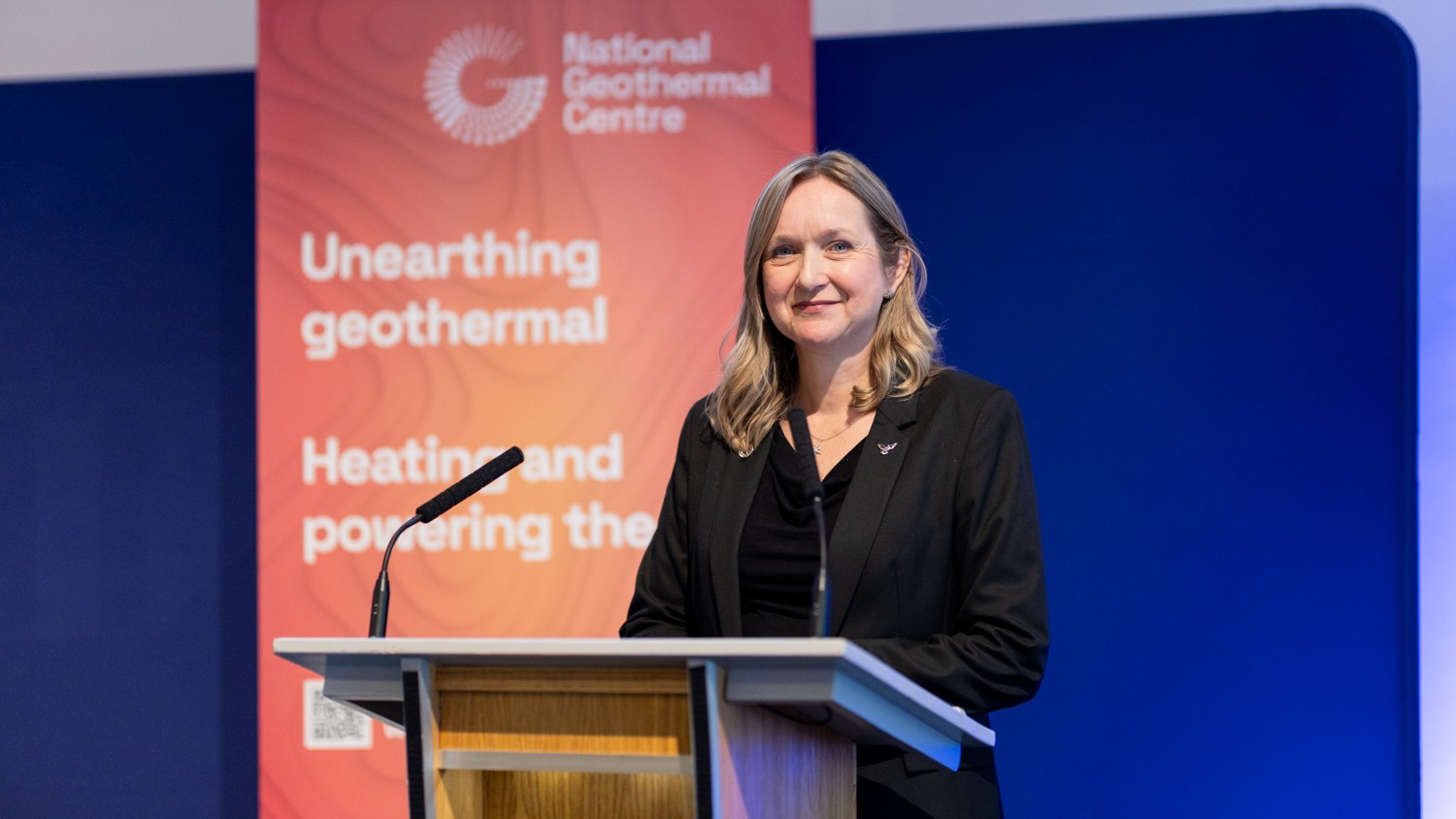
“This is a landmark moment for the National Geothermal Centre and indeed the acceleration of geothermal energy in the UK, which until now has had no national strategy” said Dr Charlotte Adams, CEO of the National Geothermal Centre. “Beneath our feet sits a source of heat and power that no other country can switch off, available day and night. Geothermal offers secure, home-grown energy and this roadmap shows government exactly how to deliver it at scale.”
Commercial-scale projects already operate across varied UK geologies. In Gateshead, a 6 MW mine-water scheme supplies heat to customers at a price at least 5 percent below the equivalent market gas tariff. In Cornwall, the UK's first geothermal power plant began generating electricity at United Downs in February.
The NGC’s newly unveiled roadmap argues that geothermal would strengthen the UK's energy security. The UK has been a net gas importer since 2004 and spent around £50 billion on gas imports following Russia's invasion of Ukraine in 2022. Under the NGC's illustrative 10 GW heat scenario, geothermal could displace about 82 TWh of gas burned in boilers each year: roughly 7.5 billion cubic metres, or around half of the UK's 2025 LNG inflows in energy terms.
The roadmap also sets out how geothermal could retain skills from the UK's oil and gas sector, which is shedding around 20,000 jobs a year from an industry that contributes around £25 billion a year to the economy. Many drilling, engineering and subsurface capabilities transfer directly. The NGC estimates that 75 to 80 percent of a future geothermal workforce would work in vocational, operational, technician and engineering roles.
Heat networks that include geothermal as their heat source are central to the roadmap, in line with the UK Government's target for 20 percent of heat to be supplied through heat networks by 2050. Other recommendations include regional centres of excellence in Cornwall, North-East England and North Yorkshire, Scotland and Northern Ireland; open-access resource mapping building on the British Geological Survey's UK Geothermal platform; and an assessment of how geothermal could supply cooling, heat and power to data centres.
“Our strategic roadmap concludes that the UK already has the essential ingredients to become a leading geothermal nation: abundant resources, proven technology, world-class scientific expertise, an experienced energy workforce and growing demand for secure, low-carbon heat” added Dr Adams. “What the UK lacks is a supportive and investable environment in which to deploy them. Our message to government is clear: back geothermal now, and the UK can turn a proven resource into secure, home-grown heat and power for decades to come.”
To begin delivery, the NGC proposes a 24-month programme. Within six months, a geothermal task group would agree the NGC's mandate as national delivery body. A first-well guarantee pilot and technology development fund would follow within 12 months.
For additional information: