

The initiative is funded by Project InnerSpace and modeled on the petroleum industry's foundational Petroleum Resources Management System (PRMS), which has enabled trillions of dollars in oil and gas investment over the past century.
The GRMS initiative emerges as the top recommendation from Project InnerSpace's two-year discovery process - a comprehensive analysis of geothermal financing barriers that engaged more than 100 subject matter experts and institutions across investment management, oil and gas, geothermal development, insurance, off-take, and policy through workshops, interviews, and funded research initiatives.
The conclusion was unambiguous: developing a shared language that both financial institutions and the oil and gas industry already use and understand to value geothermal resources is the single most important and urgent action the industry can take to unlock capital at scale.
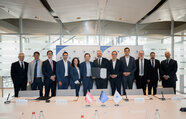
"The financial community already understands how to speak the language of large-scale subsurface energy development through oil and gas. We hope that geothermal resources will soon be included in that same financial and technical framework," said Simon Seaton, CEO of the Society of Petroleum Engineers International. "The creation of a Geothermal Resources Management System (GRMS) is a foundational step toward building the market structures and financing mechanisms needed to accelerate geothermal development."
The SPE Partnership: Standing on the Shoulders of PRMS
The Society of Petroleum Engineers is the natural home for this initiative. In August 2022, SPE issued a statement extending the use of PRMS principles to non-hydrocarbon resources, including geothermal energy - a formal opening of the door that GRMS now walks through. The principles-based architecture of PRMS means that a GRMS framework can classify conventional hydrothermal projects, next-generation geothermal systems, and emerging technologies under a single standard, without requiring technology-specific carve-outs.
Crucially, the financial community will not need to learn a new system to adopt GRMS. Banks, insurers, and the SEC already operate within the PRMS framework, which means geothermal projects can be evaluated by institutional capital immediately, leveraging an existing ecosystem of trust rather than building a parallel one from scratch. An initial GRMS framework is expected to be developed within one year.
Project InnerSpace's analysis of financial bottlenecks identified three categories of barriers limiting capital deployment into geothermal: market-related challenges, resource-related challenges, and regulatory challenges. Across all three, a single theme surfaced repeatedly: the absence of a standardized, publicly accessible, independently verifiable information framework - the kind that capital and insurance markets require before committing at scale - is an addressable barrier that if addressed, would unlock capital markets to geothermal. The GRMS framework will give geothermal projects the same financial credibility that oil and gas assets have long possessed due to the existence of the PRMS. In practical terms, GRMS is the prerequisite that will unlock every other financing mechanism, including:
Standardized contractual frameworks enabled by GRMS are projected to reduce legal and transaction structuring costs for geothermal projects by 40–60% and shorten deal execution timelines by four to five months - translating to more than $100 million in annual legal cost savings across the industry within four years.
A Market at the Inflection Point
Geothermal demand has never been stronger. Recent off-take agreements — including Fervo Energy's power deal with Google and Sage Geosystems' agreement with Meta — signal that data centers and large industrial energy consumers are actively seeking the firm, dispatchable baseload power that geothermal uniquely delivers. Yet capital flow into geothermal remains a fraction of what the opportunity demands - measured in hundreds of millions of dollars per year, compared to the approximately $90 billion of upstream capital expenditure invested annually in U.S. oil and gas, and the $600 billion invested globally. The GRMS is designed to close that gap by giving the financial world the confidence to engage at the scale geothermal requires. The leverage is compelling: every $20 million of catalytic early-stage equity, structured around GRMS-based classifications, is estimated to unlock $200 million in private capital - a 10X multiplier that reflects what market confidence built on standardized information can achieve.
"GRMS is the equivalent of GAAP for accounting — the shared language that gives the financial world the confidence to engage at scale," said Jamie Beard, Executive Director of Project InnerSpace. "With it in place, every other financial mechanism we need to scale geothermal becomes viable."
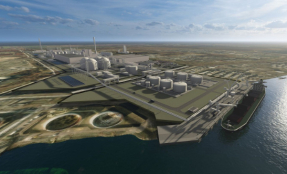
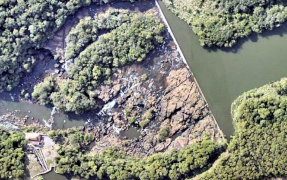
PHOTO: The new GRMS will unlock capital flow into geothermal, with every $20M of catalytic early-stage equity structured around GRMS classifications estimated to unlock $200M in private capital - a 10X multiplier that reflects what market confidence built on widely adopted standards can achieve.