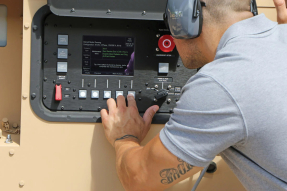

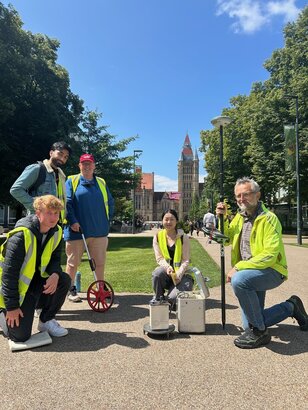
Using legacy data acquired in the 1980s for natural resource exploration below Manchester, together with newly acquired land gravity measurements, a simplified variation of the airborne technology used worldwide by Metatek to detect natural resources, the team have made their findings 2,000 metres below the University of Manchester.
“Our project, and subsequent work, provides the building blocks to create a detailed 3D geological model of the strata beneath the University campus, allowing us to select a drill location that could target high temperature zones due to the burial depth and pressure” said Dr David Johnstone, a geothermal energy specialist and Senior Geoscientist at Metatek. “This type of exploration would unlock a tremendous amount of cheap and clean energy which, if harnessed, could offset a significant proportion of the University’s energy demand of over 100GWh/year, equivalent to the electricity power consumed by 25,000 homes, or Altrincham.”
This energy source, equivalent to approximately 100,000 solar panels, would deliver a similar payback in time to other renewable energy technologies.
“We have calculated that the best access point to create a geothermal well would be an area no bigger than a tennis court, in a corner of Cecil Street Car Park – known in the city for serving the Contact Theatre and Manchester Academy music venue” Dr Johnstone added.
The rapid survey and analysis, conducted in the second half of 2025, has resulted in the most accurate and detailed geological data to show the rock formations and faults beneath the city of Manchester.
Given the significance of the findings, the gravity survey is now proposed to be scaled up and taken airborne using the world’s most powerful subsurface gravity imager, with the hope of making a major impact on the UK’s energy transition targets.
For additional information: