

Funded by UK Research and Innovation (UKRI) and led by the University of Aberdeen, subject to planning consent the project will see an instrumented borehole - a borehole that is equipped with sensors for continuous monitoring of subsurface conditions such as ground movement, water pressure and seismic activity, - drilled to a depth of over 500 metres on King’s College campus in Old Aberdeen.
“Desk studies have previously been carried out on Aberdeen’s geothermal potential” said project co-lead Professor Clare Bond. “This project will be the first to provide the in-field geological data needed to help bring our initiative and others being considered across the city to reality. The borehole will provide direct subsurface temperature, geology and hydrology data and provide the startling point to test the potential for heat generated by granite at depth to be used to heat homes, the University and other buildings across the city.”
The borehole findings will be extended using a new 3D image of the rocks to 5 kilometres beneath the entire city. Natural and man-made vibrations from waves, wind and traffic will be collected over 1-2 months using over 100 small buried seismic nodes. This ‘seismic noise’ will map out the granite and other subsurface structures and ultimately show where geothermal heating will work best in Aberdeen.
Dr David Cornwell, project co-lead and seismologist, has been championing the potential for geothermal heat in the city, assembling a large group of interested and skilled collaborators to deliver the project and de-risk further geothermal developments.
“Coupling borehole data with the city-wide model will reveal the true potential of geothermal heating in Aberdeen” he said. “The data we collect will be openly available, not just helping de-risk future geothermal investment and accelerating Aberdeen’s transition to a sustainable energy future but providing data that can be used to predict the geothermal potential of other places across the UK.
The UKRI funding enables the first phase of a larger vision to integrate geothermal into the city energy mix by integrating technical development and research as part of a just energy transition for all.
The team are looking to secure funding for subsequent phases of the AGFP project which will focus on re-assessing heat poverty information in Aberdeen to see where geothermal can contribute most effectively; empowering and equipping communities to lead on decisions regarding heating and energy in the city; and developing skills and understanding of geothermal to support job creation.
“This innovative project will support the UK's transition to clean energy” added Professor Louise Heathwaite, Executive Chair, UKRI Natural Environment Research Council (NERC). “By combining geoscience research with real-world application, the Aberdeen Geothermal Feasibility Pilot has the potential to transform heating solutions in Aberdeen. It could also provide a blueprint for geothermal potential in granite formations, that, with NERC’s UK Geoenergy Observatories (UKGEOS), will enhance geothermal development across the UK. NERC is pleased to support research that translates environmental science into tangible community benefits, particularly in addressing critical challenges like fuel poverty whilst advancing net zero ambitions.”
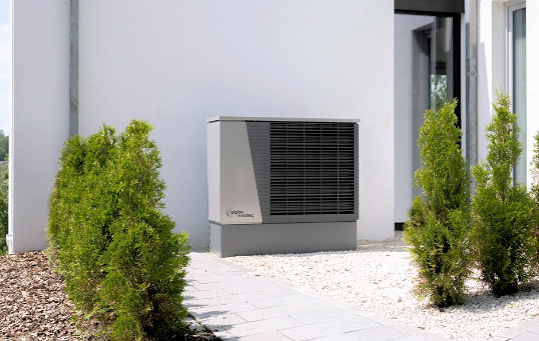
It is not yet known exactly how much geothermal potential there is in Aberdeen, according to Dr Cornwell, but it will be able to contribute to heating across the city because it is always hotter when drilling into the subsurface and heat pump technology will allow this to heat buildings, or offset the starting temperature needed to heat from.
The big question according to Dr Cornwell is how deep the project needs to drill to obtain temperatures that will make a large difference - and how much this would cost. Estimates indicate that it could reach 60-65 degrees C at a depth of 2.5 kilometres beneath the city, but the project team currently do not have any direct measures and the study will not be able to drill that deep. However, the study will be able to give a much better estimate of how quickly the temperature increases with depth.
Currently, heating accounts for approximately 70 percent of the energy demand across Aberdeen's public buildings, universities, and healthcare sites, with an annual heating bill of over £50 million. Switching from gas to geothermal could cut CO2 emissions as well as costs, by up to 90 percent per MWh of delivered heat. This means that even a small amount of geothermal contributing to the energy mix would make a significant difference, while increasing local energy security. Following modernisation of the heat network across Aberdeen, geothermal could be integrated relatively easily. Other European cities, for example Munich, are much further ahead, with geothermal already integrated into district heating.
The pilot draws on expertise from the University of Aberdeen’s Estates & Facilities, Geosciences and Engineering Schools, and the Centre for Interdisciplinary Research and the Just Transition Lab, supported by a broad consortium of collaborator and partner organisations including NHS Grampian, Aberdeen City Council, Aberdeen Heat and Power, Robert Gordon University, Geosolutions Leeds at the University of Leeds, the British Geological Survey, TU Delft Netherlands, the National Geothermal Centre, the Net Zero Technology Centre and Aberdeen Renewable Energy Group, alongside several experienced and skilled geothermal industry partners and individuals.
For additional information: