
“Hydrogen has an essential part to play in global decarbonization, which is why we are committed to driving the technology forward,” explains Joachim Post, Member of the Board of Management of BMW AG, responsible for Development.
The journey towards series production of the BMW iX5 Hydrogen began with a global pilot fleet that was on the road in more than 20 countries from 2023. It covered almost a million test kilometers under extreme climatic conditions ranging from icy cold to tropical heat. The team was able to gain extensive practical experience, delivering valuable insights for the further development of the technology and confirming the road capability of the hydrogen drive.
Backed by these results, BMW is now embarking on a new chapter: transitioning from testing to series production, the iX5 Hydrogen will be symbolic of the successful transfer of innovative drive technologies from the pilot stage to wide-scale use.
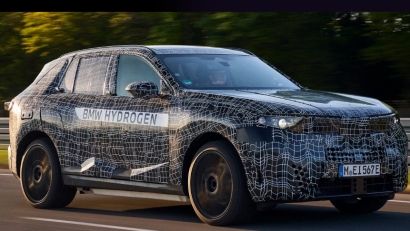
Following the successful trial of the pilot fleet worldwide, the BMW iX5 Hydrogen is now entering series production. It brings together typical BMW driving pleasure and cutting-edge drive technology, at the heart of which is the third-generation fuel cell system co-developed with Toyota.
Thanks to its compact design, enhanced efficiency and superior power, the new system increases range while reducing energy consumption. The first prototypes are already being produced at BMW’s competence centres in Munich and Steyr and lay the foundation for the new drive. The tech site in Landshut supplies key components to ensure its functionality and efficiency.
Michael Rath, Vice President Hydrogen Vehicles BMW Group, emphasizes, “The new BMW iX5 Hydrogen will be a true BMW – pioneering in its class and delivering BMW’s typical driving pleasure.”
As such, it represents the second mainstay of electromobility, after battery-electric vehicles. Hydrogen brings to the existing e-mobility range an additional energy source that also offers a flexible storage for renewable energies to help stabilise the energy system as a whole.
Hydrogen is considered a promising energy carrier with the potential to contribute to global decarbonization. Used to store and release energy from renewables efficiently and flexibly, it can help integrate wind and solar power into power networks more stably. In the automotive sector, it primarily opens up new possibilities for longer ranges and heavier vehicle segments.