

The research review by Chris J. Ballentine, Rūta Karolytė, Anran Cheng, Barbara Sherwood Lollar, Jon G. Gluyas & Michael C. Daly (Ballentine et al), published in the journal Nature Reviews Earth & Environment, explores the processes by which pockets of hydrogen accumulate in the Earth’s crust. Two key mechanisms are responsible for this – water-rock reactions where ferrous iron (Fe2+) is oxidised to ferric iron (Fe3+), particularly in ultramafic rocks (igneous and metamorphic rocks with a low silica content), and radiolysis of water via radioactive elements such as uranium, thorium and potassium. Radiolysis is the dissociation of molecules caused by ionising radiation, leading to the formation of new chemical species.
These two processes occur across very different timescales, ranging from thousands to millions of years to tens to hundreds of millions of years. Different types of terrain across the world have the potential for hydrogen accumulation and its exploitation would have a low-carbon footprint, although continental rock systems do not have the potential for regeneration and so are not renewable. Furthermore, the calculation of hydrogen generation resulting from water-rock reactions is subject to more uncertainty than radiolysis reactions.
However, the research review finds that it is likely that there are enough accumulations of naturally-occurring hydrogen in the Earth’s crust to provide clean energy for around 170,000 years, compared to current patterns of fossil fuel consumption, although it is not known how much of that hydrogen is located in populated areas or has been lost or already consumed, therefore it is accurate to conclude that a proportion of this hydrogen would be unrecoverable.
This is a fairly new discovery, given that until now hydrogen sampling and measuring in the Earth’s crust has been restricted by limited scientific understanding of how much hydrogen is actually available and where it is located. However, the researchers have developed a strategy to evaluate this.
“We have successfully developed an exploration strategy for helium and a similar 'first principles' approach can be taken for hydrogen” said study co-author, Professor Jon Gluyas of Durham University.
The strategy would include an assessment of how much hydrogen is available and the rock types it is located in, how the hydrogen migrates from this rock to form hydrogen pockets, the conditions that enable such pockets to form and the processes that destroy the hydrogen. According to study co-author Professor Barbara Sherwood Lollar of the University of Toronto, those processes include underground microbes feasting on the hydrogen, meaning that it would be important to avoid areas where this is occurring.
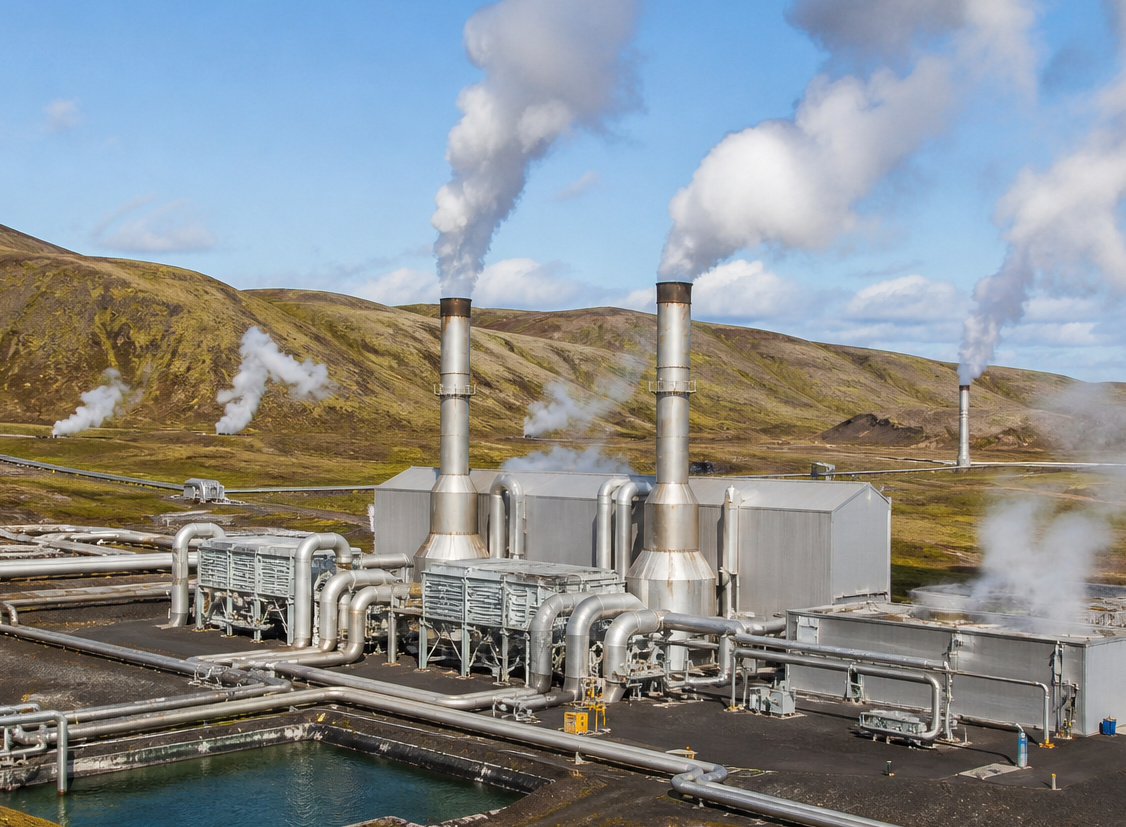
Where such pockets are discovered, the hydrogen could be extracted by drilling and wells, in a similar way to geothermal energy exploitation. This would help to eliminate completely more damaging methods of hydrogen production such as production from fossil fuels. While hydrogen produced from renewable energy facilities such as wind and solar farms, via electrolysis, is also a future method of hydrogen production, it is currently still fairly expensive.
“One successful exploration recipe that is repeatable will unlock a commercially competitive, low-carbon hydrogen source that would significantly contribute to the energy transition” added lead researcher Professor Chris Ballentine from Oxford University’s Department of Earth Sciences. “We have the right experience to combine these ingredients and find that recipe.”
The research team has now established a specialist exploration company called Snowfox Discovery Ltd, aiming to find these naturally occurring hydrogen accumulations.
For additional information: