
These assets convert, handle and transmit copious amounts of power that incite numerous safety concerns, and remote monitoring removes this pain point from the sector to advance renewable energy adoption.
Engineers are embedding smart sensors in BESS systems that alert technicians when the battery is off-gassing. This is a telltale warning sign of a potential fire hazard. The early notification allows workers to manually or remotely issue repairs and system recalibrations to let the system continue operating without escalating to a thermal event.
Case studies show novel technologies can vent off-gas within a 10-second response window and stop thermal runaway over six minutes before it occurs. These mechanisms make systems smarter, automating responses to dangerous stimuli to protect workers, properties and families.
Thermal runaway threatens the growth of BESS technologies and other equipment relying on rechargeable batteries, like electric vehicles. The energy waste feels counterproductive and tarnishes clean power’s reputation for efficiency.
Thermal concentrations are also catalysts for safety incidents, including burns or fires. As the number of households and rooftop arrays increases, this becomes a more urgent concern. Only 26% of families are prepared for a house fire, so minimizing this occurrence in renewable energy is vital.
Smart monitoring alongside AI algorithms can notice gradual increases in thermal runaway that would be difficult to detect. It also enables operators to issue preventive maintenance orders to lower runaway frequency before it causes system degradation or failure.
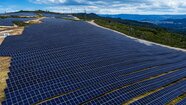
It is challenging to inspect every solar panel in an array without human error and other inaccuracies entering the equation. Smart monitoring allows operators to accurately visualize system health and performance without these deterrents influencing the data. Renewable energy workforces can see information at the module level, pinpointing where anomalies like bypass diode failures are occurring.
This improves safety by keeping operators out of situations with unknown hazards. If they are attempting to locate an issue, like if a panel has become an unexpected hot spots, then workers do not have to take apart equipment and risk injury while finding the source. Panel-level monitoring is beneficial with microinverter systems.
Arc flashes are one of the most common safety issues in solar panel work. To lower the risk, next-generation monitoring systems incorporate arc fault circuit interrupters (AFCIs). The detectors identify problematic electrical arcs within the system. Then, programmers can choose how the technology responds. This can lead to an automatic shutdown, which preserves the integrity of nearby parts while preventing the chance of a fire.
Tests demonstrate how well AI-driven smart systems notice arc faults. Observations of a grid-tied, 1.5-kilowatt photovoltaic system in an emulator had a 99.72% accuracy rate. If integrated into the system, algorithms become more cognizant of specific fault patterns, improving efficacy as they train on each event.
Noninvasive diagnostic and testing measures are a part of smart monitoring capabilities. These let operators know the battery’s health at all times, allowing them to become more familiar with performance trends and what influences damage the system the most.
Most systems misconstrue a battery’s capacity because they do not consider real-time SoC. Smart, dynamic algorithms could refine power flow and preserve battery safety simultaneously. Workers can see cell degradation with analytics-based evidence. AI integrations can also predict how their abilities will be affected based on certain maintenance actions.
The insights give them an idea of the battery’s lifespan and motivate them to repair or retrofit aspects of the machine to promote longevity. It also verifies whether the system is still adhering to fire and safety compliance frameworks, including guidance from Underwriters Laboratories and the National Fire Protection Association.
Solar farms with BESSs have countless points of failure. Therefore, when a fault occurs, discovering the source and isolating it to prevent further damage is a time-consuming process. When a five-megawatt setup spans 25 acres, companies would need to devote copious labor resources to inspect the site. Smart monitoring tools can drastically cut discovery times.
The tools can detect a range of issues to incite proactive responses, including charging cycle concerns, energy losses or system overloads. Then, the system tells workers what happened with the data backing its determinations. The analytics are transferable to other software, like digital twins or CAD programs, to simulate several diagnostic scenarios to find the most effective approach.
Research has proven wireless monitoring systems empowered by LoRa protocols make solar technologies more adaptive and technicians more aware. They can use solutions like smart field notes to see essential electrical parameters and access applications to see historical performance data. The knowledge allows operators to engage with maintenance tasks with higher safety precautions.
Leveraging remote, smart monitoring is critical for the public perception and national support of solar and BESSs. It also encourages digital transformation for maintenance workers and expands system oversight. Safety incidents will only hinder its buildout, which must be avoided given the worsening climate and grid stressors. Renewable energy experts must advocate for smart monitoring for these devices to improve their lives at work and influence the future of clean energy dissemination.