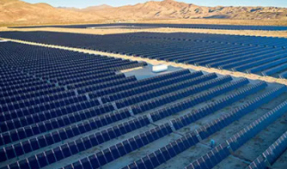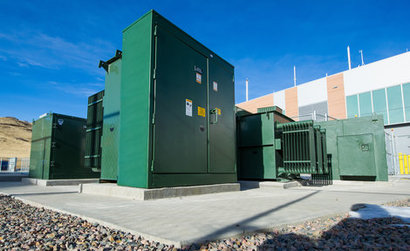

The Executive Order, citing the International Emergency Economic Powers Act (IEEPA), the National Emergencies Act (NEA), and section 301 of title 3, United States Code, targets foreign supplied facilities and control systems for the operation of an interconnected electric energy transmission network and electric energy from generation facilities, including substation transformers, utility-scale and grid-connected inverters, battery energy storage systems and generation turbines.
It applies to foreign supplied electric equipment not just from the date of the order but also with regard to equipment already operating in the US, giving the Energy Secretary the power to compel utilities to identify, isolate, monitor, disconnect, or replace specific components. However, given the impossibility of stripping out all the foreign-supplied equipment already in operation, which could destabilise the grid, the EO promotes the conditioning of operating equipment rather than its total removal.
This means, for example with Chinese-supplied equipment, moving inverters and battery storage in isolated network segments, preventing their engagement with cloud maintenance platforms. It could also entail on-site visits and the logging of commands received by devices.
Trump blamed “certain foreign actors” for “creating and exploiting vulnerabilities in the United States bulk-power system”, which he said could be a target for entities wanting to commit malicious acts against the US. He identified the foreign supply of bulk-power system electric equipment as presenting a threat to the country, including in advanced manufacturing, data centres, artificial intelligence and defence production, arguing that minimal restrictions on the acquisition or operation of foreign-produced bulk-power system electric equipment in the US assist the ability of some foreign entities to create and exploit vulnerabilities.
China is a particular concern, but the EO also targets systems from allied countries that may contain Chinese-manufactured components. Currently, at least 80 percent of the world’s battery energy storage systems (BESS) are manufactured in China, but a total of 24 nations around the world could be targeted
Analysis by Wood Mackenzie argues that the EO could adversely impact the market, representing $22 billion worth of imports since 2025 and increase the stress on the supply chain. The analysis points out that there is already an estimated market shortage of power transformers and substations of 15 percent and 8 percent respectively. It says that the market most affected will be MVA power transformers, a market that has seen huge growth since 2023, with nearly 300 percent growth in power transformers greater than 10 MVA since 2020.
“Utilities have been largely avoiding Chinese suppliers since the first bulk power ban, and the bulk of the impacts will be centred around data centres who have been using Chinese units to minimise lead times” said Ben Boucher, principal analyst, supply chain, for Wood Mackenzie. “The 100 MVA+ segment is where the shortage is already most acute, and it is precisely where data centres have been turning to Chinese manufacturers to manage lead times. However, an important uncertainty remains around the exact scope of the order. It is still unclear how the bulk power definition applies to data centre loads, which means the full extent of the impact on that segment of the market could look quite different depending on how the Department of Energy interprets and implements the rules over the next 120 days.”
The EO has mostly been well received, particularly by the tech industry, with supporters including Anthropic, Microsoft, Google, Cisco, CrowdStrike, IBM, Oracle, Check Point, Cloudflare, and OpenAI.
Its rationale is indeed legitimate, given previous attacks by Chinese entities, for example the hacking group Volt Typhoon which previously infiltrated US critical infrastructure and remained there for at least five years before detection. The similarly named Salt Typhoon managed to infiltrate nine major US telecoms networks, including AT&T, Verizon, and Lumen, as well as accessing their law enforcement wiretap systems.
For additional information: