


Biofouling adds weight, disrupts performance, and can compromise materials, reducing power conversion efficiency by up to 20%, and in extreme cases, causing declines of 30 to 50%. As Ireland and Europe expand investment in marine renewables, addressing this issue is critical for a sustainable energy future.
Dr. Yan Delauré, a researcher at Dublin City University (DCU) and the Water Institute, is leading efforts to tackle biofouling. In a recent publication in Ocean Engineering, Dr. Delauré and his team introduced a new method to test how surfaces withstand biofouling under real-world ocean conditions.
“Anything you put in the sea will start supporting life very quickly,” explains Dr. Delauré. “That growth can change how a turbine performs and even compromises the material’s integrity. Our method allows us to replicate the conditions across a turbine, from the slow-moving root to the fast-moving tip, something previous tests could not fully capture.”
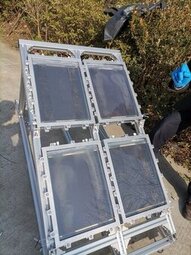
Traditionally, biofouling has been studied using rotating drums or static platforms, methods that fail to reflect the complex forces tidal turbines face in the ocean. The DCU team’s dynamic testing platform better mimics these hydrodynamic stresses.
Their research revealed that different organisms dominate under varying stress levels. Low-stress regions are colonized by hard-shell organisms such as barnacles, which can grow up to 4 millimeters thick and risk turbine failure, while high-stress regions see biofilms and microbial growth. This breakthrough provides a more accurate way to evaluate new materials, coatings, and turbine designs.
The implications extend beyond tidal energy. This testing method could accelerate the development of more durable marine energy systems and benefit other sectors, including offshore wind, aquaculture, and marine sensing technologies.
“We are working to develop solutions that help grow the sector sustainably,” says Dr. Delauré. “Our goal is to make marine energy a realistic and reliable part of our renewable future.”