
The expansion will add approximately 34,200 square feet of manufacturing space and increase PVH USA’s overall Houston store capacity by 42 percent. The additional capacity is expected to enable a 35-percent increase in production of pre-assembled components, allowing the company to support more solar projects while maintaining the quality, consistency and production control that have become central to its US manufacturing strategy.
The investment represents the latest step in PVH USA’s broader effort to bring more of the solar installation process into the factory. By completing more assembly before equipment reaches a project site, PVH USA helps customers reduce field complexity, improve installation predictability and make more efficient use of increasingly constrained construction labour.
“We are investing in additional domestic manufacturing capacity because our customers are asking us to do more” said Alfonso Queipo, CEO of PVH USA. “But this is not simply about manufacturing more products. It is about finding ways to make solar installation more efficient. Pre-assembly has become an important part of that strategy because it allows us to move complexity out of the field and into an environment where we have greater control over quality, productivity and consistency. This expansion gives us the capacity to bring that approach to more customers and more projects while maintaining the standards they expect from PVH USA.”
Since 2023, PVH USA has refined its pre-assembly approach to shift complex construction processes from the jobsite into a controlled manufacturing environment. Rather than shipping numerous individual components to a project site and requiring field crews to complete extensive assembly, PVH USA performs a greater portion of the work in its Houston facilities before the equipment leaves the factory. The result is a more streamlined installation process designed to reduce the number of components that crews must manage in the field. PVH USA’s pre-assembly approach can deliver:
Up to 70 percent fewer on-site components, reducing the number of individual parts crews must receive, organize and assemble.
Up to 44 percent faster installation rates, helping accelerate construction timelines.
Reduced field labour requirements, allowing crews to focus on installation rather than extensive component assembly.
More predictable field execution, with more of the assembly process completed under controlled factory conditions.
Greater agility for field crews, helping minimize exposure to challenging conditions and expedite construction during periods of extreme weather.
The facility expansion provides PVH USA with the physical capacity to extend this approach to more projects and customers as demand for solar tracking systems continues to grow.
“Solar EPCs face mounting pressure regarding labour availability, strict timelines and total project costs” said Rodolfo Bitar, Vice President of Business Development for PVH USA. “Traditionally, manufacturers pushed the assembly burden onto the jobsite. We ask a different question: what work can be done more efficiently before the equipment ever leaves the factory? By managing the assembly of 188 loose parts per row in our controlled manufacturing environment, we remove field complexity and make installation highly predictable.”
The expansion reflects a broader shift in how PVH USA approaches manufacturing. Rather than viewing manufacturing and installation as separate stages of a solar project, the company is using its manufacturing capabilities to address challenges that traditionally emerge in the field.
For solar developers and EPCs, those challenges can include labour availability, project schedules, material handling, weather conditions and the need to maintain consistent installation quality across large-scale projects. Moving more assembly into the factory gives PVH USA greater control over production, quality, scheduling, supply chain coordination and product consistency. It also allows more of the construction process to be completed before crews arrive at the project site.
The Houston expansion also aligns with PVH’s broader global sustainability objectives by increasing domestic manufacturing and reducing the logistical requirements associated with moving products and components through longer international supply chains. By localising more production in Texas, PVH USA can reduce the carbon emissions associated with international shipping and long-haul logistics while increasing domestic content in its products.
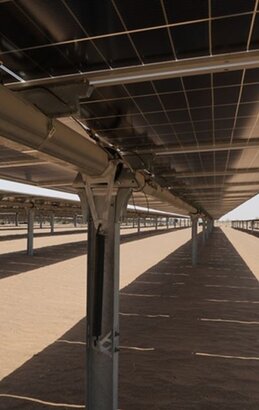
Shifting assembly into a controlled factory environment can also reduce the need for heavy machinery and extensive material handling at the project site, while helping minimise on-site material waste. PVH prioritizes circular-economy principles throughout its operations. Steel accounts for more than 98 percent of the weight of a PVH solar tracker, making the systems highly recyclable at the end of their operational lifespan.
For additional information: