
AI is hungry for data, but it’s also ravenous for electricity. Every large language model, image generator and real-time inference engine runs on dense clusters of high-performance chips that draw enormous amounts of power. As companies rush to develop more advanced models, energy consumption is increasing at a pace few industries have ever experienced.
One analysis warns that global data center electricity demand could more than double by 2030, with AI acting as the primary driver. It’s more than the computing power behind training that’s causing the surge. Inference — the everyday process of running AI models to answer questions, generate images or power background systems — is becoming an always-on demand that dwarfs even the original training cycles.
This strain highlights a growing problem — today’s electrical grids were built for a different era. Utility operators report that some regions are already struggling with capacity constraints as clusters of new data centers simultaneously request gigawatts of power. Add in the cooling systems, backup power and advanced hardware density inside these facilities, and it becomes clear why AI’s energy footprint is approaching industrial-sector levels.
If AI is going to keep expanding, the energy behind it must be reliable, affordable and clean. Fossil fuels can’t meet all three criteria, especially at the scale required to support exponential AI growth. Their volatility, emissions and long-term cost trajectory make fossil fuels a poor match for the next digital revolution.
Renewable energy, however, already checks those boxes. Solar and wind are now among the most cost-effective sources of new electricity in the United States, and their scalability aligns with the enormous power needs of the tech infrastructure. Large providers are building solar arrays adjacent to data center campuses, while wind developers sign long-term power purchase agreements to feed high-density server clusters across the Midwest and Great Plains.
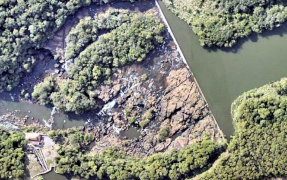
Intermittency remains a concern, but storage technologies, including grid-scale batteries and pumped hydro, are rapidly improving. Meanwhile, geothermal and hydroelectric power offer stable baseload options in regions suited for them. Countries like Norway have already leveraged their abundant hydropower to attract data center investment, demonstrating that pairing clean energy with high-tech industries is both possible and economically advantageous. For AI to grow responsibly, renewables are the only pathway that truly scales.
Society is witnessing the early stages of a new industrial transformation, one where digital intelligence and sustainable energy accelerate each other. AI requires substantial amounts of electricity, but it also helps renewables perform more efficiently. This feedback loop is a key reason experts describe the moment as an “energy awakening.”
AI-driven forecasting tools can predict wind speeds, sunlight availability and demand spikes with remarkable accuracy. Grid operators use these predictions to balance supply and demand more efficiently, reducing the amount of wasted renewable energy.
The combination of clean energy and AI also unlocks new efficiencies across entire power systems. From smarter battery dispatching to intelligent load shifting, AI allows renewable-heavy grids to operate with stability that was once considered impossible. When scaled, these innovations could refine what modern grids are capable of. Together, AI and renewables are addressing a pressing issue and redefining the future of global energy.
AI may feel like a software revolution, but beneath every model is a massive physical footprint that most people never see. Training advanced neural networks requires sprawling data campuses filled with power-hungry chips, intricate cooling systems, thousands of miles of cabling and industrial-grade electrical hardware. This physical infrastructure is the backbone of the AI era and right now, it’s straining under unprecedented demand.
The U.S. grid was not designed for clusters of new facilities requesting hundreds of megawatts at a time. In some regions, utilities face backlogs of five to 10 years to connect new data centers, simply because the existing transmission lines and substations cannot deliver enough power.
A modern AI-driven data center is essentially a small city in terms of energy consumption. Upgrading transmission corridors, adding new transformers, reinforcing substations and building climate-resilient infrastructure is the only way to ensure AI growth doesn’t outpace grid capability. These upgrades also support renewable energy integration, as clean power requires wide, flexible transmission networks to move electricity from solar- and wind-rich regions to population centers.
Even outside the data hall, infrastructure decisions have a significant impact. With the construction sector accounting for 37% of global carbon emissions, many AI companies and research institutions are investing in energy-efficient buildings that reduce cooling loads, improve insulation and support rooftop solar.
This is where building materials become part of the clean-energy conversation. For example, when organizations evaluate the long-term cost of replacing roof shingles during energy-efficiency retrofits, they make decisions that affect lifetime energy use, resiliency and overall sustainability.
High-performance roofing reduces heat absorption, supports renewable integrations and makes AI infrastructure more energy resilient, showing that sustainability begins at the architectural level just as much as at the grid level.
AI’s rapid expansion is both pressuring energy systems and accelerating some of the largest clean-power investments the world has ever seen. Companies want data centers that run on reliable, emissions-free electricity, and developers are responding with infrastructure that rivals entire utilities in size.
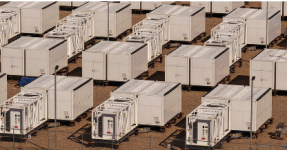
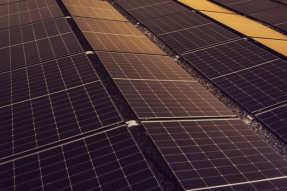
Solar energy has become a cornerstone of AI-powered infrastructure due to its affordability and scalability. In states like Texas and Nevada, developers are constructing enormous solar farms adjacent to new data campuses, creating hyper-local clean-energy ecosystems. This proximity reduces transmission losses and stabilizes power supply, while also enabling 24/7 operations when paired with storage. Some projects exceed one gigawatt of capacity, enough to power hundreds of thousands of homes or several next-generation AI facilities.
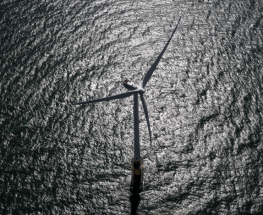
Wind energy maintains high potential for long-term power purchase agreements, especially among cloud providers. These multi-decade contracts lock in stable pricing and guarantee that data operations are supported by renewable electricity. The Midwest and Great Plains, with their strong, consistent winds, have become hot spots for these collaborations. The combination of wind’s high capacity factor and AI-driven forecasting makes it one of the most reliable renewable options for powering continuous digital workloads.
While solar and wind dominate headlines, small modular reactors are emerging as a potential clean baseload source. These compact nuclear units provide stable, carbon-free electricity with a significantly smaller footprint than traditional nuclear plants. Several tech companies have begun exploring smaller-scale nuclear reactors as part of long-term energy planning. Although still in development, they could help bridge the gap between variable renewables and the relentless demand for AI power, especially as policies evolve and pilot projects scale.
As demand accelerates, grid operators warn that many regions are approaching capacity thresholds that could lead to delays, rising electricity prices and stress on aging infrastructure. Data centers — which are driven largely by AI workloads — could consume double today’s share of electricity.
To keep pace, utilities are deploying advanced grid management technologies:
The future grid must be more flexible, more connected and more renewable-ready than anything built before.
The AI revolution is a story of energy and technology. Without dramatic investment in renewable power, grid modernization and sustainable infrastructure, AI’s next breakthroughs could be stalled by something as fundamental as electricity. However, clean energy enables AI, and AI helps renewables work smarter, creating a powerful feedback loop for efficiency and sustainability. The smartest code in the world is only as effective as the electricity that powers it.