
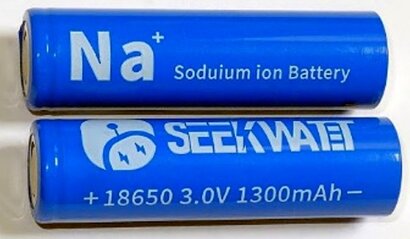
Sodium-ion batteries (SIBs) are a promising, low-cost alternative to lithium-ion batteries for both personal electronics and large-scale energy storage, but their adoption is limited by their poor stability in air and water.
The Japanese research team found that doping the SIB cathode material Na2/3[Fe1/2Mn1/2]O2 with calcium can improve stability and performance, paving the way for more practical and sustainable battery technologies.
Rechargeable batteries are a fundamental part of today's technological landscape, powering everything from our personal devices to large-scale infrastructure. While many types of rechargeable batteries exist, lithium-ion batteries (LIBs) are by far the most ubiquitous, owing to their outstanding energy density, long life cycle, and low self-discharge rate. However, lithium is rather a scarce element with a very uneven distribution throughout the world, prompting research into batteries made from other materials.
Over the past decade, scientists have focused strongly on sodium-ion batteries (SIBs), which offer a compelling alternative to LIBs. The main advantage of SIBs is the abundance of sodium, which is present in seawater and is much more affordable and safer than lithium. This makes SIBs a promising option for large-scale energy storage, such as for renewable energy grids. Despite these promising qualities, SIBs have their drawbacks. A major challenge is the stability of the cathode material in air and water, which can degrade the battery’s performance and lifespan.
In a recent study, a research team led by Professor Shinichi Komaba, Assistant Professors Zachary T. Gossage and Changhee Lee, Project Scientist Shinichi Kumakura from Tokyo University of Science (TUS), Japan, made substantial progress toward addressing this pressing limitation of SIBs. Their study was co-authored by Ms. Monalisha Mahapatra, a second-year doctoral student from TUS, who has made remarkable contributions to this research. Their paper, published online in the Journal of Materials Chemistry A on August 29, 2025, reports a new way of enhancing the air and water stability of Na2/3[Fe1/2Mn1/2]O2 (NFM), a very promising composition for the cathode material of P2-type SIBs.
Their approach centres around replacing some of the sodium (Na) ions in NFM with calcium (Ca) ions—a technique known as ‘doping.’ Even though the final concentration of Ca ions is low compared to the overall weight of the electrode (less than 2 percent), doping can have a marked impact on various properties.
Experiments showed that Ca-doped NFM had a higher rate of performance than regular NFM while maintaining a high discharge capacity. Most importantly, Ca-doped NFM exhibited high stability in air and water. Whereas 2 days of air exposure made regular NFM lose 35 percent of its discharge capacity, no losses were observed in Ca-doped NFM.
To understand the underlying reasons behind these improvements, the team conducted a detailed analysis, revealing the interesting behavior of Ca in NFM.
“According to our surface analyses, the improved stability appears to stem from spontaneous Ca migration during air exposure, which leads to the development of a protective Ca-enriched surface layer that suppresses the decomposition processes, such as Na+/H+ exchange and Na deintercalation” said Professor Komaba. “This newly explored mechanism appears to be quite effective for mitigating surface degradation reactions in layered oxides.”
The team also noted that Ca doping improved crystallinity and increased interlayer spacing in NFM, which contributes to a better electrochemical performance. Also, the protective layer shields the NFM during storage before battery assembly.
By discovering the protective effects of Ca doping in NFM, this study could pave the way to the widespread adoption of SIBs.
Ca materials are abundantly available and they can be easily incorporated into NFM using synthetic techniques, without increasing the cost substantially. This would significantly benefit renewable energy generation by providing a more sustainable and cost-effective solution for large-scale energy storage.
Furthermore, it would solve lithium scarcity issues, ensuring a stable supply chain for rechargeable batteries for a wide range of electric and electronic devices.
“I believe that the outstanding results achieved in such a short period of time by Ms. Monalisha Mahapatra, a student from India through JICA, were due to both her own hard work and the support system of the entire laboratory” added Professor Komaba.
Future studies in this field will hopefully allow researchers to tap into the full potential of doping in SIBs.
For additional information:
Tokyo University of Science (TUS)
Calcium Doping Solves Stability Issues in Sodium-Ion Batteries (YouTube video summary)