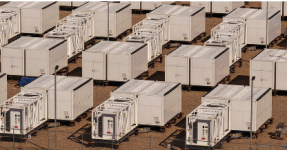

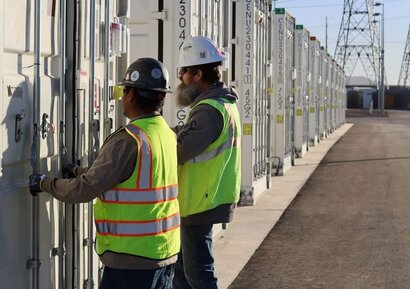
This has brought total installations in the first half of 2026 to 30.8 GWh. Utility-scale energy storage capacity has nearly doubled from 88 GWh to 165 GWh in the first 18 months of the Trump administration, as grid operators, utilities and energy buyers turn to storage to strengthen reliability and meet rising electricity demand.
Demand for energy storage is outpacing expectations, prompting an 11.5 percent increase in the report’s forecast through 2030 to 683 GWh. The upward revision comes as the industry continues to set deployment records, with more than 10 percent of all energy storage capacity currently installed in the US coming online in Q2 alone.
“This record growth highlights that storage is a powerful reliability tool that strengthens our energy security, meets rising demand and puts downward pressure on electricity bills” said Tim Pawlenty, president and CEO of the Solar Energy Industries Association.
More than 74 percent of the energy storage capacity installed in Q2 was built in states won by President Donald Trump in 2024, led largely by Arizona, Texas, and Utah. Arizona led the country with 6.2 GWh of new storage installations in Q2, the strongest quarter for any one state on record. Arizona, which has the nation's fourth-largest solar market, is increasingly pairing its abundant solar resources with storage to capture more homegrown power, meet rising demand, and help keep electricity costs down.
“Energy storage is no longer just a California and Texas story anymore” added Shan Tomouk, BESS & Energy Lead at Benchmark Minerals. “We’re seeing strong pipeline growth in Arizona, Nevada, Oregon, Colorado and several other states.”
Battery energy storage supplied more electricity to the grid in the first eight months of 2026 than in all of 2025. During periods of extreme heat in states like Texas and California, storage has helped provide power when demand is highest, supporting grid reliability and helping protect consumers from price spikes. Texas and California installed 3.8 GWh and 3.6 GWh of storage, respectively, in Q2.
For additional information: