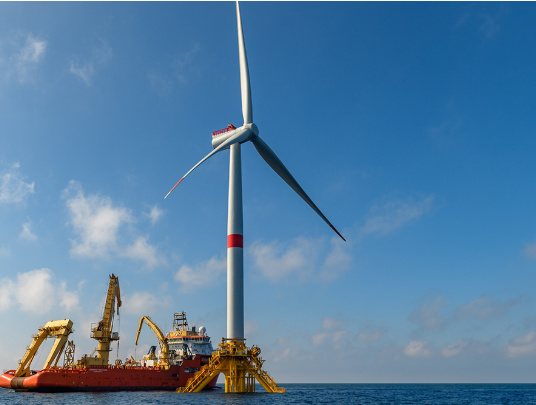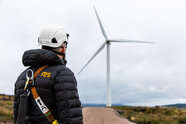

Worldwatch Institute has conducted an analysis of wind energy trends since 1980, revealing that last year, for the first time, wind power was Europe’s leading source of new electric capacity (with 8,877 MW added), well ahead of natural gas at 6,939 MW and coal at 763 MW.
By the end of last year, wind power represented 8% of EU power capacity, enough to generate 4.2% of the region’s electricity in a normal wind year. Asia accounted for almost one-third of global wind capacity, with
Nevertheless, taking into account population size, the data show that despite its greater capacity, wind energy only produces a little over 1% of
GWEC expects
Approximately 400,000 people are employed in the wind industry worldwide, although such project financing difficulties, could lead to a cut in this figure in the short term. Nonetheless, the economic crisis has resulted in cheaper material and construction costs that are forecast to lead to falling turbine prices, which could potentially boost long-term installation projections.
“Of course the financial crisis is affecting the wind energy industry, just like any other sector. At the same time, the outlook for wind energy is very healthy,” said Arthouros Zervos, GWEC's chairman.
For additional information: