
wind

WavEC Urges Portugal to Fast-Track Offshore Wind 

WavEC Offshore Renewables has issued a call for urgent action to accelerate the development of Portugal’s offshore wind industry, stressing that clear policy direction, financial certainty and industrial readiness must be aligned as a matter of priority.
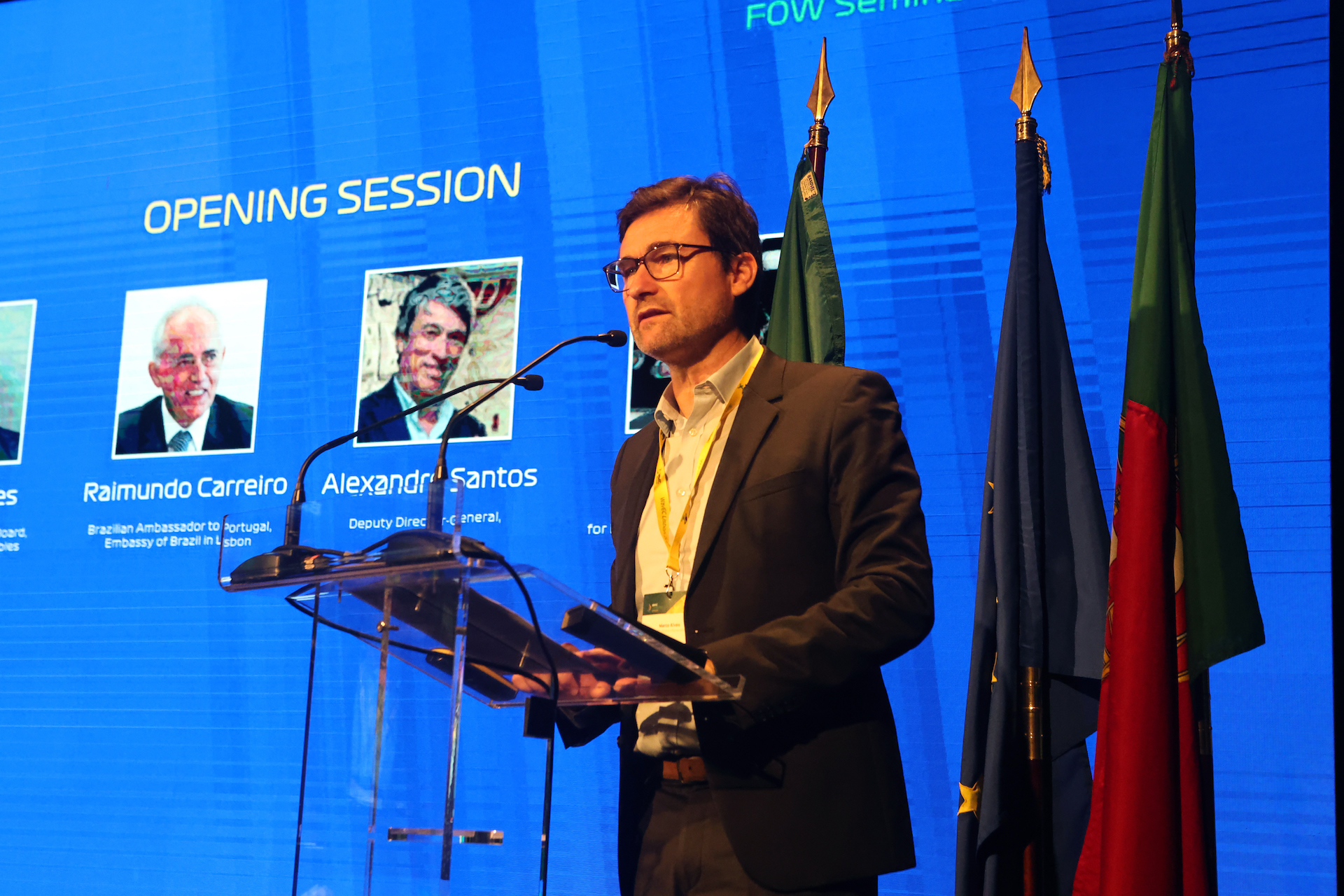
WavEC CEO Marco Alves

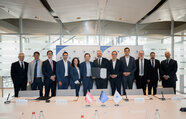
The announcement follows the success of WavEC’s 2025 Annual Seminar, held on December 4 at Lisbon’s Museu do Oriente, bringing together policymakers, investors, researchers, and industry leaders from Portugal, Brazil and the European Union.

WavEC CEO Marco Alves said that despite its vast offshore wind potential, Portugal risks falling behind unless it moves swiftly from planning to execution. Immediate investment in regulatory clarity, port infrastructure, fabrication yards and supply-chain development is essential to create a competitive domestic offshore wind industry and attract international capital, he added.

“Portugal stands at a decisive inflection point," said Alves. "We have the science, the engineering talent and the natural resources to become a global leader in floating offshore wind, but ambition alone is not enough. The viewpoint from experts at this year's seminar was clear. We need bold coordinated action in specific areas including enforceable regulatory frameworks, predictable financing mechanisms and rapid industrial deployment."

The WavEC Lisbon 2025 event co-organized by the Embassy of Brazil was titled “Portugal and Brazil: Transatlantic Alliance to Boost Floating Wind”. It reinforced the strategic importance of Portugal-Brazil cooperation focusing on shared investment, R&D collaboration and the creation of deep-water offshore wind corridors across the Atlantic.

Experts speaking in the four seminar sessions outlined concrete steps needed to turn ambition into reality:

  • In the Investment & Financing session, voices including Daniela Ribeiro (DNV), Cristina Ortuño (ERM Iberia), Jean‑Paul Prates (CERNE), Elbia Gannoum (ABEEólica), and Pedro Amaral Jorge (APREN) stressed the need for stable, predictable regulatory frameworks and tailored public–private financing instruments to de-risk floating wind investments.
  • During the Industrial & Supply-Chain session, speakers David Carrascosa (SAITEC), Javier Abanades (TYPSA Offshore Energy), Pablo Alcón Valero (Qair Offshore Iberia), Sofia Simões (LNEG), Henrique Osorio (Firjan) and Nuno Vaz (TechnipFMC) called for early investment in fabrication yards, port infrastructure and optimised offshore logistics, all of which are essential building blocks for competitive project deployment and the development of domestic value chains.
  • In the Innovation & Technology session, Andreia Fernandes (ATE – Aliança para a Transição Energética), Anita Leite GAZELLE Wind Power, Manuel Rocha (CorPower Ocean), André de Almeida Santos (Indico Capital) and Ricardo Pereira (WavEC Offshore Renewables) underlined the importance of scaling up demonstration projects, hybrid solutions (wave plus wind), digital operations and R&D collaboration, all critical to lowering costs and improving the bankability of offshore wind. The EU-funded WinDTwin project was highlighted as a model to follow.
  • Meanwhile, during the Environmental & Social Pathways session, speakers from environmental licensing bodies and marine ecosystem specialists such as Domingos Leitão (STRIX International), Alexandra Silva and Pedro Brito (IPMA), Sérgio Iani Godinho (Veritas Group), João Silva Rodrigues (SGS) and Thomaz Xavier (Research Centre for Greenhouse Gas Innovation - RCGI) outlined best practices for sustainable deep-water deployment, stressing the importance of robust environmental impact assessments, meaningful stakeholder engagement and clear, predictable regulation.

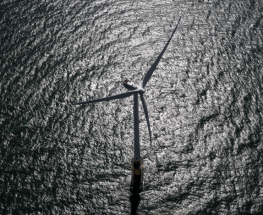
Portugal has significant offshore wind potential, with technical estimates of 25-30 GW, mainly in deep waters suitable for floating wind. Key preparatory steps have already been taken, including approval of the PAER (Offshore Renewable Energy Zoning Plan), which designates areas off Viana do Castelo, Leixões, Figueira da Foz and Sines for floating projects, and the PNEC (National Energy and Climate Plan) target of 2 GW of offshore wind by 2030, positioning the sector as a key pillar of the country’s decarbonisation strategy.

Seminar participants emphasized that coordinated regulatory, financial, and industrial strategies between Portugal and Brazil could establish a competitive Atlantic floating wind corridor, combining Brazil’s abundant resources with Portuguese and European technical expertise and investment capacity.

Baterías con premio en la gran feria europea del almacenamiento de energía
El jurado de la feria ees (la gran feria europea de las baterías y los sistemas acumuladores de energía) ya ha seleccionado los productos y soluciones innovadoras que aspiran, como finalistas, al gran premio ees 2021. Independientemente de cuál o cuáles sean las candidaturas ganadoras, la sola inclusión en este exquisito grupo VIP constituye todo un éxito para las empresas. A continuación, los diez finalistas 2021 de los ees Award (ees es una de las cuatro ferias que integran el gran evento anual europeo del sector de la energía, The smarter E).