

“The Wind CFOs’ Guide to Artificial Intelligence (AI)” report finds that CFOs are driving a wave of AI deployment across the wind sector as companies battle rising technology costs, supply chain bottlenecks, and labour shortages. The report reveals that 78 percent of businesses globally now use AI for at least one function - up from 55 percent in 2023 - and over 90 percent plan to increase investment over the next three years, according to data cited in the study.
As the global wind sector faces rising project costs and tightening investor scrutiny, the growing role of AI in financial planning marks a structural shift for renewable energy. Shoreline’s latest report signals that intelligent, domain-specific AI tools are becoming essential infrastructure for large-scale project delivery — not just optional innovation. For energy finance leaders, that represents a new phase in how renewable projects are evaluated, financed, and optimised for long-term value.
The findings suggest AI’s role in wind energy has shifted from emerging to essential. Developers and operators are using AI-powered tools to optimise turbine layouts, schedule construction, predict weather windows, and automate data-heavy analysis – all of which are helping CFOs protect margins and enhance project bankability.
The report explains, while the hype around generic AI has quadrupled the combined market value of eight major tech firms, the real breakthrough benefits for wind energy businesses will be delivered through industry-specific AI platforms. These tools already integrate engineering, logistics and financial data to simulate complex projects and enable more reliable cost forecasting.
In 2025 alone, Shoreline’s systems ran almost 2 million simulations, reflecting the scale and growing reliance on AI for critical planning and forecasting decisions.
“Today, wind businesses have a wealth of data at their fingertips. However, translating and decoding this data to support key decisions is a challenge” said Ole-Erik Endrerud, Founder and Chief Product Officer at Shoreline Wind. “We’re trying to provide CFOs, and supporting teams, with accurate information fundamental to assess risk and improve the profitability of projects. AI platforms can process terabytes of disconnected datasets independently and also together, in seconds, faster than a human analyst ever could. It is this rigour and capability to make a material difference that is proving popular with wind businesses.”
Wind projects involve capital budgets often exceeding $2–5 billion, and the report highlights how even small (2-3 percent) improvements in accuracy can have significant financial outcomes. For example, AI models may predict a more prudent 13-month build time, factoring in far more interdependent datasets, compared with positively biased, 10-month plan created with traditional planning methods – a difference that directly impacts contingency planning, financing, and asset sales.
“Using AI-powered planning tools, teams have access to more realistic project estimates and are able to build in further contingencies prior to financing decisions being made” added Mr Endrerud. “Without it, CFOs are retrospectively dealing with project deviations, sometimes as much as three months, that has a significant and direct impact on profitability.”
The report notes that Shoreline’s automation capabilities save up to 3 hours per planner per day, freeing teams to focus on higher-value strategy and decision-making while reducing manual scheduling errors.
Industry experts cited in the report agree that AI is already transforming how work is done.
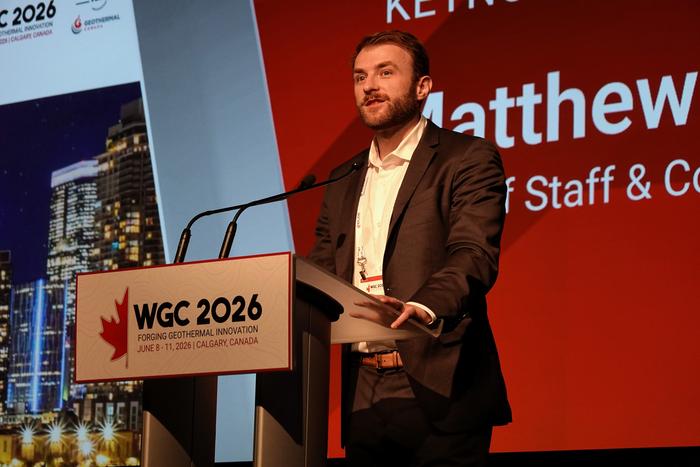
Matthew Geraghty, Founder and Chief Executive of ReWind Energy, says AI’s ability to automate repetitive, data-intensive work - such as energy yield assessments and regulatory compliance - will allow wind professionals to focus on higher-value decision-making.
“With AI, you've got so much more data than you can pull up yourself” said Mr Geraghty. “Even if it is off by 5 percent-10 percent, you're still putting yourself in a much better position to make decisions. You can't ignore the tools. You need to be using them and, if you're not, you're going to be left behind.”
While these systems will replace some manual tasks traditionally handled by consultants, they complement, not supplant, human expertise, according to Geraghty.
Shoreline Wind’s use of AI in its platform focuses on improving efficiency, accuracy, and decision support, by automating data-intensive analyses and providing actionable insights. This responsible application of AI is intended to complement the skills of human engineers and consultants, ultimately helping to reduce risk, improve trust, and increase the safety of complex wind energy projects.
The new report also highlights the emergence of generative AI tools such as ChatGPT, Copilot and Flow, which finance leaders are increasingly using to support administrative and analytical tasks.
“I think it adds a lot of value to those low-level tasks of pulling together the data and summarising it” added Justin Fitzhugh, Group CFO at Telis Energy, citing how LLMs can instantly compare growing opportunities to apply AI systems in optimising asset performance, particularly for battery and tariff clauses across markets - a task that might otherwise take hours of manual research – and pointing to hybrid projects.
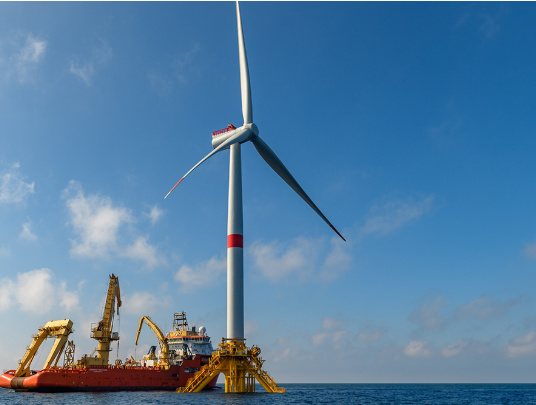
The offshore wind sector is seeing some of the most immediate returns on AI investment. Logistics and vessel operations can represent 25–30 percent of a project’s total cost, and small efficiency improvements can translate into cuts of up to $300K per day in transport costs with AI-optimised plans, while reducing OPEX by 10 percent through predictive maintenance workflows and execution of smarter tasks.
From the boardroom to the project control centre, AI planning systems are already being deployed by leading developers including Equinor, Ramboll, Renova and TEPCO Renewable Power. These companies use Shoreline Wind’s Shoresim AI to model construction and operations scenarios, evaluate costs, predict cashflows and optimise vessel utilisation.
The report’s conclusion is that the most valuable AI applications for wind finance are not generic large language models, but deep, domain-specific systems trained on industry data and designed to replicate real-world decision-making.
Mr Endrerud said that CFOs who continue to rely on outdated forecasting methods risk exposing billions in CapEx to preventable uncertainty.
“CFOs and management teams can sleep better because of that” he added. “As AI becomes a staple of financial strategy in renewables, the companies that invest now in specialised, proven systems will be best positioned to weather market volatility and deliver stronger, more predictable returns.”
For additional information:
Report: “The Wind CFOs’ Guide to Artificial Intelligence (AI)”