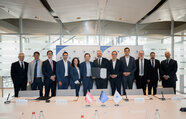


The initiative will deploy a fleet of around 20 Toyota and BMW vehicles, powered by Repsol’s 100% renewable gasoline (Nexa 95), and supported by Bosch’s advanced digital fuel tracking technology.
This pilot aims to provide tangible, real-world evidence that vehicles exclusively running on renewable fuels can be effectively deployed at scale, supporting Europe’s transition to decarbonize mobility through a complementary, technology-neutral approach while leaving no one behind.
"Technology openness is a key pillar of the BMW Group strategy – at the same time our goal is always to have more environmentally friendly and efficient vehicles on the road. Our BMW and MINI vehicles as a part of this future oriented pilot, will help to gain valuable data helping us to offer our global customer the best and most efficient powertrain also in the future,” says Stefan Heller, Head of Development of the VEEF programme at BMW Group.
The pilot will focus on three key objectives:
Bosch’s system will collect and validate refueling data from multiple sources, including vehicle data, fuel stations and fuel card transactions, ensuring robust, transparent tracking of renewable fuel usage.
“With our 'Digital Fuel Twin,' Bosch is bringing full digital transparency to the entire fuel value chain to reliably track and verify the renewable fuels from the moment they enter the market right down to the end consumer. By precisely monitoring fuel usage on individual vehicles in real-time, we are building the foundation of trust and regulatory compliance needed for higher acceptance of renewable fuels in the mobility and transport sector”, says Dr. Marko Babic, Head of Product Area at Bosch– in charge of the Digital Fuel Twin.
A scalable solution using existing vehicles and infrastructure
Unlike solutions that require new vehicle technologies or infrastructure investments, the pilot uses existing Toyota and Lexus passenger cars provided by Toyota España (TES), and BMW fleet vehicles. It highlights the immediate scalability of renewable fuels as a drop-in solution for decarbonising road transport.
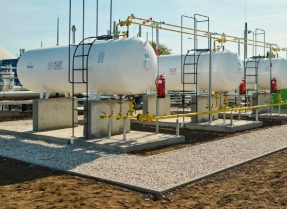
Repsol’s Nexa 95 renewable gasoline is produced from RED-compliant feedstocks, offering significant greenhouse gas reductions compared to fossil fuels, while remaining fully compatible with today’s gasoline engines and infrastructure.
Spain has been selected as the optimal location for this demonstration due to the availability of renewable gasoline, strong partner collaboration, and Toyota España’s operational support.
“At Repsol, we believe every emissions-reduction solution has a role to play in decarbonizing transport. This project underscores how renewable fuels can expand consumer choice,offering another way to reduce carbon footprints using existing vehicles and infrastructure. As the only company currently supplying 100% renewable gasoline at public service stations in Spain, Repsol is proud to contribute its expertise and infrastructure alongside Toyota, BMW, and Bosch. The project’s real-world data will demonstrate the value of a technology-neutral approach to Europe’s mobility transition,” said Estíbaliz Pombo, Deputy Director of Energy Products at Repsol.
Strengthening the case for technology neutrality in Europe
The pilot is designed to generate robust data and insights that will support ongoing European policy discussions on decarbonizing the automotive sector.
With EU policy currently focused predominantly on electrification, the project aims to demonstrate that renewable fuels can play a complementary and scalable role in reducing CO₂ emissions.
Data and intermediate findings from the pilot will be shared with EU policymakers, industry stakeholders and media audiences, contributing to discussions around technology neutrality and the potential inclusion of vehicles running exclusively on renewable fuels in future regulatory frameworks.
Driving measurable impact
A key success factor of the project will be promoting the effective use of renewable fuel across the fleet, supporting emissions reductions and advocacy impact.
The pilot will also provide valuable insights for R&D validation and monitoring methods, the scalability of existing approaches for tracking physical fueling, and fuel operator’s ability to link fuel consumption to individual vehicles.