
The new connection means that capacity to produce liquefied biogas in Huddinge has more than doubled, strengthening both the green transition and the region’s security of supply of fossil-free fuels.
Liquefied biogas, or LBG, is biogas that has been cooled and converted into liquid form. It is one of the most effective ways to reduce emissions from heavy road transport, shipping and industry. When used as a fuel, it also improves local air quality by reducing nitrogen oxides (NOx) and other harmful particulate emissions. Moreover, it is one of the few energy carriers produced from local feedstock – in this case, Stockholm residents’ food waste and wastewater.
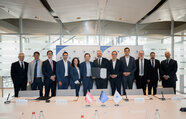
“We are very pleased to inaugurate the new connection that links two of our facilities in Stockholm. This is a major milestone for us and means we can supply the market with even more liquefied biogas to help accelerate the green transition. Recent developments in the world around us also show how important it is to invest in infrastructure and locally produced energy, and this connection contributes to increased security of supply for both the region and Sweden,” says Miika Johansson, CEO, St1 Biokraft.
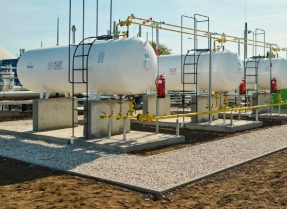
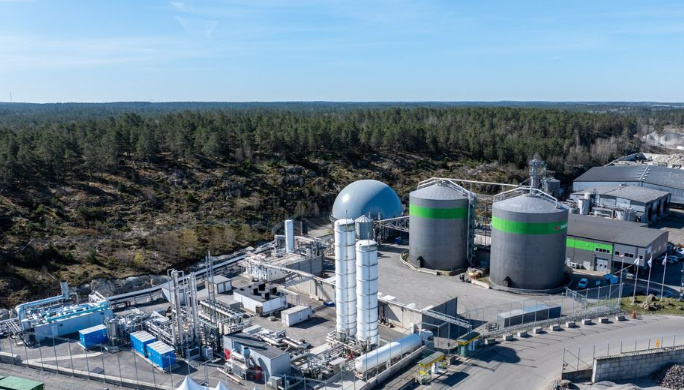
The Gladö Kvarn facility comprises a production unit that produces approximately 100 GWh of biogas per year and two upgrading units that can produce compressed (CBG) and liquefied (LBG) biogas, respectively. The LBG unit was completed in late summer 2023 and was then one of the world’s largest liquefaction plants. However, the LBG upgrading unit is designed for 240 GWh, equivalent to 22 million litres of diesel. What has been missing is the grid connection from the Henriksdal facility, which can only produce CBG.
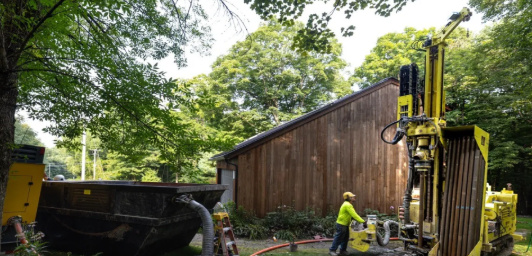
The project has required the construction of an entirely new gas pipeline through Stockholm – work that has been ongoing for two years.
“The new gas pipeline is an important part of the Stockholm region’s climate transition and has been built to increase the use of biogas. But it is also important from a security perspective. With the new pipeline, the region broadens its energy mix and becomes less dependent on a single energy source. If recent years of global uncertainty have shown us anything, it is that we must safeguard our energy supply,” says Jesper Karpsen, CEO, Gasnätet Stockholm, part of Driva.
The project has been carried out with investment support from the Swedish Environmental Protection Agency’s programme Klimatklivet.
GWh figures are stated as High Heating Value (HHV).