
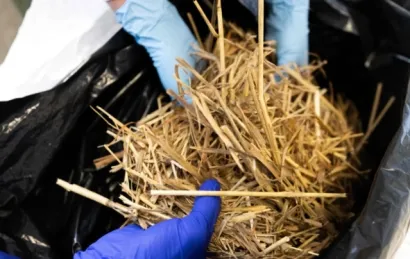
The BFNUF specializes in preprocessing technologies that turn raw biomass, such as corn stover, into a form that is more easily converted into synthetic biofuels. Those fuels can be used to power jet engines, trains, ships and the nation’s manufacturing economy.
Terragia is “developing and deploying disruptive technology to convert cellulosic biomass to ethanol, other fuels and co-products at a cost competitive with petroleum.”
“Working with INL and their facilities will allow us to validate our current technology and ensure its effectiveness before introducing it more broadly in the biofuel industry,” said Lee Lynd, the co-founder and chief technology officer of Terragia. “Having access to state-of-the-art preprocessing equipment through the BFNUF enables us to evaluate the best next steps as we develop technology to increase bioconversion efficiency and advance the United States bioeconomy.”
This partnership will improve the bioeconomy supply chain by increasing the yields of biomass-derived sugars, which are widely used in biomanufacturing and biotechnology. The current method for processing corn stover uses the entire plant at once, which is inefficient. Corn stover plant material is heterogenous — some tissues, like stalks or cobs, are harder to treat than others.
Specialized equipment at the BFNUF can fractionate biomass into parts, which can be processed in a cost-effective manner and optimized for their chemical and physical properties. This fractionation reduces the amount of corn stover that is wasted and improves overall yields.
“The improved yield will ultimately increase the value and reduce the cost of processed sugars that are used across the biomanufacturing and biotechnology sector,” said INL’s John Aston, the principal investigator for the Terragia project.
The collaboration with Terragia is an example of a partnership between basic and applied science stakeholders. It brings together funding from the Bioenergy Technologies Office, which sponsored the INL portion of the project, and Office of Science funding through the Center for Bioenergy Innovation, which sponsored Terragia.
The project will also allow Terragia to take data to potential partners. These partners, in turn, open future collaborations for INL by providing BFNUF researchers with the opportunity to showcase their preprocessing capabilities and validate technologies that can impact the larger national biomanufacturing economy.