
In January, Mast’s MT1 project delivered its first credit issuance under the Puro.earth registry, representing the largest issuance under Puro.earth’s Terrestrial Storage of Biomass methodology and one of the fastest excavation-to issuance timelines globally for a carbon removal project. Following third-party verification, Puro.earth certified 4,277 carbon removal credits from the burial of more than 10 million pounds of wildfire-killed trees in an underground chamber engineered for long-term storage.
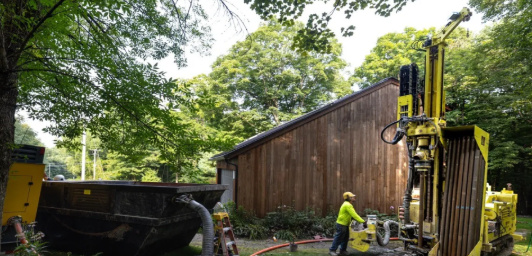
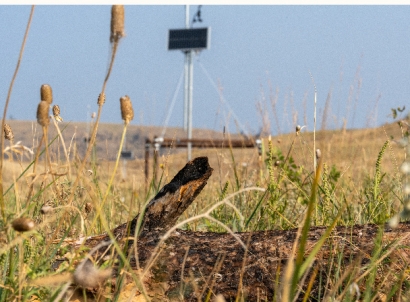
Absent the project, the biomass would have been pile-burned; instead, biomass burial locks this carbon underground, removing it from the atmospheric cycle for at least a century, backed by Mast’s rigorous MRV program. Mast began monitoring in and above the chamber in August and will continue monitoring throughout the project’s 100-year duration. This novel Biomass Carbon Removal and Storage (BiCRS) approach is the first to use its proceeds to fund critically needed post-wildfire reforestation.
Proceeds from MT1 credit sales are directly funding post-wildfire reforestation surrounding the biomass burial site in Bighorn County in southern Montana. This area burned so severely during the 2021 Poverty Flats Fire that natural recovery was unlikely within the next century or more. Reforestation on the MT1 site will begin in spring 2026, using native conifer seedlings grown from wild-collected, locally adapted seed currently being cultivated at Mast’s commercial nurseries.
Purchase participants include: The Royal Bank of Canada (RBC), a global financial institution, purchased Mast’s MT1 credits; CNaught, a carbon portfolio provider that makes high-integrity carbon credits accessible to organizations of all sizes, purchased MT1 credits to enable broader market participation; Muir AI, a Seattle-based, AI-driven product intelligence company, purchased MT1 credits on behalf of its customers using its Product Carbon Footprint solution; SE Advisory Services, the global consulting arm of Schneider Electric, supported client evaluation and their purchase of MT1 carbon credits.
“A first successful issuance that delivers high quality credits on a rapid timeline builds trust and provides a pathway to scale for organizations with challenging 2030 targets,” said Mast CEO Grant Canary. “Our next steps are to scale projects up to 20,000 tonnes or more each, and build a pipeline where we’re delivering 150,000 tonnes per year. There’s ample supply we’ve assessed, with 2.8M tons of fire killed trees in Montana alone from recent fires.”
“RBC is focused on driving action to help increase climate resiliency through innovative solutions which includes the purchase of biomass burial credits from Mast,” said Jon Douglas, Senior Director, Head of Climate Operations at RBC. “The procurement of these credits is part of RBC’s growing climate strategy to support projects that focus on helping reduce emissions and increasing climate resilience."
Prior to the project’s completion, Mast Wood Preserve MT1 earned a pre-issuance rating of ‘A’pre from credit ratings agency BeZero Carbon, indicating low project execution risk––aligning MT1 with the top 8% of non-nature-based projects globally when benchmarked against BeZero’s ex-post ratings.
“Mast Reforestation’s first issuance stood out for the quality and completeness of its data submissions, including monitoring, reporting and supporting documentation,” said Benno Fuchs, Chief Operating Officer of Puro.earth. “That level of preparation is critical for buyer confidence and for the delivery of carbon removal to market. It also represents the largest issuance to-date under the Terrestrial Storage of Biomass methodology, marking an important milestone and demonstrating the pathway’s ability to deliver at scale.”
Beyond its ability to rapidly deliver carbon removal, MT1 demonstrates a financial pathway to fund the recovery of ecosystems and communities devastated by severe wildfire; funding that doesn’t currently exist at the scale needed. Mast has documented elk, sharp-tailed grouse, bobcats, and other wildlife utilizing the land surrounding the project site—species expected to directly benefit as forest cover and native habitats are restored.
Mast is uniquely positioned with its longstanding nursery operations to ensure resilient and ecologically appropriate reforestation practices, including native cone collection and seedlings specific to each project site. In addition, MT1 has generated meaningful local economic impact, injecting more than $1 million into this rural, economically disadvantaged region by providing local economic opportunities.
Building on this foundation, Mast has expanded its pipeline of biomass burial projects in 2026, targeting tens of thousands of tonnes of carbon removal. Scaling this approach will generate additional funding for forest restoration across thousands of acres of fire-impacted land, which is deeply needed at the scale of the problem.