
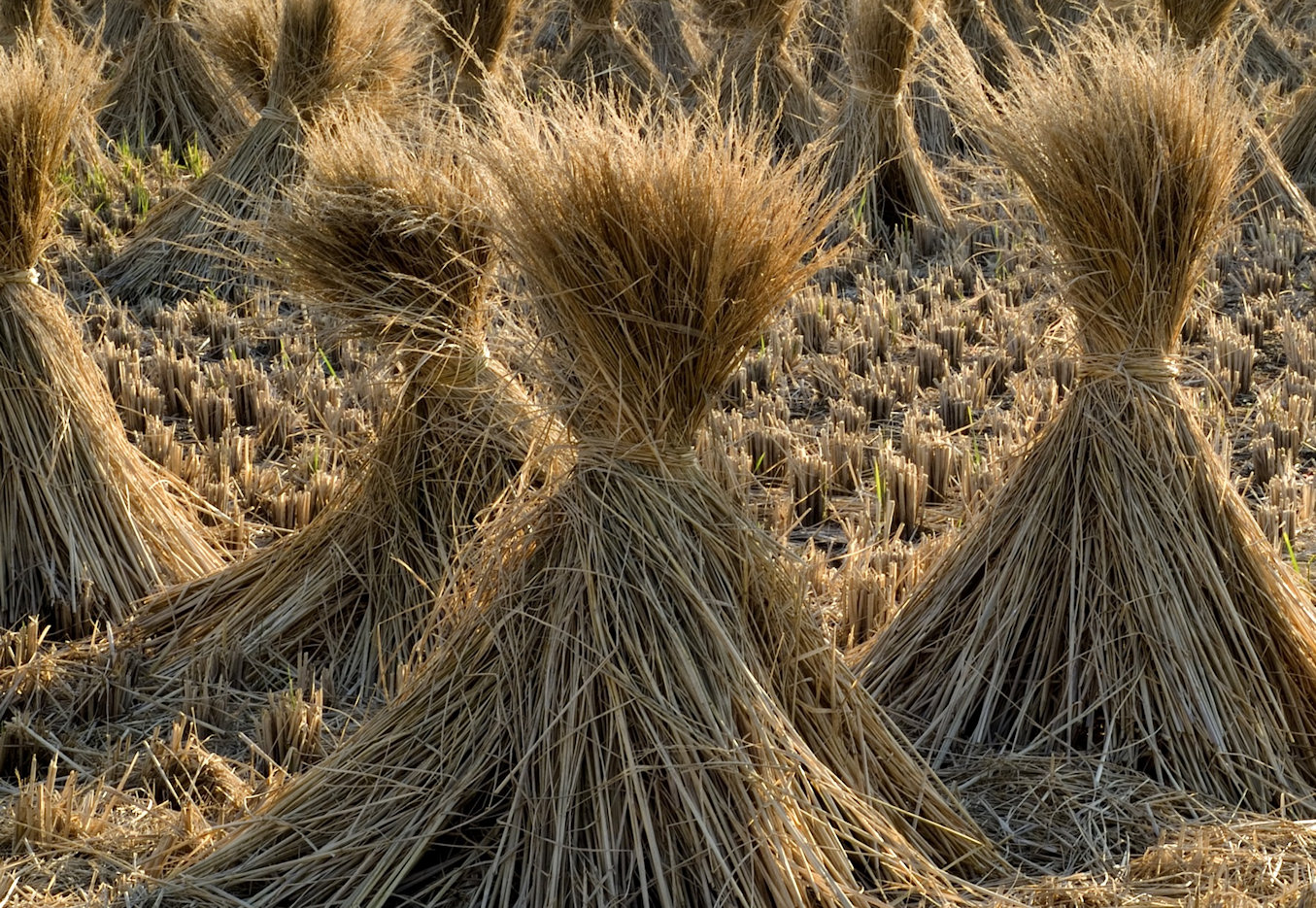
Many biochar production systems rely on drying biomass before pyrolysis because freshly harvested plant materials often contain substantial water. However, the new research suggests that the story is more nuanced. By studying cellulose, lignin, and rice straw with different water contents, the research team found that both free water and bound water slowed the intensity of pyrolysis reactions and increased biochar yield.
“Water is usually regarded as something that must be removed before pyrolysis,” said corresponding author Bo Pan. “Our findings show that different forms of water interact with biomass components in different ways. Understanding these interactions can help us regulate biochar formation more precisely.”
The team distinguished between free water, which is more loosely held and can evaporate more readily, and bound water, which is connected to plant polymers through hydrogen bonding. Using thermogravimetric analysis, differential scanning calorimetry, mass spectrometry, and in situ infrared spectroscopy, the researchers tracked how water affected the breakdown of major biomass components in real time.
One key finding was that bound water lowered the activation energy of hemicellulose, making it easier for this component to decompose. The researchers found that bound water formed hydrogen bonds with O-acetyl groups in hemicellulose, accelerating decomposition and promoting the release of acetic acid at lower temperatures. In contrast, bound water increased the activation energy of cellulose by strengthening hydrogen bond networks, which made cellulose more thermally stable during pyrolysis.
The study also showed that water influenced functional groups in a clear sequence during rice straw pyrolysis: hydroxyl groups responded first, followed by carboxyl C=O, aliphatic C-H, carbohydrate C-O-C, and aromatic rings. This sequence suggests that water can promote the formation of more condensed aromatic carbon structures, an important feature of stable biochar.
The researchers found that increasing water content raised biochar yield across cellulose, lignin, and rice straw samples. Lignin derived biochar showed the highest yield, reaching up to 78% under the tested conditions. However, more water also meant higher energy consumption because additional heat was needed to evaporate water. Considering both biochar yield and energy demand, the study suggests that a biomass water content of around 30% may offer a practical balance for pyrolysis.
“This work provides a molecular level explanation for why water changes biomass pyrolysis,” Pan said. “It gives researchers and producers a theoretical basis for adjusting feedstock moisture to guide product distribution and improve biochar production.”
The findings could help advance the sustainable use of agricultural residues and other lignocellulosic biomass resources. Rather than treating moisture only as a problem, the study points to water content as a potential control factor for tailoring biochar yield and physicochemical properties.
===
Journal Reference: Tao, W., Gao, L., Li, M. et al. Effect of initial water content on the pyrolysis mechanism of lignocellulosic biomass. Biochar 8, 116 (2026).
https://doi.org/10.1007/s42773-026-00629-5
===